
 > Blogs > Glass Hookah Base vs Acrylic Base: A Practical Guide to Material and Performance
Table of Contents
Core keywords: glass hookah base vs acrylic base, hookah glass material, acrylic material base
Introduction: Understanding Glass Hookah Base vs Acrylic Base
Every hookah setup begins at its foundation — the base. It is the chamber where water cools, filters, and stabilizes smoke before it travels through the stem and hose. Whether you prefer tradition or modern convenience, the choice between a glass hookah base vs acrylic base determines not only the look of your setup but also its performance and maintenance needs.
As modern designs evolve, understanding the properties of hookah glass material and acrylic material base helps users balance aesthetics, durability, and flavor purity.
1. Understanding the Role of the Hookah Base
The base serves several essential functions: it holds water for filtration, provides stability, and defines the visual style of the entire hookah. The size, shape, and material of the base directly influence smoke temperature, airflow, and flavor.
When comparing glass hookah base vs acrylic base, the most noticeable differences lie in material characteristics — transparency, resistance to impact, heat tolerance, and maintenance requirements. Both materials have their advantages, but they cater to different kinds of users and environments.
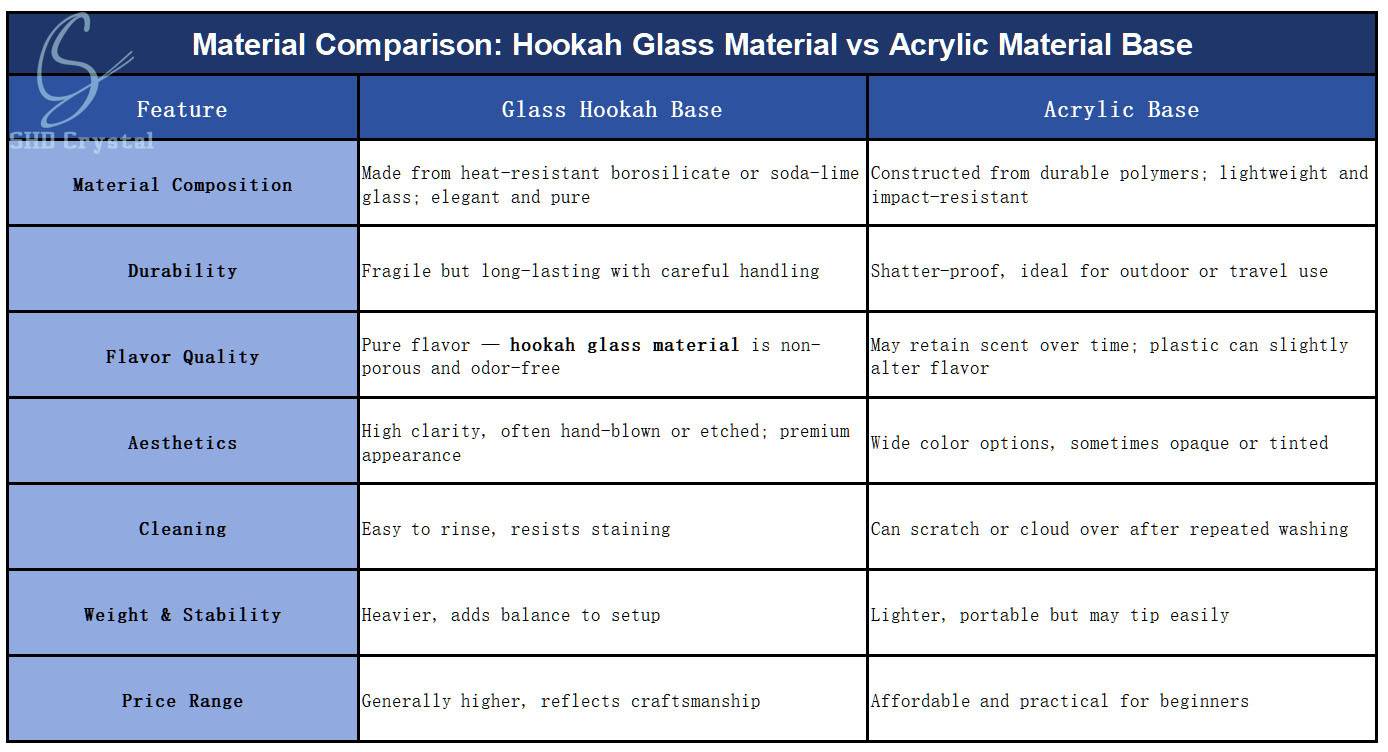
2. Material Comparison: Hookah Glass Material vs Acrylic Material Base
In summary, the comparison between glass hookah base vs acrylic base reveals a clear distinction in both character and purpose. The hookah glass material offers purity, elegance, and flavor consistency, while the acrylic material base provides practicality and resilience for daily or outdoor use. Each material serves a different type of smoker — one seeking refined sensory balance, the other prioritizing durability and convenience. Understanding these contrasts lays the groundwork for exploring how each base performs in real smoking conditions, where heat, airflow, and flavor truly define the experience.
3. Performance and Sensory Experience of Each Material
The hookah glass material offers a smooth, clean taste because it does not absorb residual flavors or moisture. Its transparency allows users to monitor water level and smoke density in real time, enhancing control during a session.
By contrast, the acrylic material base is favored for mobility and resilience. It can survive accidental drops or bumps that would shatter a glass base. However, acrylic’s porous structure may trap subtle scents from previous sessions, requiring more frequent cleaning to maintain flavor integrity.
Each material handles temperature differently. preventing overheating near the stem, while acrylic tends to retain warmth longer — something to consider during extended smoking sessions.
4. Design and Aesthetic Value
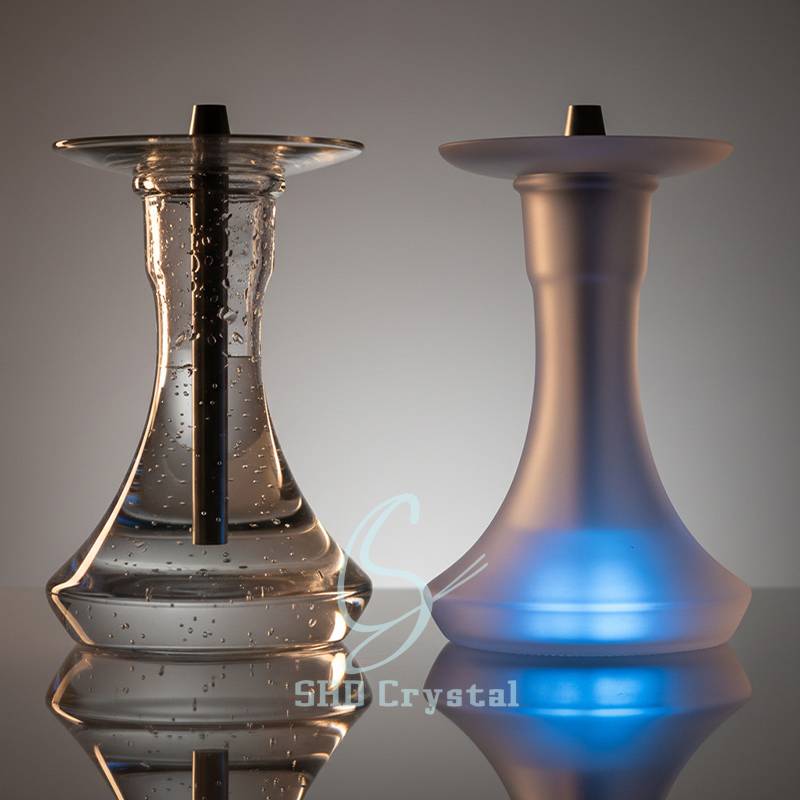
When choosing between glass hookah base vs acrylic base, design preference often drives the decision. Glass bases are available in clear, frosted, or colored finishes, sometimes decorated with hand-cut patterns or crystal engraving. The craftsmanship behind each piece makes the glass base not just functional but collectible.
Meanwhile, acrylic bases allow for more experimental shapes and integrated lighting. Some manufacturers mold acrylic material base designs with built-in LED elements, producing colorful illumination effects in lounge environments. While they may lack the tactile luxury of glass, they offer creative flexibility and durability that appeal to younger audiences or commercial lounges.
5. Maintenance and Longevity
Cleaning plays a key role in maintaining both materials. For glass bases, warm water with lemon juice or baking soda keeps surfaces clear and odor-free. Because hookah glass material is smooth and non-reactive, it resists long-term discoloration.
Acrylic requires gentler cleaning. Avoid alcohol-based agents or harsh scrubbing, which can cause clouding or micro-scratches on the acrylic material base. Instead, use mild soap and soft sponges to maintain clarity and longevity.
With proper care, both types can last for years, but glass tends to maintain its clarity longer, while acrylic excels in environments where durability matters most.
These practical differences set the stage for a broader consideration — how material choice affects sustainability and long-term use.
6. Environmental and Health Considerations
Environmentally, glass remains the more sustainable material. It is fully recyclable and does not emit fumes when heated. The hookah glass material aligns with eco-conscious production and long-term reusability.
Acrylic, while recyclable in theory, often ends up as mixed plastic waste. However, its long lifespan and low breakage rate make it efficient for settings where frequent replacements would otherwise increase waste.
For health and safety, always ensure your base—glass or acrylic—is made from non-toxic, heat-safe materials, and avoid low-quality imitations.
7. Final Verdict: Which One Fits Your Lifestyle?
Ultimately, the choice between glass hookah base vs acrylic base depends on your priorities:
-Choose glass if you value purity, elegance, and flavor clarity.
-Choose acrylic if you need resilience, portability, and affordability.
The modern hookah culture celebrates diversity in both form and function. Whether you prefer the timeless allure of hookah glass material or the practicality of acrylic material base, each offers a unique experience shaped by your lifestyle and environment.
Custom Hookah Bases by SHD Crystal
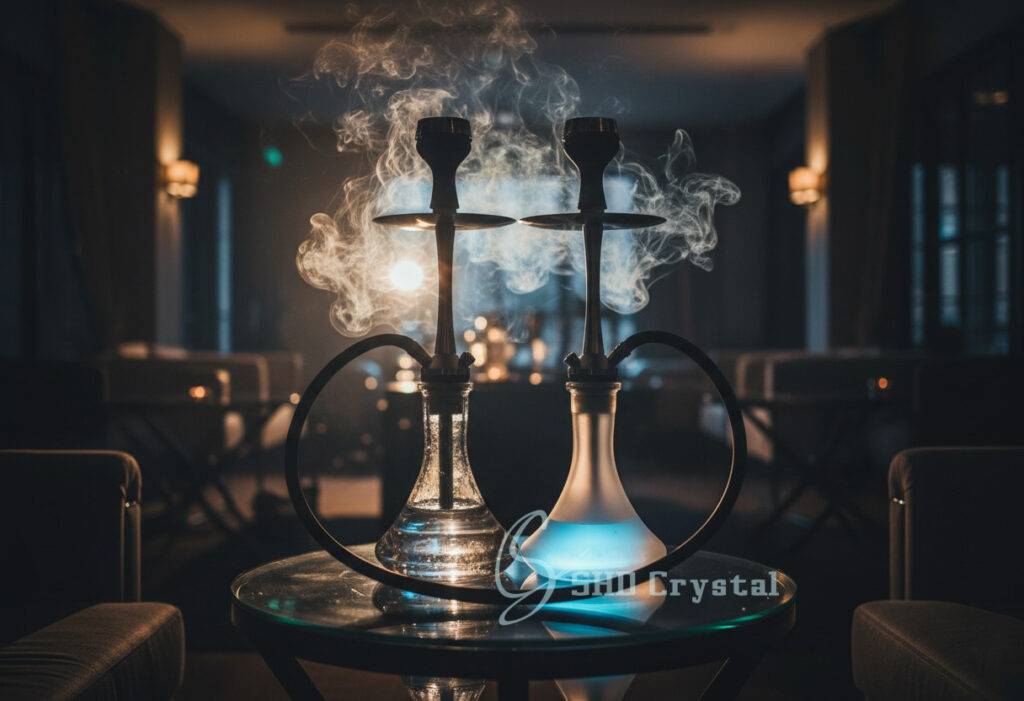
For collectors, lounges, and enthusiasts seeking craftsmanship, SHD Crystal produces bespoke hookah bases using both materials. From hand-blown crystal to engineered acrylic hybrids, each design reflects the perfect harmony of durability, artistry, and innovation — ensuring your base is as distinctive as your session.


