
Blogpost keywords: traditional Arabic hookah design, Arabic hookah craftsmanship, ornate hookah glass base
The traditional Arabic hookah design reflects centuries of cultural refinement, functional experimentation, and aesthetic symbolism. Originating across regions of the Middle East and North Africa, this design philosophy emphasizes balance, durability, and communal usability rather than modern minimalism or modular complexity. A well-executed traditional Arabic hookah design is not merely decorative; it represents an integrated system where form and function evolve together through long-term cultural use.
Traditional Arabic Hookah Design: Core Structural Principles
A genuine traditional Arabic hookah design can be identified through a set of structural principles refined through generations of practical use.
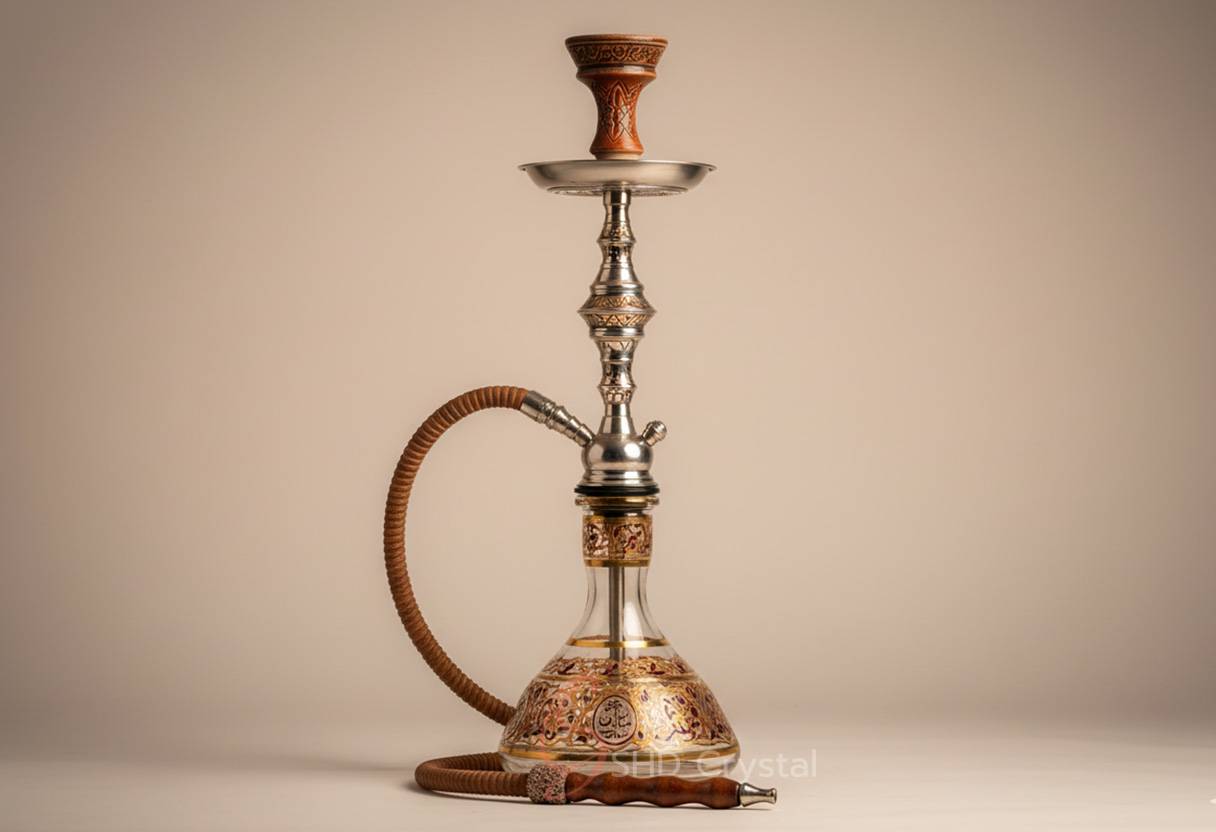
One defining element is proportional balance. Traditional Arabic hookahs are built with vertically aligned proportions, where stem height, base volume, and hose connection placement work together to ensure stability and smooth smoke flow. This proportional harmony is a central expression of Arabic hookah craftsmanship, developed to support long, relaxed sessions without instability.
Another hallmark is the open draw philosophy. Unlike some modern designs that rely on restricted airflow to increase smoke density, the traditional Arabic hookah design favors an open draw. This allows smoke to travel smoothly through the stem and water chamber with minimal resistance, supporting comfort and consistency during extended use.
Despite their ornate appearance, traditional hookahs remain mechanically simple. Internal construction typically avoids unnecessary valves or modular systems. This simplicity reduces maintenance complexity and contributes to the long-term reliability that defines authentic traditional Arabic hookah design.
Cultural and Aesthetic Identity
The visual language of a traditional Arabic hookah design is deeply rooted in regional artistry and symbolism.
Decorative metalwork is common, including engraved stems, hand-finished surfaces, and classical motifs. These details are not purely ornamental; they often reinforce structural areas of the stem, contributing to durability as well as visual richness. This integration of decoration and function is a signature of Arabic hookah craftsmanship.
The ornate hookah glass base serves as both a functional anchor and a cultural canvas. Beyond holding water and stabilizing the hookah, it reflects regional preferences through color, pattern, and transparency. In traditional settings, the base plays a symbolic role, reinforcing the hookah’s presence as a shared centerpiece.
Equally important is harmony between components. The stem, base, tray, and hose are designed to appear as a unified object rather than interchangeable parts. This visual coherence reinforces the identity of a traditional Arabic hookah design as a complete form.
Materials and Functional Performance
The longevity of a traditional Arabic hookah design depends heavily on material selection and disciplined production.
A properly made ornate hookah glass base must maintain uniform wall thickness to support stability and resist stress during use and cleaning. Uneven glass distribution weakens structural balance and increases the risk of cracking over time.
Metal stems are commonly produced from brass or stainless steel. Proper internal finishing and corrosion resistance are essential to preserve airflow quality and prevent metallic aftertaste. Even minor degradation can disrupt the smooth, open draw that defines the traditional Arabic hookah design.
Although construction is simple, seal precision remains critical. Accurate fitting between stem and base ensures airtight performance. Small air leaks can compromise smoke quality and undermine the open-draw experience valued in traditional systems.
Use Scenarios Where Traditional Design Excels
A traditional Arabic hookah design remains highly relevant across multiple use contexts:
- Cultural lounges and hospitality environments
- Long-duration group sessions
- Users who value smooth, unrestricted airflow
- Settings where durability and easy maintenance are priorities
In these scenarios, Arabic hookah craftsmanship consistently outperforms trend-driven designs due to its emphasis on stability, balance, and proven geometry.
Care and Preservation
Maintaining a traditional Arabic hookah design requires consistent but straightforward care. Rinsing the glass base after each session, drying metal components thoroughly, and avoiding abrasive tools on decorative surfaces help preserve both function and appearance. Storing the hookah upright protects the ornate hookah glass base from unnecessary stress or impact.
With proper care, traditional hookahs retain their performance characteristics and visual detail for many years.
Conclusion
A refined traditional Arabic hookah design endures because it balances cultural expression with proven functionality. When executed with disciplined craftsmanship, accurate proportions, and consistent materials, this design philosophy continues to meet modern expectations without sacrificing heritage. In this space, manufacturers such as SHD Crystal, with strong capabilities in glass production and quality control, contribute to preserving the structural reliability and visual integrity essential to traditional hookah forms.
When choosing a hookah rooted in heritage, prioritize authenticity over excessive modification. A true traditional Arabic hookah design, supported by skilled Arabic hookah craftsmanship and a well-made ornate hookah glass base, delivers dependable airflow, cultural character, and long-term value for both personal and professional use.