
Blogpost keywords: glass hookah hand-forming, controlled glass shaping, custom base profiles
As hookah designs become more differentiated, not every concept can or should rely on fixed molds. Glass hookah hand-forming remains a vital process for projects that demand flexibility, nuanced shaping, and responsive adjustment during production. In professional manufacturing, hand-forming is not the absence of control—it is a different kind of control.
Why Glass Hookah Hand-Forming Still Matters
Glass hookah hand-forming allows manufacturers to respond directly to design intent. Unlike mold-based processes, hand-forming enables real-time adjustments to proportion, curvature, and transition points. This adaptability is especially valuable in early-stage development or limited-run projects where designs are still evolving.
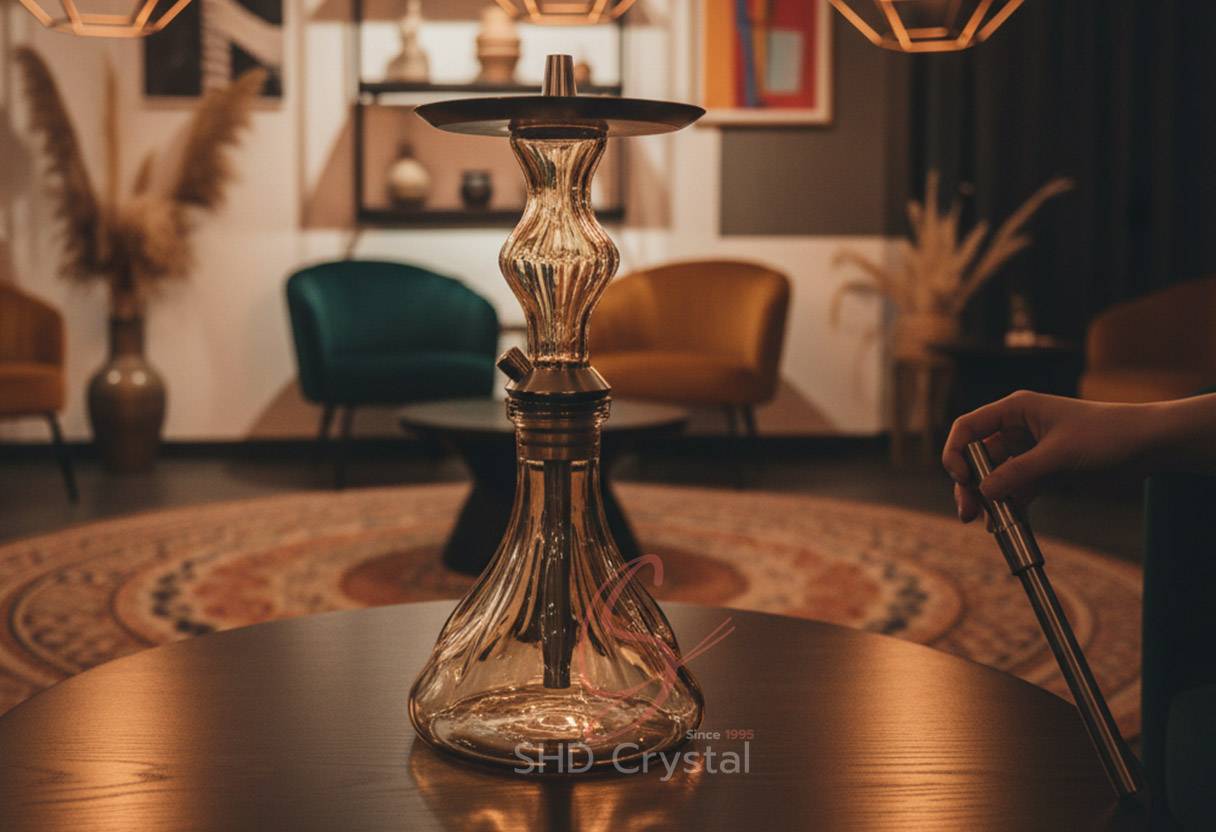
For brands exploring new concepts, glass hookah hand-forming provides a way to test ideas physically without committing to tooling. It supports experimentation while maintaining a clear path toward later standardization if needed.
Controlled Glass Shaping as a Professional Discipline
Hand-forming does not imply unpredictability. Controlled glass shaping relies on experienced craftsmen, defined temperature windows, and consistent forming techniques. Each movement is guided by process knowledge rather than improvisation.
Through controlled glass shaping, wall thickness, symmetry, and balance can be managed within acceptable tolerances. This discipline ensures that hand-formed components remain functional and compatible with other parts of the hookah system, even when shapes are unconventional.
Custom Base Profiles and Design Flexibility
One of the key advantages of glass hookah hand-forming is the ability to create custom base profiles without structural compromise. Designers can explore wider bases, tapered forms, or asymmetric silhouettes that are difficult to achieve through standard molds.
These custom base profiles allow brands to express identity through form while maintaining stability and usability. By refining profiles during forming, manufacturers can adjust weight distribution and internal volume to suit specific use environments.
From Hand-Forming to Scalable Solutions
While hand-forming is often associated with small batches, it plays an important role in scalable development. Glass hookah hand-forming is frequently used to establish reference shapes and validate proportions before transitioning to molds.
In this context, controlled glass shaping becomes a bridge between concept and production. Once a custom base profile is proven through hand-forming, it can inform tooling design or be retained for limited production lines where individuality remains a priority.
Strategic Value for Brands and OEM Projects
For OEM clients, glass hookah hand-forming offers strategic flexibility. It reduces upfront investment, accelerates development timelines, and supports design-led differentiation. When paired with disciplined controlled glass shaping, hand-formed components meet professional quality expectations.
Brands that leverage custom base profiles developed through hand-forming gain a clearer understanding of their product’s physical identity before committing to scale.
Shaping Ideas with Hands-On Glass Expertise
At SHD Crystal, hand-forming is used as a practical tool for exploring form rather than a decorative label. As a professional hookah accessory and glass manufacturer, we apply controlled hand-forming techniques to help clients evaluate proportions, balance, and visual flow at an early stage.
This approach allows brands to test and refine custom base profiles directly in glass, without relying on fixed tooling. Whether the goal is to keep production artisanal or prepare a design for later scaling, our OEM customization service provides the flexibility and technical support needed to move forward with confidence.