
Blogpost keywords: architectural hookah design, geometric glass base, modern shisha form
As hookah design evolves, inspiration increasingly comes from architecture rather than ornament. Architectural hookah design applies principles of structure, proportion, and spatial balance to create objects that feel grounded, intentional, and modern. In contemporary shisha culture, form is no longer decorative by default—it is constructed.
Architectural Hookah Design Rooted in Structure
Architectural hookah design begins with an understanding of load, balance, and visual weight. Much like buildings, hookahs designed with architectural logic rely on clear geometry and stable foundations. Every curve or edge serves a purpose, contributing to both visual clarity and physical reliability.
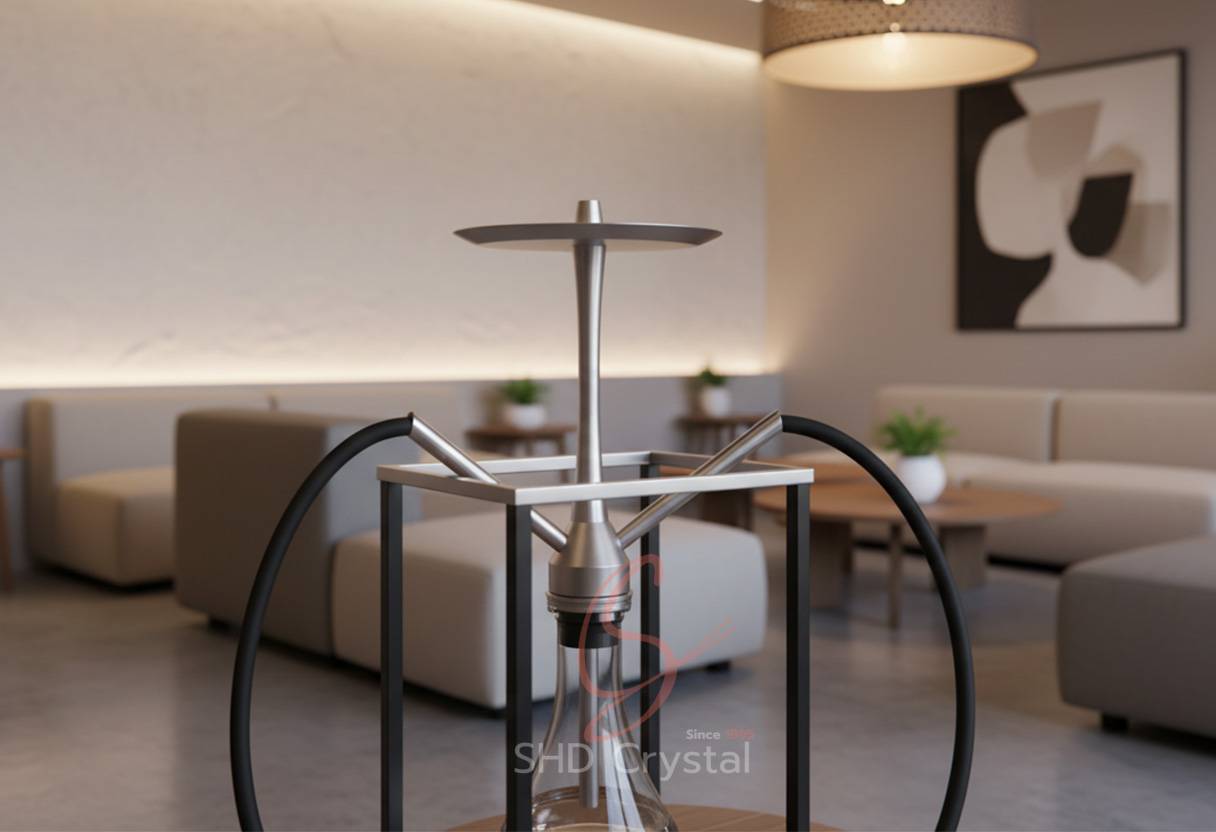
This approach replaces excess detail with compositional discipline. The hookah is treated as a spatial object, one that occupies its environment with confidence rather than decoration. As a result, architectural forms tend to feel timeless, resisting short-lived stylistic trends.
The Geometric Glass Base as a Structural Anchor
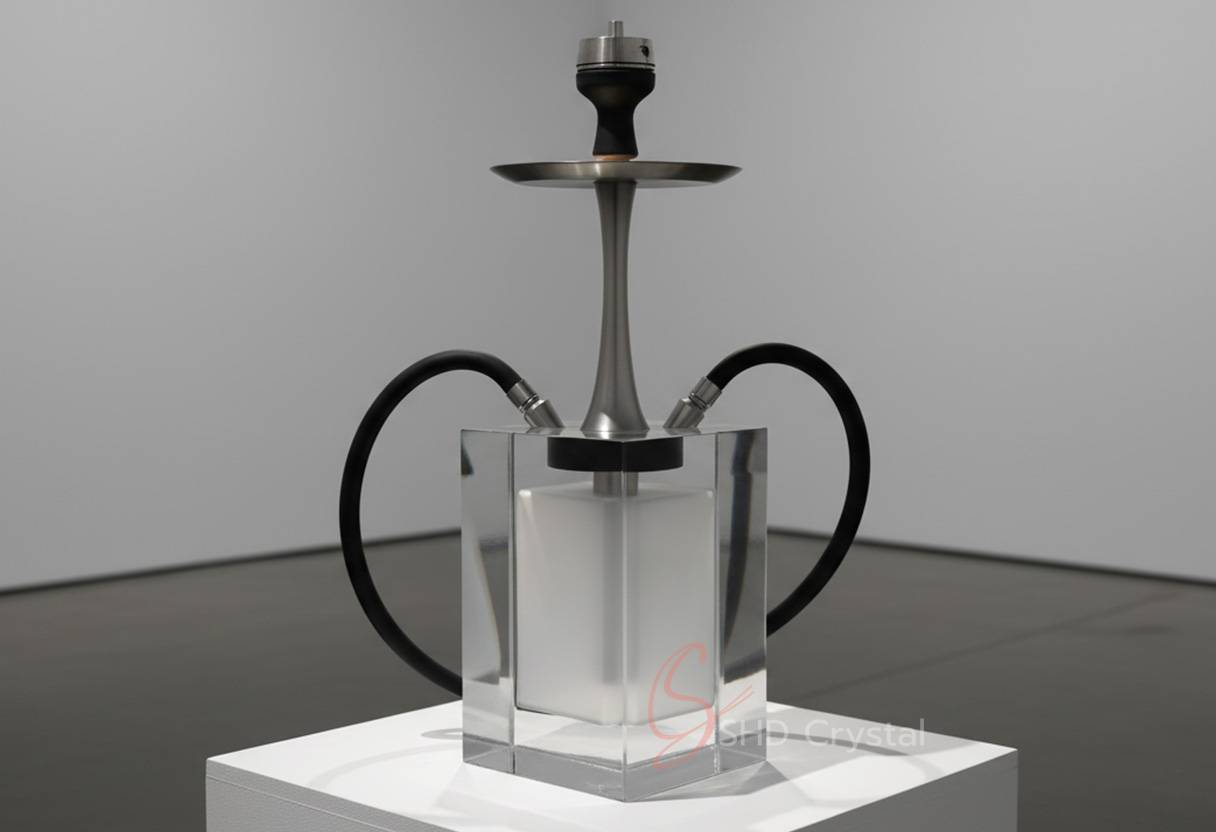
A geometric glass base is often the defining element in architectural hookah concepts. Through circles, cones, prisms, or faceted volumes, geometry establishes order and predictability. These shapes provide both visual stability and functional balance.
In practice, a geometric glass base allows designers to control center of gravity, footprint, and internal volume with precision. The clarity of glass further emphasizes the geometry, making the structure readable from every angle. This transparency reinforces the architectural nature of the design, where form is revealed rather than concealed.
Modern Shisha Form and Contemporary Design Language
A modern shisha form reflects contemporary values: simplicity, clarity, and restraint. Instead of referencing historical motifs, modern forms draw from industrial design, architecture, and minimalism. Lines are clean, transitions are deliberate, and proportions are carefully resolved.
Within a modern shisha form, geometry and material work together. Glass becomes a medium for expressing volume and light rather than surface decoration. This balance allows the hookah to integrate seamlessly into modern interiors, whether residential or commercial.
Spatial Presence and Environmental Harmony
Architectural objects interact with their surroundings. Architectural hookah design considers how the hookah relates to furniture, lighting, and spatial rhythm. The goal is not dominance, but coherence.
A well-proportioned geometric glass base anchors the piece visually, while the overall modern shisha form complements contemporary environments. This harmony enhances atmosphere, allowing the hookah to contribute to space rather than interrupt it.
From Conceptual Geometry to Functional Object
Design discipline must be supported by execution. Translating architectural hookah design into a usable product requires attention to material behavior, wall thickness, and assembly interfaces. Geometry that looks compelling on paper must remain stable and comfortable in use.
For a geometric glass base, this means balancing sharp definition with practical durability. Edges are softened subtly, transitions reinforced, and internal stress managed. The success of a modern shisha form depends on this balance between conceptual clarity and physical reliability.
Longevity Through Architectural Thinking
Architectural design endures because it is based on principles rather than trends. A hookah developed through architectural hookah design maintains relevance over time, as its value lies in proportion and structure rather than novelty.
Brands that adopt geometric glass base concepts and modern shisha form language invest in long-term identity. These designs remain compatible with evolving interiors and lifestyles, reinforcing brand consistency across years rather than seasons.
Translating Architectural Concepts into Glass
At SHD Crystal, architectural thinking is integrated into production from the earliest stage. As a professional hookah accessory and glass manufacturer, we support OEM customization that transforms architectural hookah design concepts into refined glass products. From developing a geometric glass base to realizing a coherent modern shisha form, our process bridges structural design intent with reliable manufacturing outcomes.