
Blogpost keywords: bohemian style glass lamp shades factory, interior style transition elements, layered decor continuity
A bohemian style glass lamp shades factory rarely produces objects that dominate a space. Instead, its role becomes clear only when different materials, eras, and visual languages need to coexist. In layered interiors, especially those influenced by bohemian aesthetics, the real challenge is not decoration—it is continuity. This is where interior style transition elements quietly define whether a space feels intentional or fragmented.
Why A Bohemian Style Glass Lamp Shades Factory Focuses On Transitional Objects
In practice, most interior failures do not come from a lack of focal points, but from poor transitions. When wood, metal, fabric, and stone meet without mediation, the result often feels abrupt.
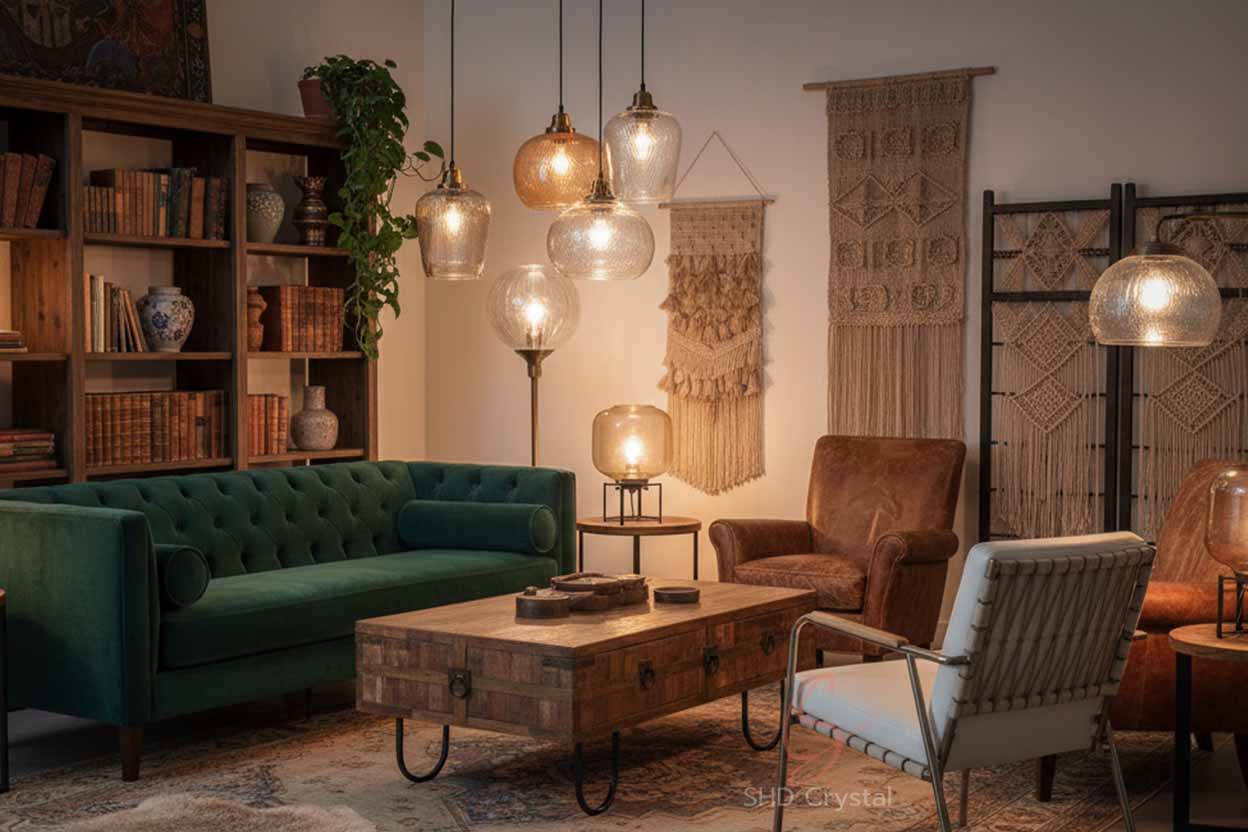
A bohemian style glass lamp shades factory addresses this issue by producing elements that sit between materials rather than compete with them. These interior style transition elements function as visual buffers, allowing contrasts to coexist without tension while maintaining layered decor continuity.
Glass As A Material That Absorbs Visual Conflict
Glass behaves differently from most materials used in interiors. It reflects, diffuses, and transmits light at the same time, making it inherently adaptive.
In bohemian environments, where visual diversity is intentional, glass shades help reduce the rigidity of transitions. A bohemian style glass lamp shades factory leverages this property by controlling thickness, texture, and transparency. As a result, interior style transition elements become less about decoration and more about regulating how light and material interact.
Where Design Intent Meets Manufacturing Reality
From a production standpoint, achieving this level of subtlety is not straightforward. Slight variations in glass thickness or surface finish can significantly alter how light behaves.
A capable bohemian style glass lamp shades factory must control forming precision and finishing consistency across batches. This ensures that interior style transition elements perform predictably, especially in projects where multiple light sources are distributed across a space. Maintaining layered decor continuity requires not just design intent, but manufacturing discipline.
Common Misunderstandings About Bohemian Lighting
A common misconception is that bohemian style encourages randomness. In reality, successful spaces are carefully controlled compositions.
Another misunderstanding is that any decorative shade can function as a transition element. In practice, poorly designed pieces often introduce more visual noise. A true bohemian style glass lamp shades factory focuses on restraint—allowing interior style transition elements to connect rather than compete, preserving layered decor continuity.
Practical Applications Across Different Environments
In residential interiors, glass shades often bridge handcrafted furniture with modern fixtures. In hospitality spaces, they help unify varied seating areas, materials, and lighting layers.
Retail environments benefit particularly from this approach. A bohemian style glass lamp shades factory can provide consistent components that allow displays to evolve without losing cohesion. In each case, interior style transition elements ensure that diversity does not lead to fragmentation.
Where Craftsmanship Supports Subtle Design Control
Behind these seemingly simple objects lies a controlled production process. At SHD Crystal, glass lamp shades are formed with attention to thickness distribution, edge refinement, and surface treatment, ensuring predictable light diffusion.
By managing these variables, a bohemian style glass lamp shades factory can produce components that integrate seamlessly across projects. This level of control allows interior style transition elements to function reliably, supporting layered decor continuity without overpowering the design.
Conclusion
A bohemian style glass lamp shades factory plays a critical role in shaping how complex interiors function visually. By supporting transitions rather than competing for attention, a bohemian style glass lamp shades factory enables spaces to feel cohesive, layered, and intentionally composed.
Creating Interiors That Flow Rather Than Compete
Working with a bohemian style glass lamp shades factory allows designers and buyers to introduce lighting components that connect materials, soften contrasts, and maintain visual rhythm. With well-executed interior style transition elements, achieving layered decor continuity becomes a controlled process rather than a matter of chance.