
Blogpost keywords: water droplet cut buckets, crystal glass cutting, ice for cooling
When a table is set for a proper gathering, it is often the smallest detail that defines the overall experience. Drinks are ready, glasses are arranged, but without a proper vessel for ice, the rhythm feels incomplete. A well-designed ice bucket does more than hold ice—it controls temperature, presentation, and atmosphere.
This is where water droplet cut buckets stand apart. Instead of acting as a passive container, they bring structure and visual movement to the table. When filled with ice for cooling, light refracts through both the crystal and the ice itself, creating a layered effect that immediately elevates the setting.
Why Ice Buckets Matter More Than Expected
In both private and commercial settings, ice is constantly in motion—being served, melting, and interacting with drinks. The container holding it must support this process while maintaining visual clarity.
Standard buckets often focus only on function. In contrast, water droplet cut buckets integrate design into usability. The textured surface improves grip, reduces slipping caused by condensation, and visually masks minor water marks during use.
At the same time, the presence of a structured surface changes how ice for cooling is perceived. Instead of appearing as a temporary element, it becomes part of the overall presentation, especially under ambient lighting.
How Crystal Glass Cutting Defines The Surface
The defining characteristic of water droplet cut buckets lies in their surface geometry. Through advanced crystal glass cutting, patterns resembling stretched or faceted droplets are carved into the outer surface.
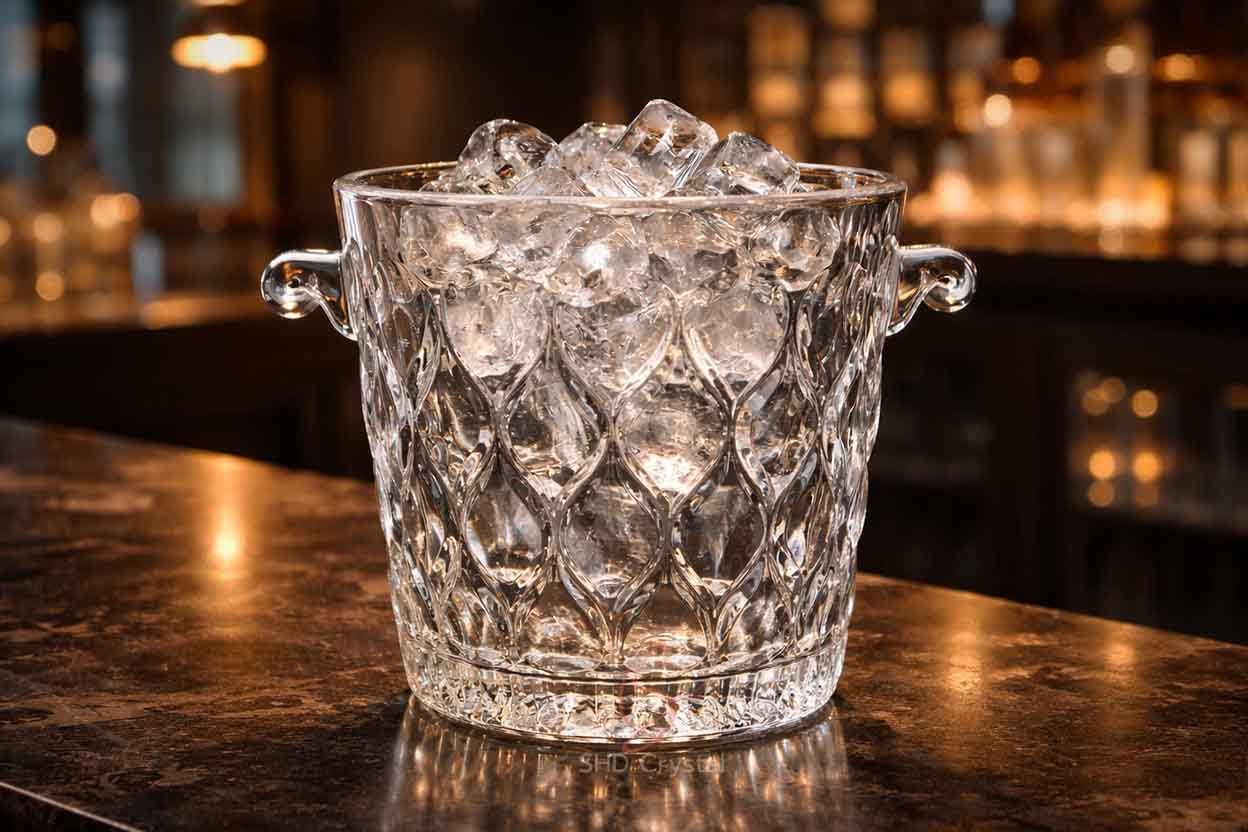
These cuts are not decorative alone. Each facet interacts with light differently, breaking reflections into smaller highlights. When ice is placed inside, this effect becomes more pronounced. The transparency of the material allows internal reflections to merge with external cuts, creating depth that smooth glass cannot achieve.
Unlike flat or polished surfaces, this type of crystal glass cutting introduces controlled irregularity—giving the bucket a sense of movement even when it is static.
The Functional Role of Structure In Ice Handling
From a practical standpoint, the structure of the bucket directly affects usability. A well-balanced form ensures that the bucket remains stable even when partially filled or frequently handled.
The thickness of the glass plays a role in maintaining temperature, slowing down the melting process of ice for cooling. At the same time, the textured exterior reduces direct contact area, making it easier to handle even when condensation forms.
In environments such as bars or hospitality settings, where speed and repetition are important, these details contribute to both efficiency and user comfort.
Where These Buckets Create The Strongest Impact
Water droplet cut buckets are particularly effective in environments where visual layering matters. In dimly lit bars, they catch and scatter light from surrounding sources. In bright dining settings, they create contrast against smooth table surfaces and polished glassware.
Because of their structure, they integrate naturally with different types of party drinkware and serving elements. The presence of ice for cooling inside the bucket becomes part of the visual composition rather than an afterthought.
This makes them suitable not only for functional use, but also as a subtle centerpiece within a table arrangement.
Common Misunderstandings About Cut Crystal Ice Buckets
A common misconception is that heavily cut surfaces make glass more fragile. In reality, properly executed crystal glass cutting works within controlled depth limits, ensuring that structural integrity is maintained.
Another misunderstanding is that textured surfaces are harder to maintain. In practice, the patterning helps disguise minor water marks and fingerprints, making the bucket appear cleaner during active use.
Some buyers also assume that all cut patterns perform the same. However, the geometry of water droplet cut buckets is specifically designed to enhance light interaction, which is not always the case with generic patterns.
Practical Considerations When Sourcing Ice Buckets
When selecting water droplet cut buckets, attention should be given to both form and finishing. The clarity of the material determines how well the pattern interacts with light, while the precision of crystal glass cutting affects both appearance and durability.
It is also important to consider how the bucket will be used. In high-frequency environments, handling comfort and stability become more important than purely visual features. For residential use, the emphasis may shift toward aesthetic integration.
In either case, the goal is to ensure that the bucket performs consistently while enhancing the experience of ice for cooling in real use.
Conclusion
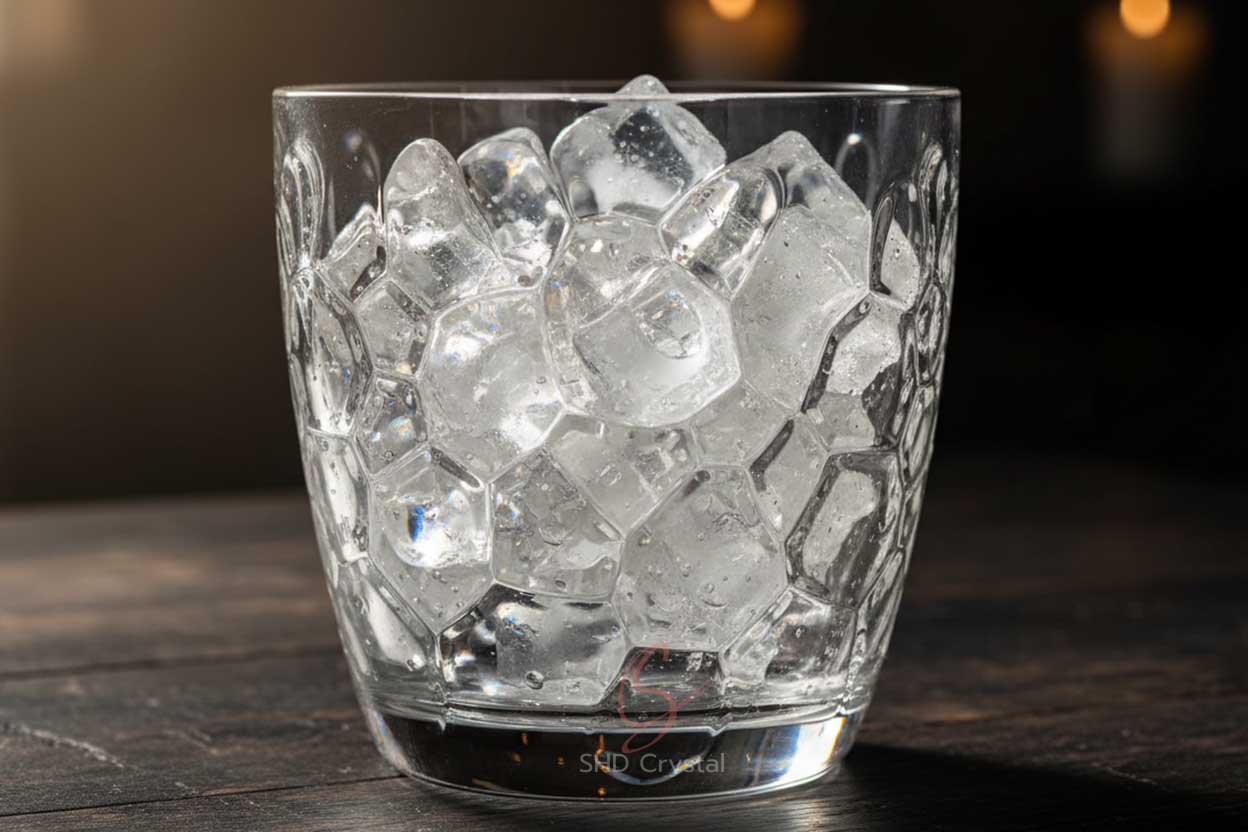
Water droplet cut buckets redefine the role of an ice container by combining structure, light interaction, and practical usability. Through precise crystal glass cutting and thoughtful design, they transform ice for cooling into a visually integrated part of the table experience.
When Ice Presentation Becomes Part Of The Experience
At SHD Crystal, producing water droplet cut buckets is not only about surface patterning—it is about aligning glass forming, cutting, and finishing into a controlled workflow.
With a dedicated glass shaping and processing team, along with experienced glass blowing craftsmen, SHD Crystal develops ice buckets that balance structural stability with expressive surface detail. From forming the base shape to executing precise crystal glass cutting, each stage is managed to ensure consistency across production.
This integrated approach allows us to support customized ice bucket designs while maintaining reliable quality, helping clients create products that perform both visually and functionally in real-world applications involving ice for cooling.