
Blogpost keywords: palace style glass lamp shades manufacturers, monumental styling, ornate profile engineering
Some lighting fixtures illuminate a room. Palace-style lighting was designed to dominate it. Long before modern minimalism reduced lighting to clean lines and hidden LEDs, ceremonial interiors relied on glass, metal, and reflection to establish hierarchy inside the space itself. Chandeliers were not treated as functional objects suspended from ceilings. They behaved more like illuminated architecture — layered, ornamental, and visually commanding from every angle within the room.
This is why palace style glass lamp shades manufacturers work within a very different design language from ordinary decorative lighting production. The glass is not simply intended to diffuse brightness. It must carry visual authority equal to the surrounding fixture structure. If the shade lacks depth, weight, or contour rhythm, even heavily ornamented chandeliers begin feeling visually incomplete.
Monumental Styling Depends on Contour Before Decoration
People often assume palace-style lighting becomes luxurious through decoration alone. In reality, the silhouette establishes the emotional impact long before etched patterns, gilding, or metalwork are even noticed. Expanded shoulders, layered flare transitions, deeply weighted lower bodies, and sculptural rim shaping all contribute to monumental styling by controlling how visual mass spreads throughout the fixture.
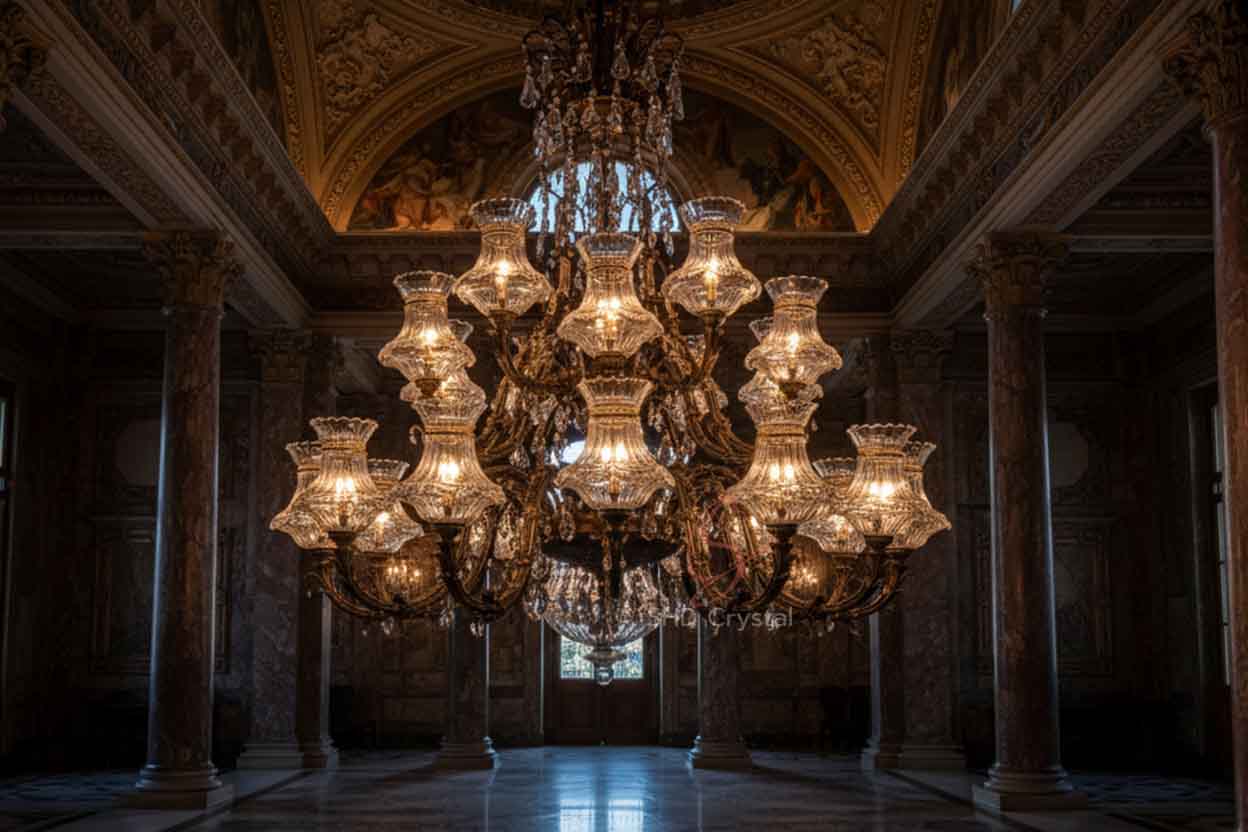
A narrow or visually thin shade immediately weakens the ceremonial atmosphere of heritage lighting, regardless of decorative detail. This is why palace style glass lamp shades manufacturers spend so much attention refining contour progression rather than relying purely on ornament. The profile itself must already feel architectural before decoration begins.
Ornate Profile Engineering Shapes Light Like Sculpture
Palace-style glass behaves differently from contemporary lighting glass. Modern shades often prioritize uniform illumination and visual restraint. Heritage-inspired palace lighting depends on controlled drama instead. Light moves through thick contour transitions, layered curves, and deeply sculpted glass surfaces in ways that create shadow density as much as brightness.
This is where ornate profile engineering becomes central to the final atmosphere of the fixture. A heavily flared lower body may create softer ambient glow beneath the chandelier while preserving darker architectural shadow above. Deep stepped contours generate layered reflections across gilded metal arms and surrounding marble interiors. Even rim thickness changes how visually heavy the fixture feels once illuminated. The glass begins functioning less like a lampshade and more like illuminated decorative sculpture.
Decorative Weight Matters More Than Physical Size
Large lighting does not automatically feel luxurious. Some oversized chandeliers still appear visually hollow because the glass lacks structural richness. Palace-style fixtures achieve stronger decorative authority through density of form rather than scale alone. This is one reason monumental styling often relies on compressed massing, expanded curvature, and repeated layered geometry instead of exaggerated dimensions.
A properly proportioned palace glass shade can feel visually heavier and more ceremonial than much larger contemporary forms simply because the contour carries stronger sculptural tension. The eye reads decorative weight emotionally rather than mathematically.
Heritage Lighting Depends on Repetition Discipline
One of the hidden challenges in palace-style lighting is consistency. A chandelier may contain dozens of repeated glass components viewed simultaneously beneath strong illumination. Even minor variation in contour sharpness, flare depth, or rim balance becomes highly visible once the entire fixture is assembled.
For palace style glass lamp shades manufacturers, this means ornamental complexity actually increases production sensitivity. The more sculptural the profile becomes, the more carefully repeatability must be controlled to preserve visual rhythm across the fixture.
Without this discipline, the chandelier loses coherence and begins feeling visually unstable. True luxury heritage lighting depends heavily on repetition precision hidden beneath decorative richness.
Why Palace Lighting Still Feels Emotionally Powerful
Many contemporary interiors prioritize calmness and reduction. Palace-style lighting operates through the opposite philosophy. It creates atmosphere through abundance, layered ornament, reflective density, and ceremonial visual hierarchy. The chandelier becomes a focal object that intentionally reshapes the emotional scale of the room itself. This explains why heritage-inspired lighting continues returning within luxury hospitality interiors, grand residences, ceremonial halls, and collector-oriented spaces seeking stronger decorative identity.
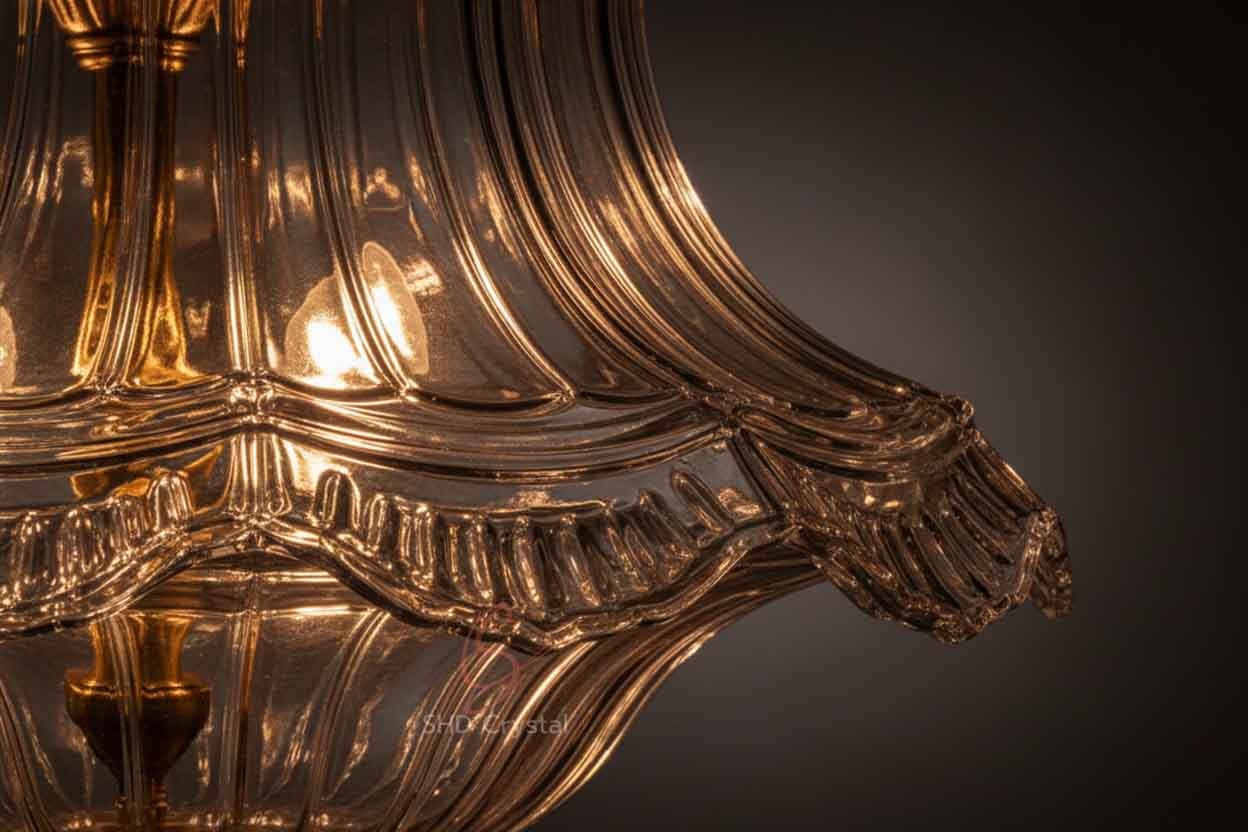
The glass contributes not just illumination, but emotional gravity.
Conclusion
Palace style glass lamp shades manufacturers shape more than decorative lighting components alone. Through monumental styling, ornate profile engineering, and sculptural contour refinement, palace-style glass shades continue defining heritage lighting through visual authority, layered reflection, and ceremonial architectural presence rather than illumination alone.
Heritage Glass Shades Developed Through Sculptural Contour and Decorative Weight
At SHD Crystal, we approach palace style glass lamp shades manufacturers projects through monumental styling, sculptural contour layering, and ornate profile engineering rather than ordinary lighting production alone. Our heritage lighting glass development process focuses on decorative mass distribution, reflective contour rhythm, and ceremonial silhouette refinement to preserve authentic palace-inspired atmosphere across luxury fixtures.
Through blown ornamental glass shaping, layered flare progression, decorative rim refinement, and heritage contour balancing, we support lighting collections seeking palace-style glass shades with long-term architectural presence and collectible decorative identity.