
Blogpost keywords: wash basin processing, flow path engineering, surface tension calibration
Wash basin processing driven by flow path engineering and surface tension calibration for stable shaping and refined glass performance.
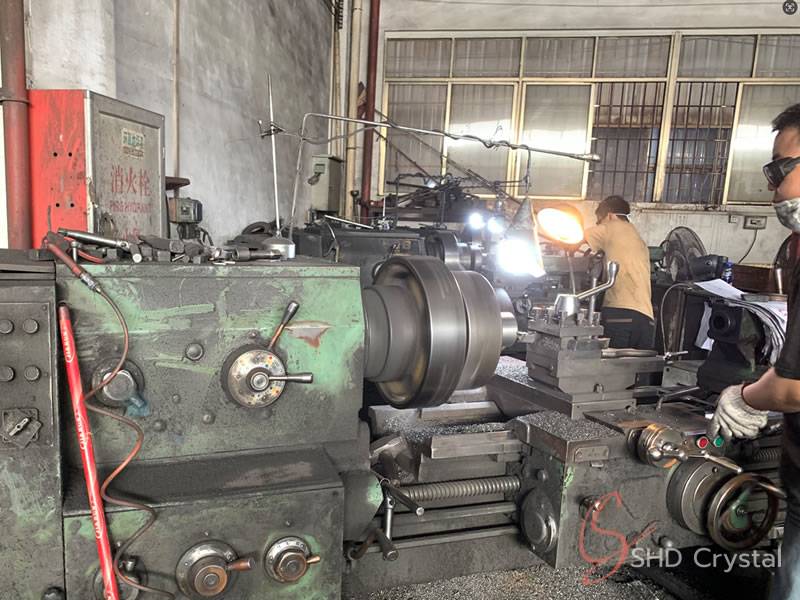
A Different Perspective on Wash Basin Processing
Wash basin processing in glass manufacturing is not just about shaping a product—it is about directing how material behaves under controlled conditions. Unlike rigid materials, glass responds to gravity, internal cohesion, and temperature in ways that require strategic guidance rather than force.
Modern wash basin processing focuses on understanding how molten material moves and stabilizes. Manufacturers that apply flow path engineering and precise surface tension calibration are able to produce basins with balanced geometry, clean surfaces, and predictable performance.
This approach transforms production into a study of movement and control rather than static forming.
Guiding Material Through Flow Paths
In glass-based wash basin processing, the material does not simply fill a shape—it travels through it. The way glass flows during forming determines thickness distribution, symmetry, and structural balance.
Through flow path engineering, manufacturers design how molten glass moves during shaping. This includes controlling entry points, directional flow, and settling behavior.
Instead of relying on external pressure alone, the process allows the material to distribute itself naturally along predefined paths.
This results in more uniform structures, especially in basins with curved or asymmetrical designs.
Controlling Surface Behavior During Formation
Surface quality begins forming long before polishing. In wash basin processing, the behavior of the surface is influenced by how the material interacts with itself during shaping.
With surface tension calibration, manufacturers adjust conditions so that the glass surface stabilizes smoothly as it forms. Proper calibration reduces irregularities such as waviness or micro-distortion.
This is particularly important for transparent or reflective basins, where even small surface variations can become visible.
By managing surface behavior early, manufacturers reduce the need for corrective finishing later.
Balancing Movement and Stability
A key challenge in wash basin processing is balancing fluid movement with structural stability. If the material moves too freely, it may lose its intended shape. If it is too restricted, internal stress may develop.
Through coordinated use of flow path engineering, the material is guided into position without excessive force.
At the same time, surface tension calibration helps stabilize the outer layer, allowing the basin to retain its form as it transitions toward solidification.
This balance ensures that both internal structure and external appearance remain consistent.
From Formation to Functional Surface
Once the basin shape is established, its usability depends heavily on surface behavior. In wash basin processing, the goal is not only visual clarity but also functional performance.
A well-calibrated surface supports smooth water movement, reducing splashing and improving drainage.
Through surface tension calibration, manufacturers influence how water interacts with the basin, affecting cleaning efficiency and long-term maintenance.
Meanwhile, flow path engineering ensures that the internal geometry supports this functionality.
Together, these factors enhance both user experience and durability.
Addressing Subtle Production Variations
Glass production is sensitive to minor variations that can have significant effects. In wash basin processing, even small deviations in flow or surface conditions can lead to inconsistencies.
Without proper flow path engineering, material distribution may become uneven, affecting structural balance.
Without accurate surface tension calibration, surface irregularities may develop, impacting both appearance and performance.
Managing these variables requires continuous observation and fine adjustment throughout production.
Application in Contemporary Design Manufacturing
Advanced wash basin processing techniques are increasingly applied in projects where both design and performance are critical.
In residential spaces, glass basins are used to create clean, modern aesthetics with strong visual clarity.
In commercial environments, consistent functionality across multiple units is essential.
Through controlled flow path engineering, manufacturers ensure repeatable shaping, while surface tension calibration enhances usability and surface stability.
This approach supports both customization and scalable production.
Conclusion
Wash basin processing in glass manufacturing is best understood as a system of guided material behavior. By applying flow path engineering and precise surface tension calibration, manufacturers can produce basins that achieve both structural balance and refined surface performance. This method ensures consistent quality while supporting increasingly complex design requirements.
Advancing Wash Basin Processing Techniques
For manufacturers seeking to improve wash basin processing, focusing on material flow and surface behavior offers a clear path forward. Facilities that refine flow path engineering and strengthen surface tension calibration can reduce variability, enhance product quality, and expand design possibilities. This positions them to meet the evolving demands of modern glass basin production.