Blogpost keywords: whiskey glass OEM, custom whiskey glasses, lead-free crystal glassware
At SHD Crystal, many whiskey glass projects begin the same way. A client sends several reference images and asks for something “premium,” but after deeper discussion, we usually find the real requirement is much more specific. Some brands want a heavier base for gifting. Others need a thinner rim for hospitality use. Some prioritize freight efficiency, while others care more about visual identity for e-commerce photography.
This is why whiskey glass OEM development is rarely just about producing a drinking glass. The real work is balancing appearance, hand feel, manufacturing method, packaging structure, and market positioning into one stable product solution.
Why Whiskey Glass OEM Decisions Should Start With Market Positioning
Many buyers initially focus only on shape selection. In practice, the intended sales channel often matters more. For example, custom whiskey glasses developed for hotel projects usually prioritize stack safety, stable dimensions, and repeated-use durability. E-commerce brands often focus more heavily on presentation, gift packaging, and visual impact during unboxing. Retail-oriented collections may require multiple capacities or coordinated barware sets built around the same design language.
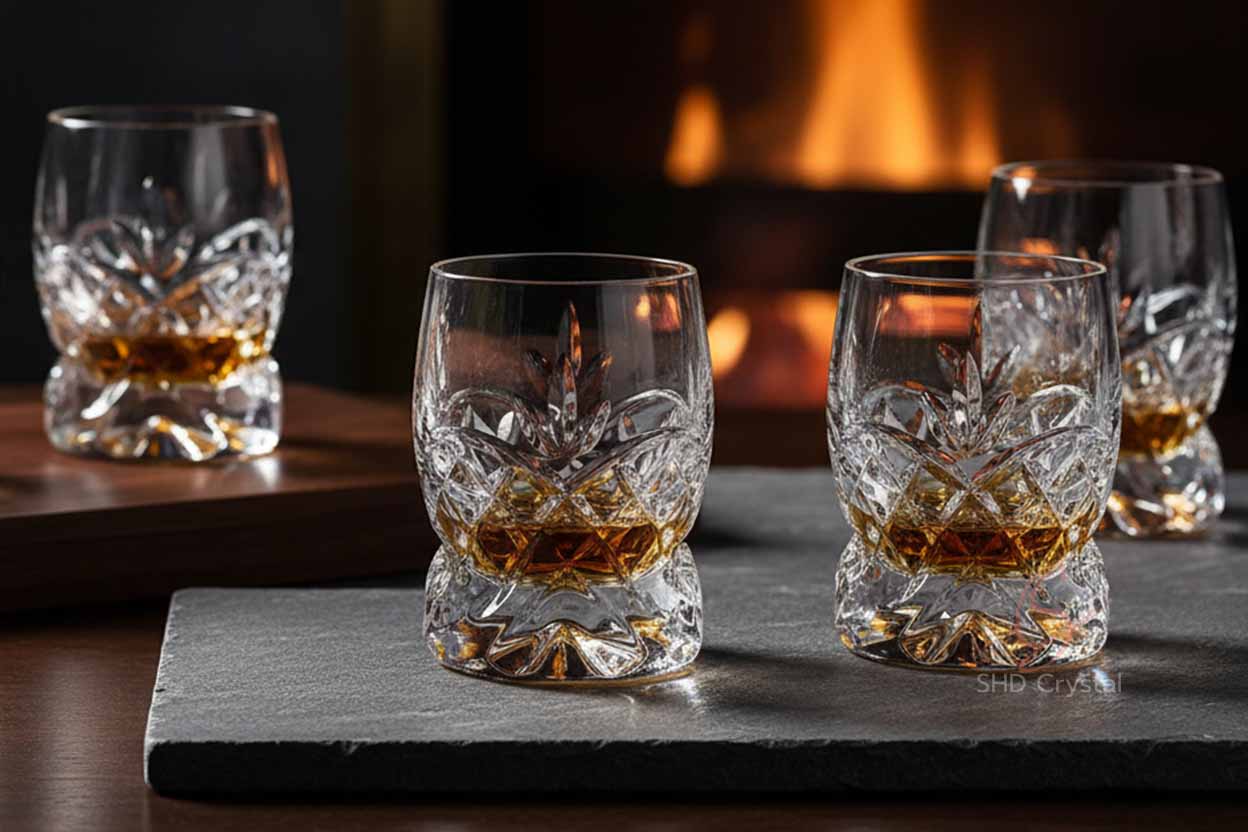
Because of this, we usually begin each whiskey glass OEM discussion by clarifying where and how the product will actually be sold.
Existing Mold or New Mold?
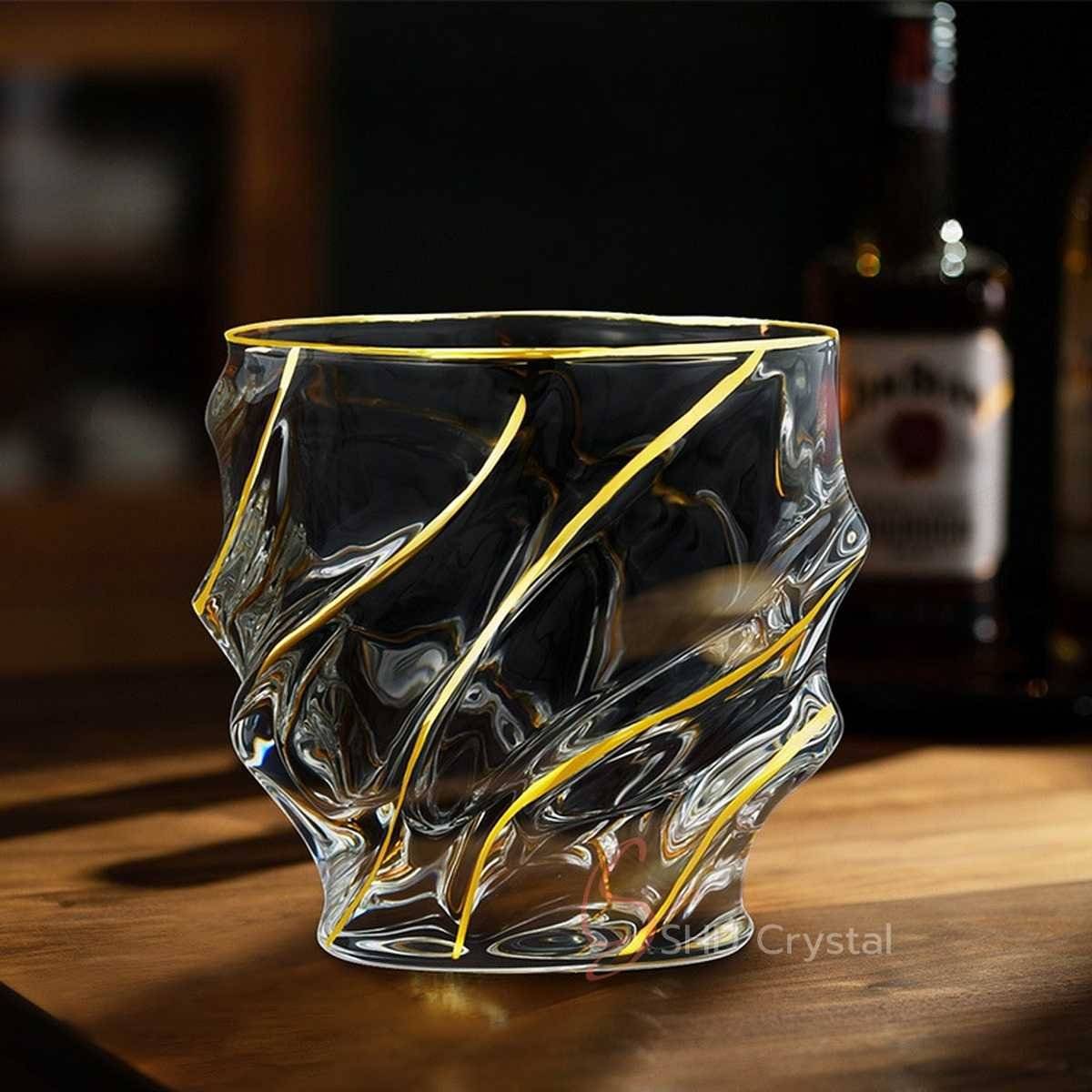
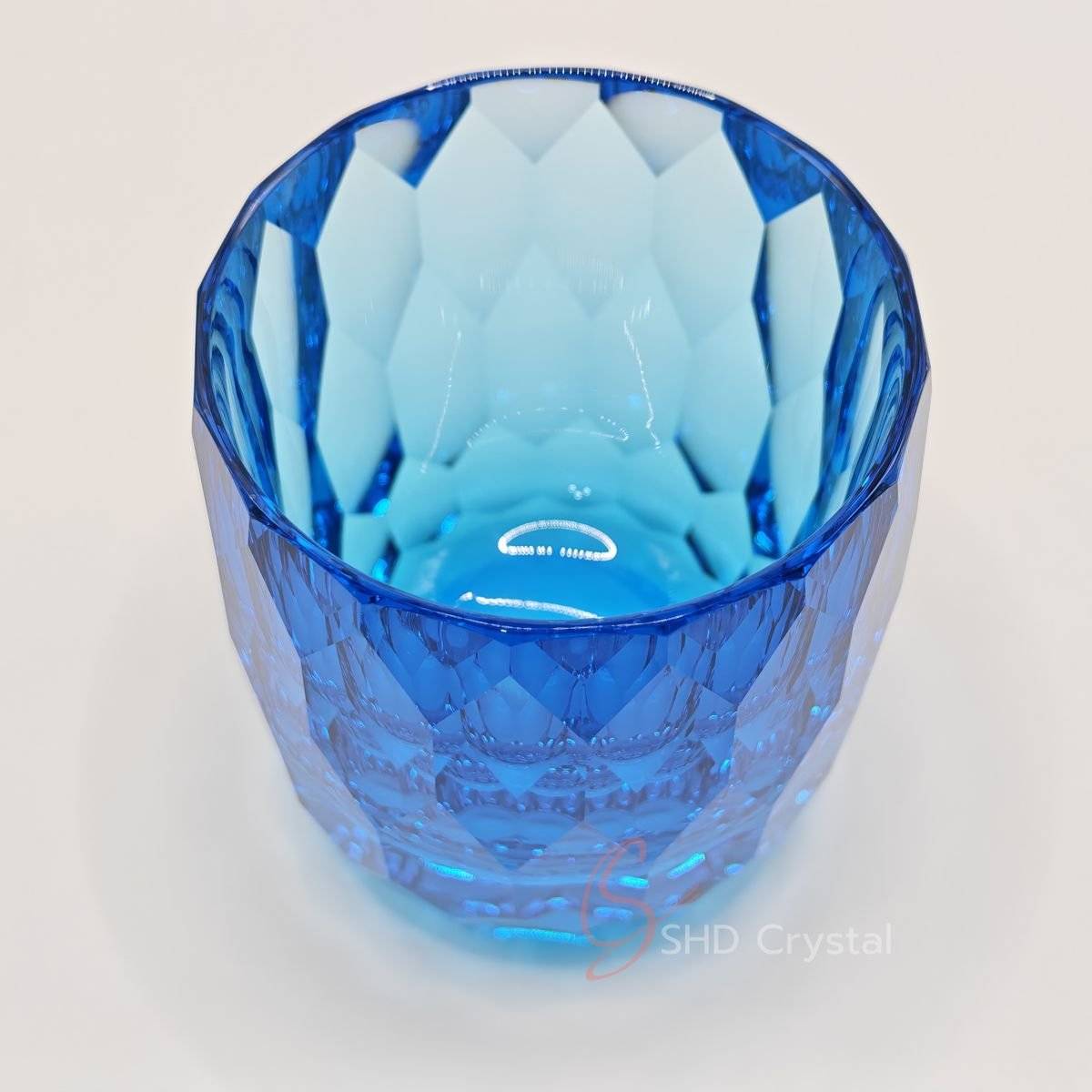
One of the most common questions clients ask is whether they should invest in a completely custom mold immediately. In many projects, we actually recommend starting from an adjusted existing mold first. A well-selected base shape combined with customized engraving, color spray, electroplated detailing, or upgraded packaging can often create a strong product identity without the lead time and tooling cost of a fully new structure. For growing brands entering the market with lead-free crystal glassware, this approach usually reduces risk while still leaving room for future collection expansion.
However, when a client wants a truly recognizable silhouette or sculptural heavy-base structure, a dedicated mold becomes much more valuable. In these cases, wall transition, bottom proportion, and optical behavior all need to be developed specifically around the intended design direction.
Weight Distribution Changes the Entire User Experience
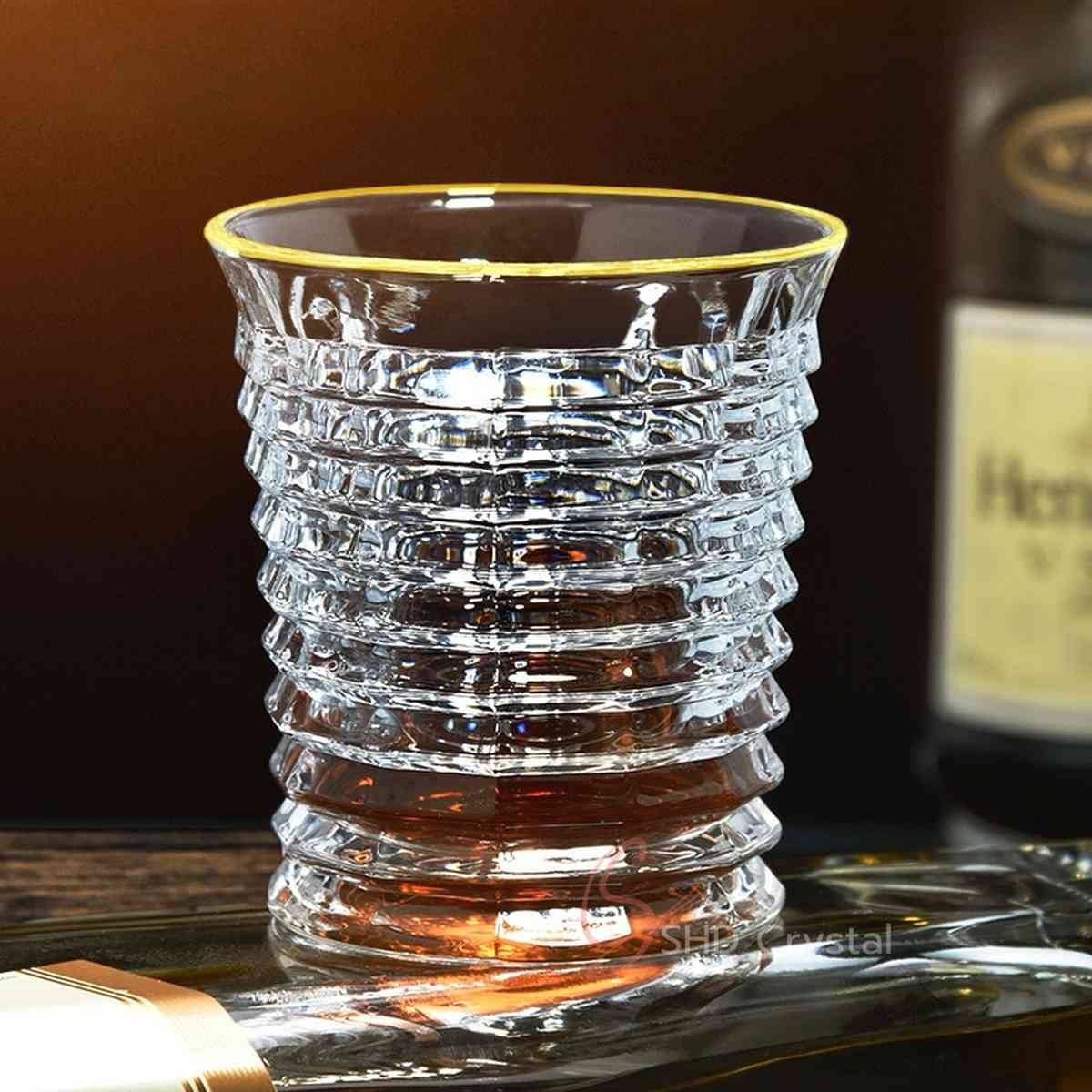
A surprising number of whiskey glasses look similar online but feel completely different in hand. Some low-cost tumblers rely on excessive base thickness to simulate quality. The result often feels bulky rather than refined. In our experience, successful custom whiskey glasses usually depend on controlled weight distribution instead of simple heaviness.
We pay close attention to how the glass balances when lifted, how the rim feels during drinking, and how reflections behave through the base under warm bar lighting. Small adjustments in wall thickness or bottom curvature can significantly change the perceived quality of the finished product. This becomes especially important for premium lead-free crystal glassware, where transparency and optical depth naturally draw more attention to structural details.
Packaging Problems Often Cost More Than Production Problems
Another issue many buyers underestimate is packaging. We have seen projects where the glass itself performed well, but weak dividers or thin export cartons created avoidable breakage during shipment. For brands selling online, packaging also influences customer perception before the product is even touched.
This is why our whiskey glass OEM projects usually include packaging review together with product sampling. Depending on the market, we may recommend thicker pearl cotton protection, magnetic gift boxes, drop-test-oriented carton structures, or custom insert layouts designed around heavier crystal bases. Good packaging should support the identity of the glass rather than function as an afterthought.
Why Lead-Free Crystal Glassware Continues to Dominate Premium Programs
Most modern premium whiskey programs now prefer lead-free crystal glassware because it provides strong clarity while supporting cleaner international market positioning. At the same time, material alone does not guarantee a premium result. Mold polishing quality, annealing stability, rim finishing, and consistency between batches all influence how the product finally performs in real hospitality or retail environments. This is why sample review remains critical even when the material specification appears correct on paper.
Conclusion
A successful whiskey glass OEM project depends on much more than selecting a visually attractive tumbler. The strongest results come from balancing product identity, ergonomic comfort, packaging reliability, optical clarity, and realistic market positioning throughout the entire development process.
Supporting Custom Whiskey Glass Development
At SHD Crystal, we support OEM barware projects through mold development, heavy-base crystal forming, hand-finished detailing, engraving customization, packaging engineering, and export-oriented production management. For brands developing custom whiskey glasses and premium lead-free crystal glassware, our team focuses on creating products that feel commercially distinctive while remaining stable for long-term retail, hospitality, and gifting programs.