
Blogpost keywords: custom high-end perfume bottle OEM, luxury perfume bottle manufacturing, cosmetic glass packaging OEM
A successful fragrance package begins long before glass enters a mold. Behind every distinctive bottle on a retail shelf is a development process that balances design ambition, manufacturing feasibility, and production consistency. This is where a custom high-end perfume bottle OEM becomes an essential partner rather than simply a supplier.
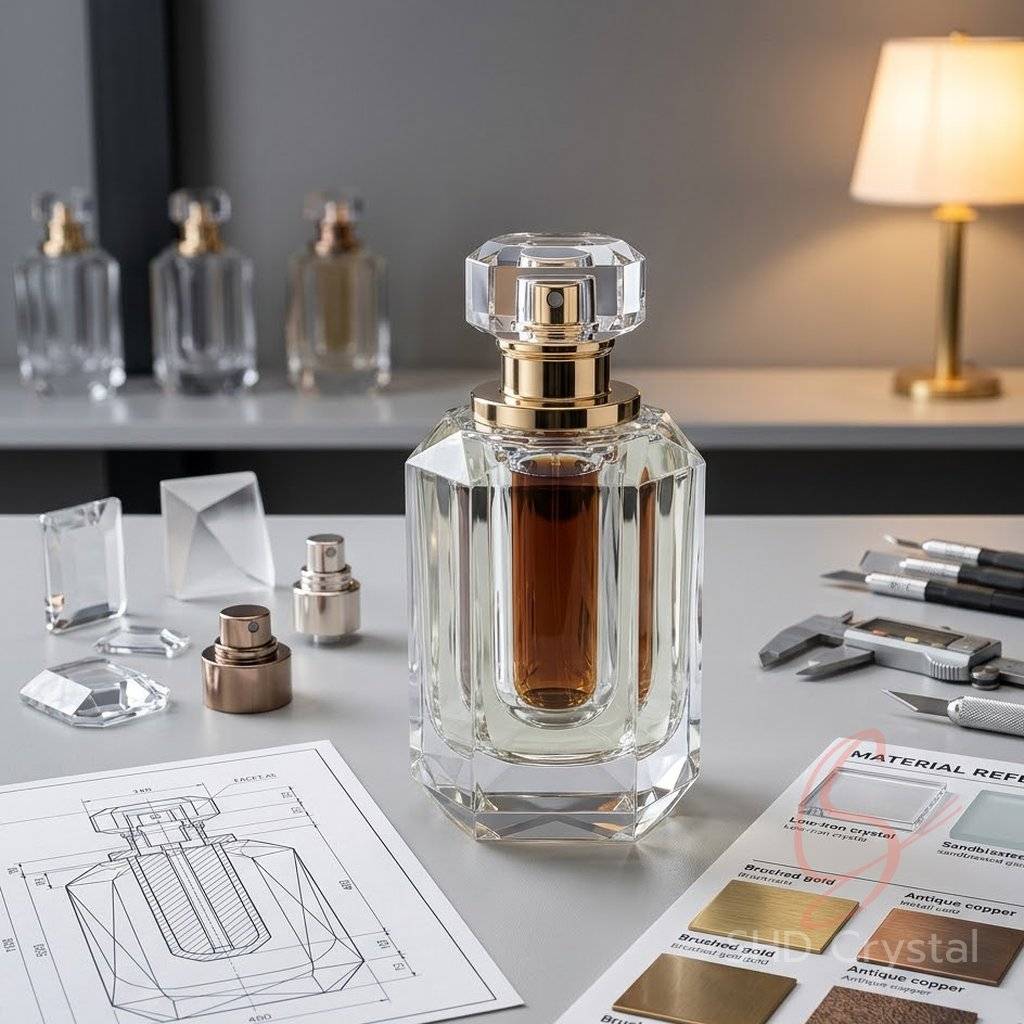
Luxury fragrance brands often begin with a visual concept intended to communicate identity, positioning, and consumer perception. However, transforming that concept into a manufacturable product requires careful evaluation of glass behavior, decoration techniques, dimensional accuracy, and large-scale production requirements. The challenge is not creating one beautiful bottle. The challenge is producing thousands of identical bottles that consistently represent the same design intent.
How A Custom High-End Perfume Bottle OEM Evaluates New Designs
Before tooling begins, a custom high-end perfume bottle OEM typically evaluates whether a design can move efficiently from concept to production.
At this stage, engineers review factors such as bottle geometry, wall thickness distribution, neck dimensions, closure compatibility, and decorative requirements. Certain design elements that appear visually appealing in a rendering may introduce production challenges when translated into glass.
Sharp transitions, deep embossing, dramatic asymmetry, or complex surface structures can affect forming behavior and cooling performance. Early evaluation helps identify potential issues before development costs increase.
For brands planning long-term product launches, this stage often determines how smoothly the project progresses through future production phases.
Key Factors Evaluated Before Tooling
Several factors influence development feasibility:
- Bottle geometry and structural balance
- Wall thickness transition
- Decoration and finishing requirements
- Pump and closure compatibility
- Production volume expectations
- Mold complexity
- Cooling and annealing behavior
- Long-term batch consistency requirements
Evaluating these factors together allows development teams to make informed decisions before manufacturing begins.
Turning Design Concepts Into Physical Samples
Once the design is approved for development, prototype creation becomes the next critical milestone. In luxury perfume bottle manufacturing, prototypes serve multiple purposes. They verify proportions, confirm decorative effects, evaluate filling compatibility, and provide a physical reference for stakeholder review.
At this stage, even small dimensional adjustments can significantly improve manufacturability. A slight modification to shoulder curvature, neck geometry, or wall thickness distribution may enhance forming stability without altering the overall visual identity of the bottle. This collaborative refinement process helps reduce risk before production tooling is finalized.
Manufacturing Variables That Influence Bottle Quality
Many buyers focus primarily on appearance when evaluating fragrance packaging. While aesthetics remain important, manufacturing variables often determine whether quality can be maintained consistently across large production runs.
Forming temperature is one such variable. If glass viscosity fluctuates during forming, dimensional consistency may become difficult to maintain. Mold tolerance is equally important because even minor deviations can affect symmetry and visual balance.
Annealing behavior also plays a critical role. During cooling, residual stress can develop within the glass structure. Controlled annealing gradually releases this stress, helping improve structural stability and reducing the likelihood of performance issues later in the product lifecycle.
These variables are fundamental to both luxury perfume bottle manufacturing and long-term production reliability.
From Decorative Finishing To Retail Presentation
After forming, bottles move through various finishing stages depending on project requirements.
These may include frosting, coating, spraying, polishing, engraving, hot stamping, screen printing, or decorative metal component integration. While often viewed as aesthetic enhancements, these processes introduce additional production variables that require careful management.
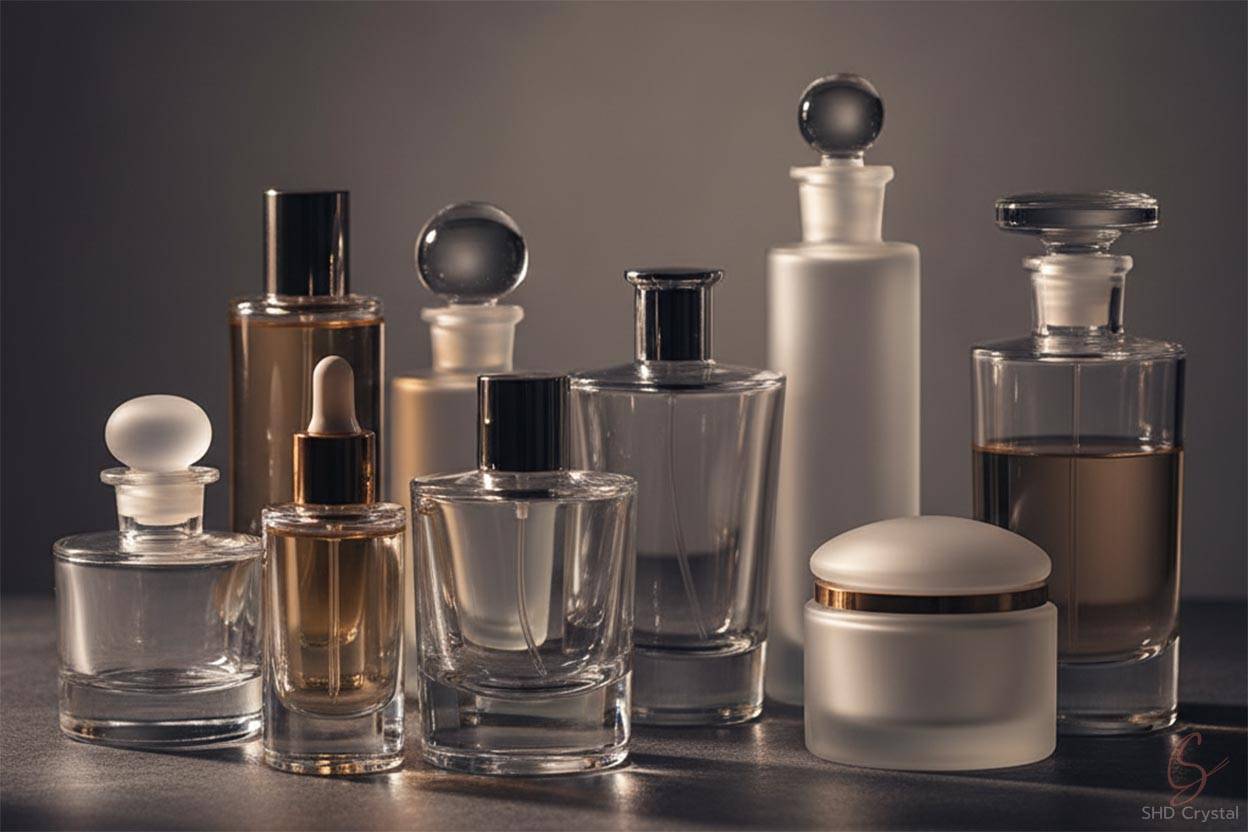
In cosmetic glass packaging OEM projects, maintaining consistency during finishing is particularly important because visual variations become highly noticeable when products are displayed together on retail shelves. For this reason, inspection checkpoints are commonly integrated throughout the finishing workflow to monitor appearance, dimensional accuracy, and decoration quality.
From A Manufacturing Perspective
One reality of perfume bottle development is that initial designs often evolve during the prototyping stage.
A bottle that performs well as a digital rendering may require adjustments once glass behavior is evaluated in production conditions. Small refinements to wall thickness transition, decorative depth, or structural geometry frequently improve production stability without changing the overall design language.
Experienced development teams recognize that successful projects are rarely the result of design alone. They emerge from collaboration between designers, engineers, mold developers, and production specialists who understand both aesthetic goals and manufacturing limitations.
What Buyers Should Consider When Selecting An OEM Partner
When evaluating a custom high-end perfume bottle OEM, buyers may benefit from looking beyond sample appearance alone.
Important considerations often include:
- Prototype development capability
- Mold engineering experience
- Decorative finishing resources
- Production scalability
- Batch consistency management
- Quality-control procedures
- Lead-time planning
- Integration of packaging components
These factors often have a greater impact on long-term project success than the bottle design itself.
Conclusion
A successful custom high-end perfume bottle OEM project is built on more than creative design. It depends on how effectively concepts are translated into manufacturable products through engineering evaluation, prototype refinement, process control, and production consistency. When design objectives align with manufacturing realities, brands are better positioned to achieve both visual distinction and reliable large-scale production.
Supporting Luxury Fragrance Packaging Development
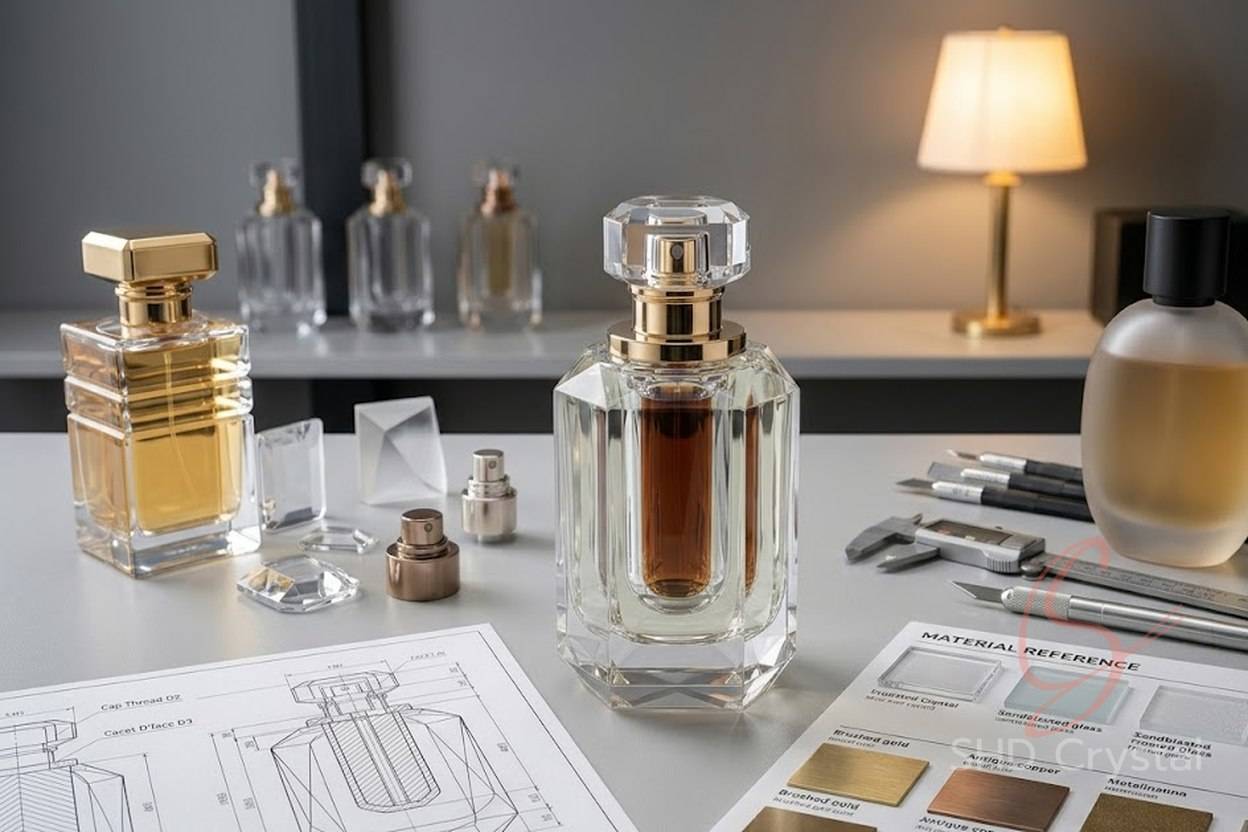
Whether developing a new fragrance collection or expanding an existing product line, a structured development process helps reduce risk throughout production. Through luxury perfume bottle manufacturing expertise and cosmetic glass packaging OEM capabilities, manufacturers can support projects from concept validation and prototype development to decorative finishing and scalable production execution.