
Blogpost keywords: custom glass tableware supplier, custom glass dinnerware, glass tableware manufacturer
Custom glass tableware supplier support for custom glass dinnerware and glass tableware manufacturer projects with forming and finishing control.
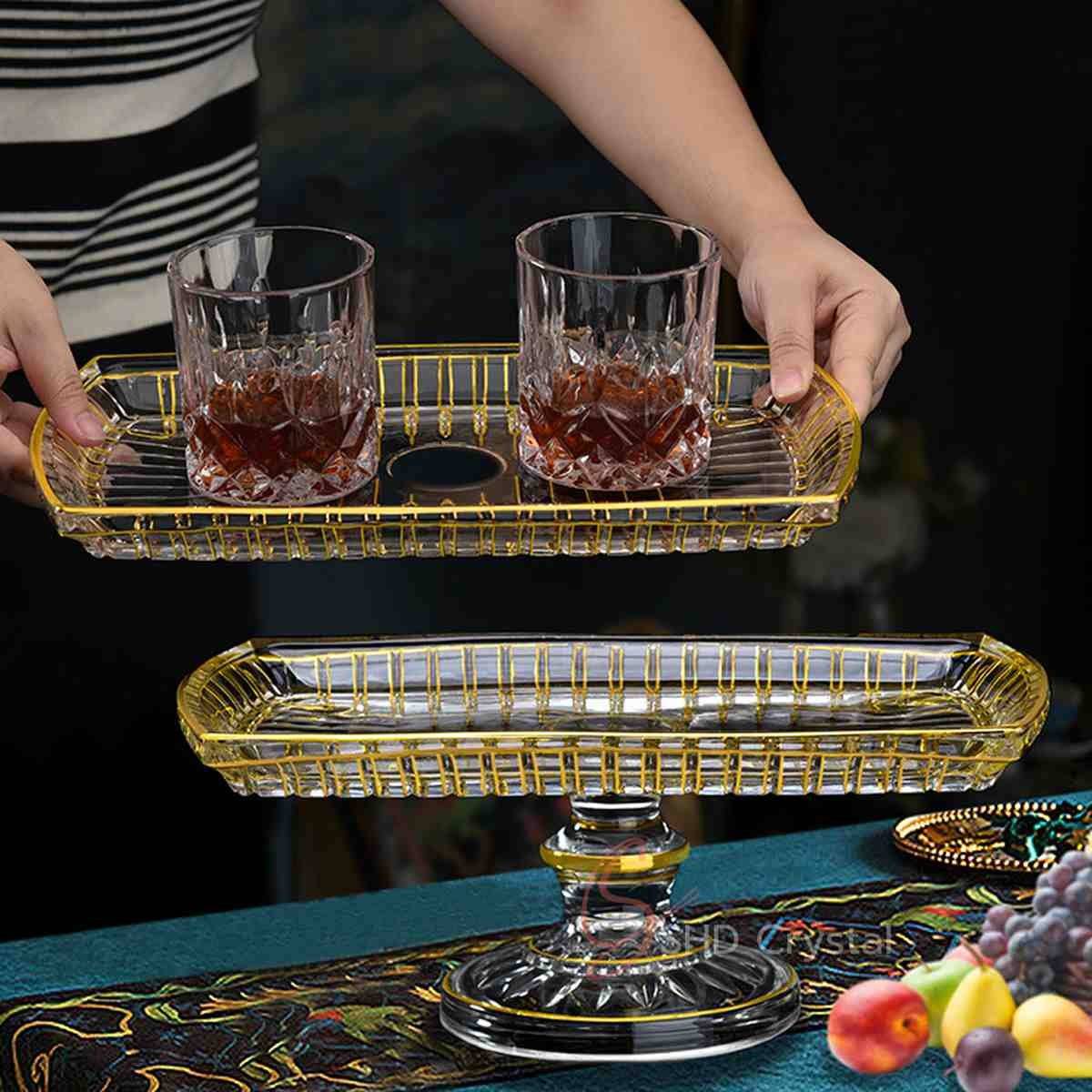
Custom Glass Tableware Supplier for Brand Buyers
Custom glass tableware supplier selection is not only a matter of price, catalog style, or available stock. For tableware brands, hotel buyers, restaurant groups, and giftware companies, the supplier affects product consistency, surface quality, packaging safety, and long-term reorder stability. A plate may look simple. A bowl may seem easy to copy. In real production, glass tableware depends on forming control, annealing behavior, finishing accuracy, and inspection discipline.
Custom Glass Tableware Supplier Evaluation Begins Before Quotation
A serious buyer should evaluate a supplier before asking only for the lowest unit price. The first question is whether the factory understands how the item will be used. A hotel buffet bowl, a retail dinnerware set, a cocktail glass, and a decorative serving tray require different levels of wall thickness, rim strength, base stability, and surface refinement.
For custom glass dinnerware, the early design review should include size tolerance, mold feasibility, edge polishing, stacking behavior, and food contact suitability. These details influence both sample quality and mass production risk. A custom glass tableware supplier with practical manufacturing experience will usually ask about application, quantity, decoration, packaging, and target market before confirming the process route.
Price Should Be Read Together With Process Scope
One common mistake is comparing quotations without checking what each price includes. A lower price may exclude mold adjustment, polishing refinement, color testing, stricter inspection, or stronger export packaging. Another supplier may quote higher because the project includes more stable raw material control, longer annealing time, or more manual finishing.
A glass tableware manufacturer may use pressed forming for plates, trays, bowls, and textured shapes where dimensional repeatability is important. Hand-blown forming may be more suitable for organic silhouettes, softer cup shapes, or artistic collections where slight manual variation is acceptable. The forming method affects not only appearance but also mold tolerance, wall thickness transition, and production speed.
Surface Finish Is Part Of Product Positioning
Surface treatment can strongly change how glass tableware is perceived. Clear polished glass gives a clean and direct table setting. Frosted surfaces soften transparency. Engraving adds brand identity or decorative depth. Color spraying and metallic decoration can create stronger shelf impact, but they also introduce adhesion, abrasion, and washing concerns.
For luxury-oriented custom glass dinnerware, buyers often focus on shine and decoration first. That is understandable. However, daily handling matters. If a gold rim is placed where users frequently touch or wash the product, durability should be discussed early. If a deep texture is too close to a thin edge, polishing pressure may affect the final shape. A reliable custom glass tableware supplier should help connect design choices with practical limits.
Production Control Matters After Sample Approval
A good sample does not automatically guarantee a stable batch. During production, forming temperature, mold condition, annealing schedule, cutting depth, polishing pressure, and manual finishing variation can all influence the final result. For repeat orders, batch consistency becomes even more important.
A glass tableware manufacturer should keep approved samples, define inspection standards, and check key points such as clarity, bubbles, scratches, rim smoothness, base flatness, weight range, and packing safety. For mixed sets, the challenge is greater because plates, bowls, cups, and serving items must look visually related. Color tone, thickness feeling, and surface quality should remain consistent across the collection.
A Better Buying Decision
The best custom glass tableware supplier is not always the one offering the fastest answer or the lowest price. Buyers should look for a partner that can review design feasibility, explain process differences, support sample correction, and control production details. This is especially important when custom glass dinnerware needs to fit both brand appearance and real commercial use.
Conclusion
Custom glass tableware supplier choice directly affects how a tableware idea moves from concept to usable product. When buyers compare process scope, forming method, decoration risk, inspection standards, and packaging design together, they can avoid many avoidable problems and build glass tableware projects with stronger production logic.
Developing Tableware With Practical Factory Support
For brands looking for a custom glass tableware supplier, SHD Crystal can support shape evaluation, forming method selection, surface finishing, sample development, and OEM production planning. From custom tableware sets to decorative serving pieces, the focus is to create glass products that match both brand style and real handling conditions.