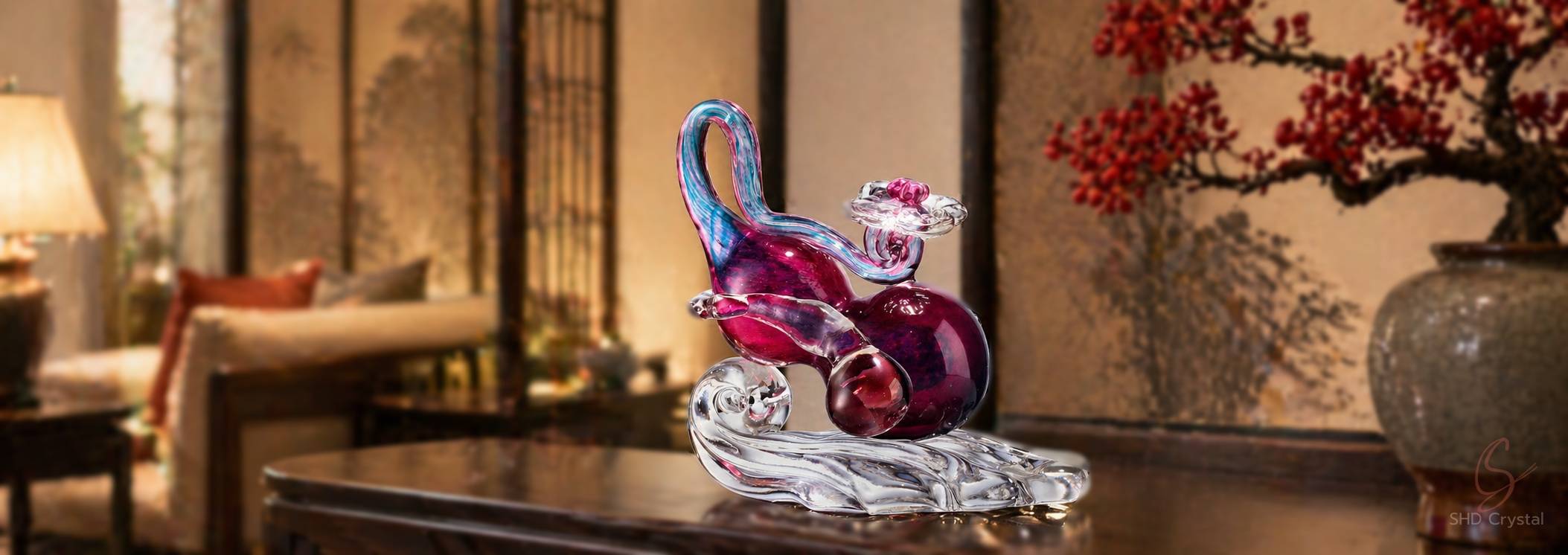
Bohemian crystal history did not begin beneath palace chandeliers. It began in wooded mountain regions, where glass furnaces consumed timber, craftsmen worked far from major cities, and raw materials had to be understood through experience rather than laboratory measurement. The polished goblets, engraved beakers, colored vases, and glittering lighting components now associated with the Czech lands emerged from centuries of difficult material work.
Bohemia was a historical territory within the lands of the Bohemian Crown and today forms a large part of the Czech Republic. Its glass tradition was never confined to a single town or one protected recipe. It developed through a network of forest glasshouses, family workshops, refining studios, schools, merchants, and export centers.
To follow that history is to follow more than a decorative art. It is to watch a regional industry learn how to transform quartz, ash, heat, labor, and light into a cultural identity.
Bohemian Crystal History Began Deep in the Forest
Medieval and early modern glassmaking required enormous quantities of wood. Timber heated the furnaces, while wood ash supplied potassium compounds that helped lower the melting temperature of silica. Glasshouses were therefore often established in wooded regions where fuel and raw materials could be found nearby.
These early workshops produced what is commonly called forest glass. Because the raw materials were not always highly refined, iron impurities could give the glass a greenish or yellowish cast. The vessels were functional rather than perfectly colorless: bottles, drinking glasses, storage containers, and window glass made for local communities and regional trade.
The forest was not merely a scenic background. It was part of the chemical process.
Workers burned wood, gathered the ash, extracted potash, prepared quartz-rich material, maintained the furnace, and shaped the molten glass. A glasshouse could operate only while its supply of fuel remained practical. When nearby forests were depleted, production sometimes moved elsewhere.
This mobile relationship between woodland and furnace helps explain why glassmaking settlements appeared across the Bohemian and Moravian highlands and the mountain regions of northern Bohemia. Long before Bohemian glassware became a fashionable European export, it belonged to a landscape of smoke, timber, carts, sand, and seasonal labor.
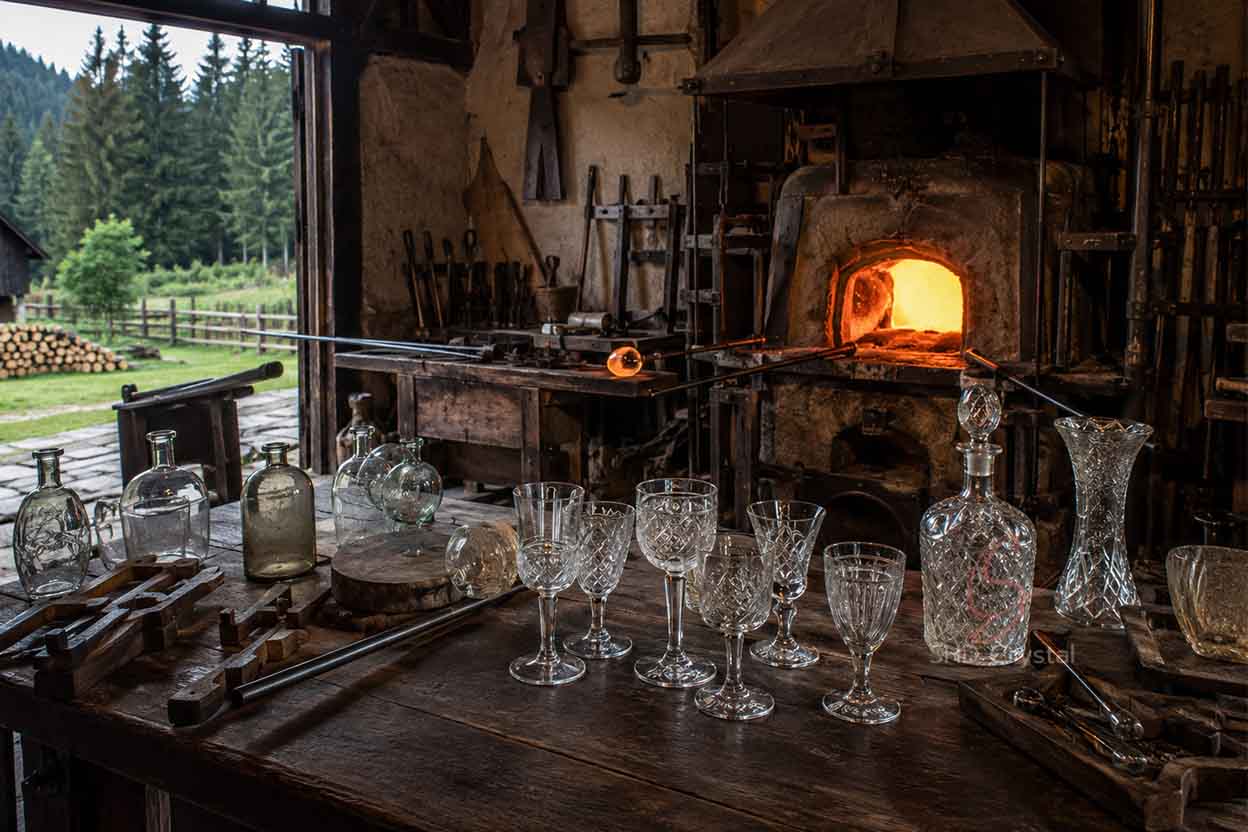
From Green Forest Glass to Clear Bohemian Crystal
By the late 17th century, glassmakers in the region had developed a clearer and more brilliant potash-lime glass. Compared with many earlier forest glasses, this material was harder, more lustrous, and particularly suitable for cutting and copper-wheel engraving. This was a decisive shift in bohemian crystal history.
Venetian glass had long dominated European ideas of refinement. Murano workshops were celebrated for thin walls, elegant profiles, colored glass, filigree decoration, and elaborate hot-working techniques. Venetian-style glass was imitated across Europe under the broad tradition known as façon de Venise.
Bohemian makers did not defeat Venice by producing an identical material. They developed a different language.
The relatively hard Bohemian potash-lime body was well suited to cold decoration after the vessel left the furnace. Instead of relying entirely on delicate blown forms and hot-applied ornament, craftsmen could cut facets into thicker walls or engrave scenes into the surface. The glass became a field for drawing. Leaves, hunting scenes, coats of arms, portraits, buildings, inscriptions, mythological figures, and geometric borders appeared on goblets and beakers. Light no longer passed only through the outline of a vessel. It moved across polished cuts, recessed lines, and engraved images.
The Quiet Room Beyond the Furnace
Popular images of glassmaking usually focus on the furnace. Molten glass glows, blowpipes turn, and the work appears dramatic. Yet much of the identity of Bohemian glassware was created later, in quieter rooms.
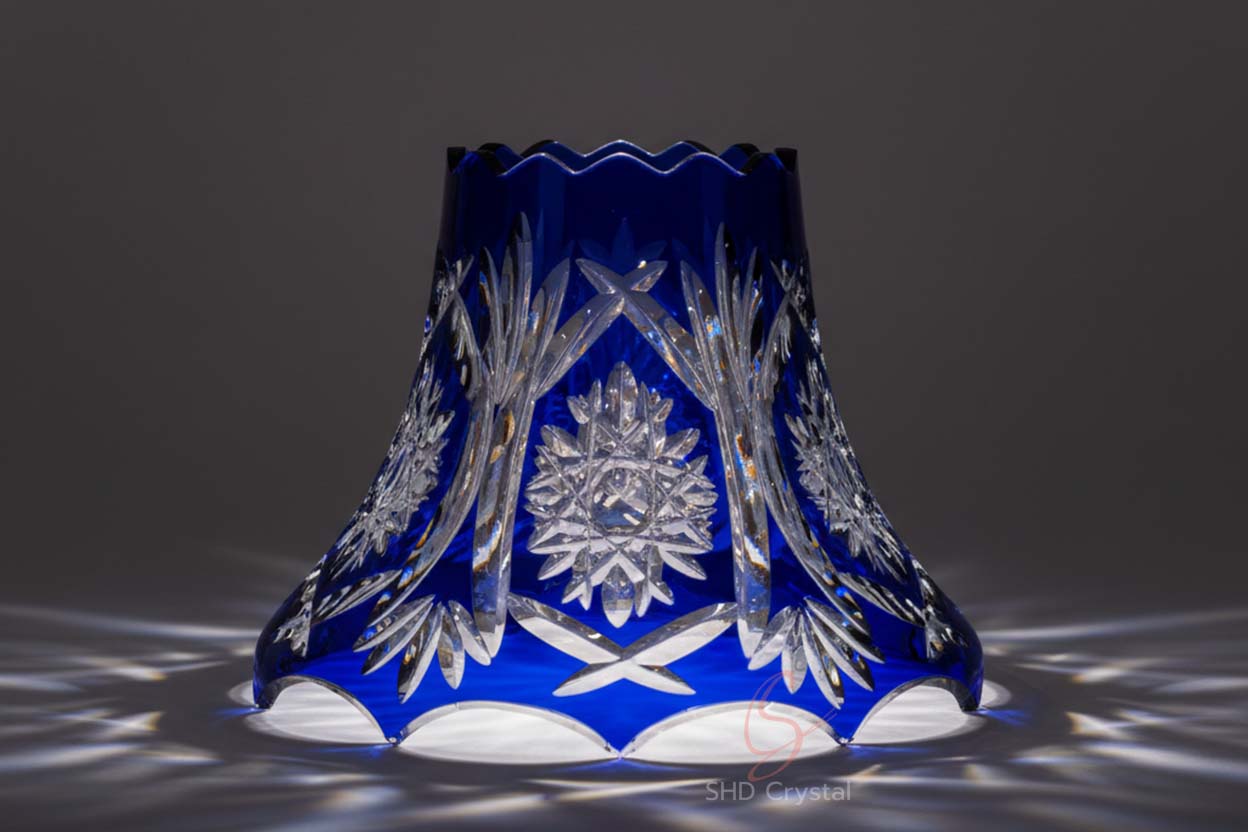
A cutter worked against a rotating wheel, bringing the glass steadily toward its surface. An engraver might use copper wheels of different sizes, together with abrasive compounds, to remove material in controlled layers. Broad wheels shaped larger areas. Fine wheels produced lines, textures, faces, feathers, and lettering.
The process demanded unusual coordination. The craftsman had to think through a transparent surface while controlling pressure against a brittle material. A mistake could not be erased in the way pencil could be rubbed from paper. Removing slightly too much glass could disturb a face, break a border, or weaken the object.
Deep cutting and fine engraving were related but not identical. Cutting emphasized facets, grooves, stars, diamonds, and optical rhythm. Engraving could operate more like illustration, producing scenes whose details became visible through changes in depth and texture.
Viewed under subdued light, an engraved vessel may initially appear restrained. Turn it toward a window, and the image becomes clearer. The artwork depends on movement between glass, light, and observer.
A Drinking Vessel Could Become a Historical Document
Many surviving objects reveal how glass participated in social life. Goblets recorded marriages, military victories, family emblems, occupations, landscapes, and political loyalties. Spa beakers became connected with the culture of European health resorts. Presentation glasses commemorated visits, anniversaries, and professional achievements.
A vessel could therefore serve several roles at once. It was a drinking object, a status symbol, a souvenir, a portrait surface, and a record of an occasion.
Some engraved works display astonishingly detailed narrative scenes. The 19th-century engraver Dominik Biemann became known for portrait and figure engraving that transformed glass surfaces into miniature pictorial worlds. Friedrich Egermann developed influential staining and decorating techniques in northern Bohemia, demonstrating that the region’s reputation did not rest on clear cut glass alone.
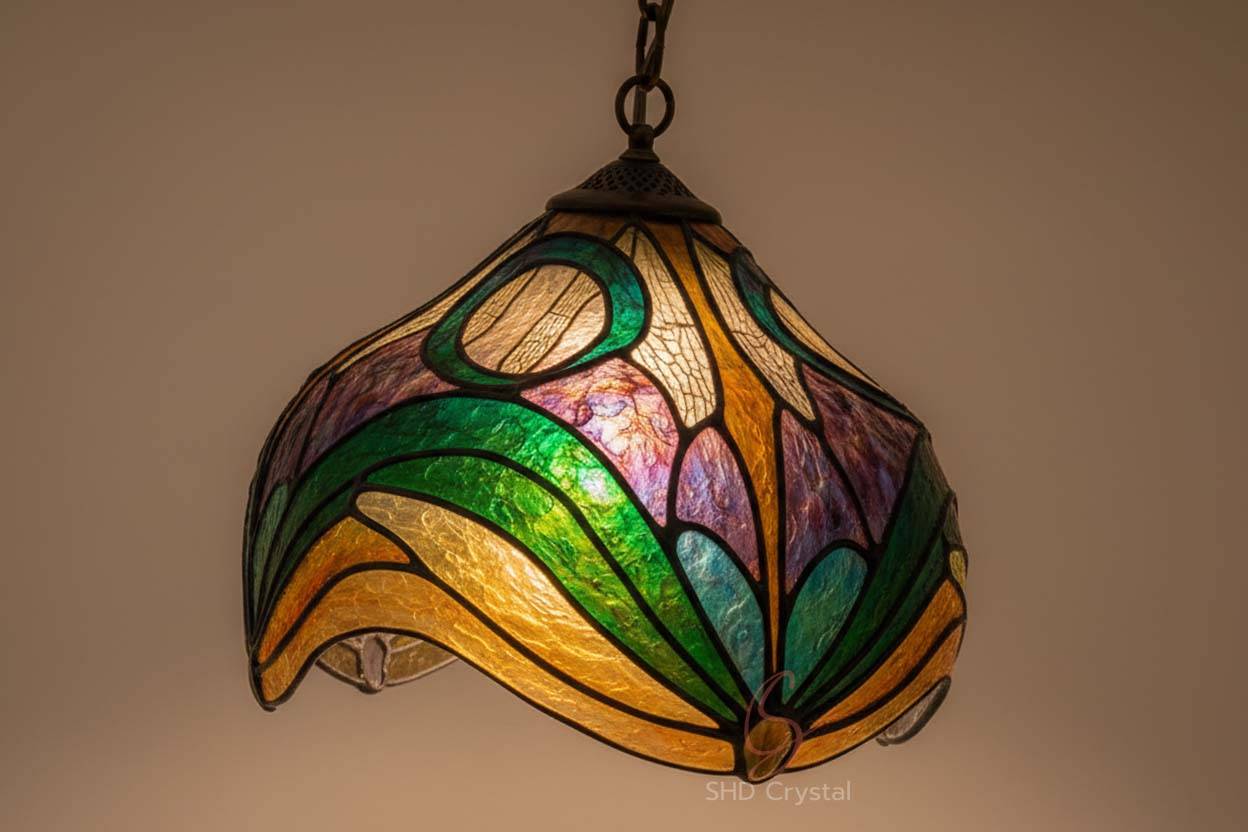
Bohemian glassware could be transparent, painted, enameled, gilded, stained, layered, opaque, or made to resemble stone. The familiar image of a colorless faceted goblet represents only one part of a much wider tradition.
Trade Carried Bohemian Glass Far Beyond Bohemia
A craft becomes a cultural phenomenon not only when objects are made, but when they travel.
Merchants and glass traders carried products from Bohemian workshops into European cities and overseas markets. Production was distributed across a network. One workshop might blow the blank, another cut or engrave it, and another handle painting, gilding, assembly, or sale.
The object’s journey could therefore begin in a rural furnace and pass through several skilled hands before entering a palace, merchant’s house, hotel, or distant retail market.
Northern Bohemian towns became especially important to this system. Nový Bor developed as a major glassmaking and trading center. Kamenický Šenov became closely associated with cutting, engraving, chandelier production, and specialist education. Harrachov maintained a glassworks whose history extends across approximately three centuries, adapting its production through Baroque, Biedermeier, Historicist, Art Nouveau, Art Deco, and modern design periods.
The reputation of Czech crystal glass was not created by one factory. It emerged from the cooperation and competition of many furnaces, refiners, designers, schools, and trading houses.
The 19th Century Turned Glass Into a Laboratory of Color
The 19th century brought industrial growth, expanding international exhibitions, changing middle-class taste, and an appetite for novelty. Bohemian makers responded with technical and visual experimentation.
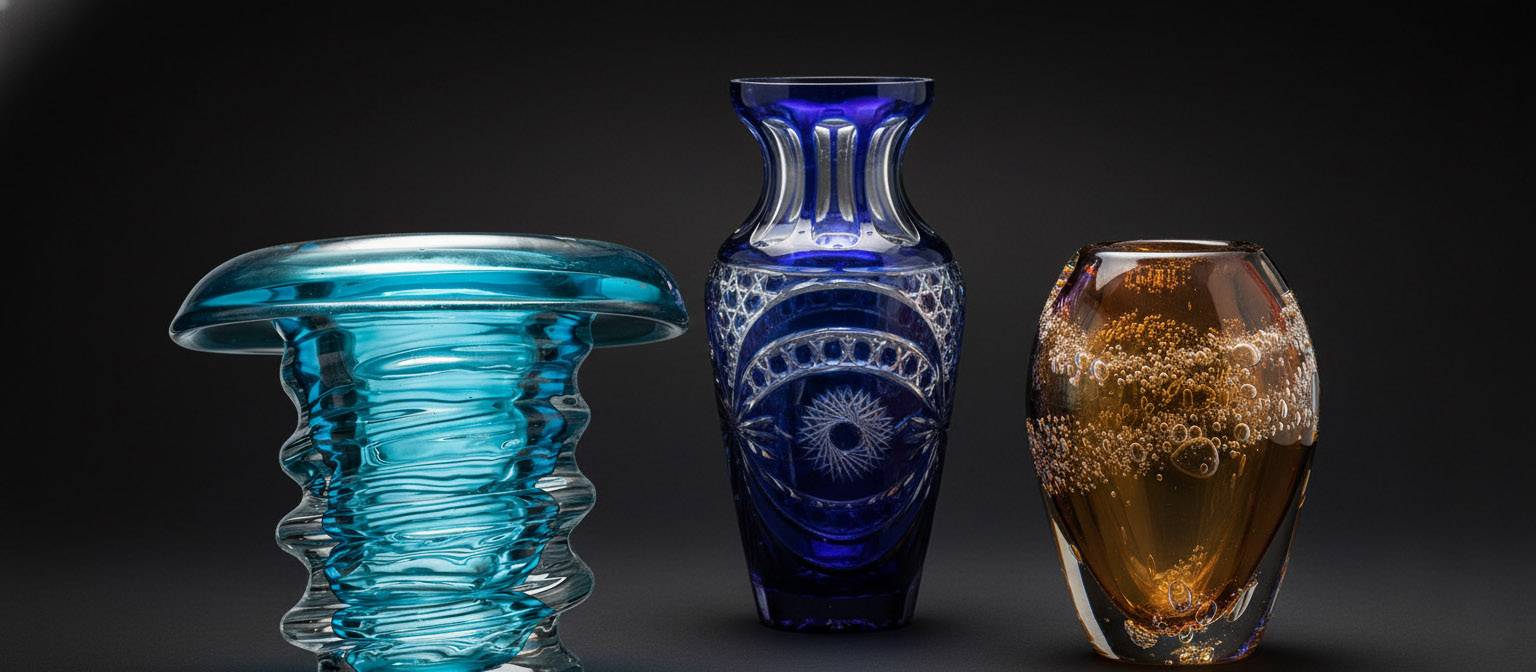
Clear engraved glass remained important, but colored glass grew increasingly varied. Makers used layered and flashed constructions in which a thin colored layer could be cut through to reveal a contrasting body beneath. Ruby-colored surfaces became especially characteristic of some 19th-century production.
Other materials deliberately moved away from transparency. Hyalith glass appeared dark and opaque, sometimes carrying gilded decoration. Lithyalin glass used marbled colors to imitate semiprecious stone. Painted and enameled pieces drew on botanical imagery, historical revival styles, Orientalist motifs, and contemporary fashion.
Czech crystal glass was not evolving along a straight path from simple to ornate or from handmade to industrial. Different approaches existed side by side. Some workshops refined traditional engraving. Others pursued color, pressed forms, chemical staining, lighting components, or new approaches to serial production.
The history is therefore better understood as a series of overlapping experiments than as a single style.
Schools Made Skill More Than a Family Secret
Craft traditions are often described as knowledge passed from parent to child. That certainly occurred in glassmaking communities, but formal education also became crucial.
The glass school founded in Kamenický Šenov in 1856 is regarded as the oldest institution of its kind. Its establishment reflected a practical need: local craftsmen required stronger training in drawing, ornament, form, and design.
This changed the relationship between maker and object. Technical skill remained essential, but students also learned to develop decorative concepts systematically. The classroom, drawing board, cutting wheel, and furnace became connected parts of the same culture.
Schools helped preserve skills while allowing them to change. A young engraver did not have to reproduce only the patterns of a previous generation. Training offered access to historical ornament, figure drawing, geometry, composition, and emerging design movements.
Seen this way, bohemian crystal history is also a history of education. Its continuity depended not only on keeping old methods alive, but on creating environments in which those methods could be questioned and redirected.
Industry Did Not Simply Replace the Hand
The 20th century brought mechanization, war, political change, nationalized industry, mass production, and new forms of artistic glass. These developments transformed the organization of Czech glassmaking, but they did not create a simple division between machine-made objects and handmade art.
Pressed glass allowed decorative objects and tableware to reach larger audiences. Automated and semi-automated processes improved output and dimensional consistency. At the same time, designers explored thick optical forms, sculptural casting, studio production, engraving, and individually finished objects.
An industrially formed blank could still receive hand cutting or polishing. A designer might create a form intended for repeated pressing while carefully controlling how the molded surface reflected light. Factory knowledge and artistic authorship often occupied the same object.
Postwar Czech and Czechoslovak glass became internationally known for treating glass not only as tableware or decoration but also as a medium for modern sculpture and architectural installation. The inherited knowledge of heat, thickness, cutting, polishing, and optical behavior gave artists a technical foundation from which to experiment.
Tradition survived not by remaining visually unchanged, but by continuing to provide usable knowledge.
What Czech Crystal Glass Means Today
The term Czech crystal glass does not describe one timeless chemical formula. Historical Bohemian crystal was often a non-lead potash-lime glass, whereas later and modern production may include lead crystal, lead-free crystal formulations, high-clarity glass, colored glass, pressed glass, and other specialized compositions.
The cultural category is therefore broader than a single recipe.
What connects the tradition is a body of knowledge: preparing and melting glass, judging its movement, shaping it hot, cooling it safely, cutting and engraving it cold, polishing surfaces, applying color, and understanding how the finished object responds to light.
In 2023, the knowledge, craft, and skills of handmade glass production shared by Czechia and five other European countries were inscribed on UNESCO’s Representative List of the Intangible Cultural Heritage of Humanity. The recognition concerns living practices rather than a frozen historical style. It acknowledges communities, skills, tools, and knowledge that continue to be transmitted.
A UNESCO inscription does not mean every object is handmade, nor does it turn all Czech glass into one category. It recognizes that handmade glass production remains a cultural practice carried by people.
A Tradition That Refused to Stay in One Century
Bohemian crystal history stretches from forest furnaces to museum galleries, but the distance between them is not as great as it seems. The same essential questions remain present: how should the material be melted, how far can it be stretched, where should it be thick, how should it cool, and what can light reveal on its surface?
The answers changed with chemistry, equipment, fashion, trade, and education.
Bohemian glassware became internationally recognized because it never depended on ornament alone. Its character grew from the relationship between material and skilled intervention. A clear blank could become an engraved landscape. A colored layer could be cut away to expose another color. A drinking glass could preserve a family event. A chandelier component could carry North Bohemian work into a distant palace.
Czech crystal glass remains culturally significant because it contains both continuity and disagreement. It includes the furnace worker and the engraver, the factory and the studio, the practical drinking vessel and the object that no one would dare place in a dishwasher.
That complexity is the real subject of bohemian crystal history. It is not simply a tale of luxurious objects. It is the record of communities that learned to make a fragile material carry memory, labor, design, and light.
Read the original article on custom crystal glass manufacturing: https://shdcrystal.com/blogs/bohemian-crystal-history/