
At SHD Crystal, custom bottle decoration design is never treated as the final production step. Decoration is planned alongside bottle structure, material selection, and packaging because every surface process behaves differently once it enters mass production. For perfume, liquor, beverage, skincare, and gift packaging brands, successful decoration should strengthen product recognition while remaining reliable throughout filling, packing, transportation, and future repeat orders.
Custom Bottle Decoration Design Starts With Surface Compatibility
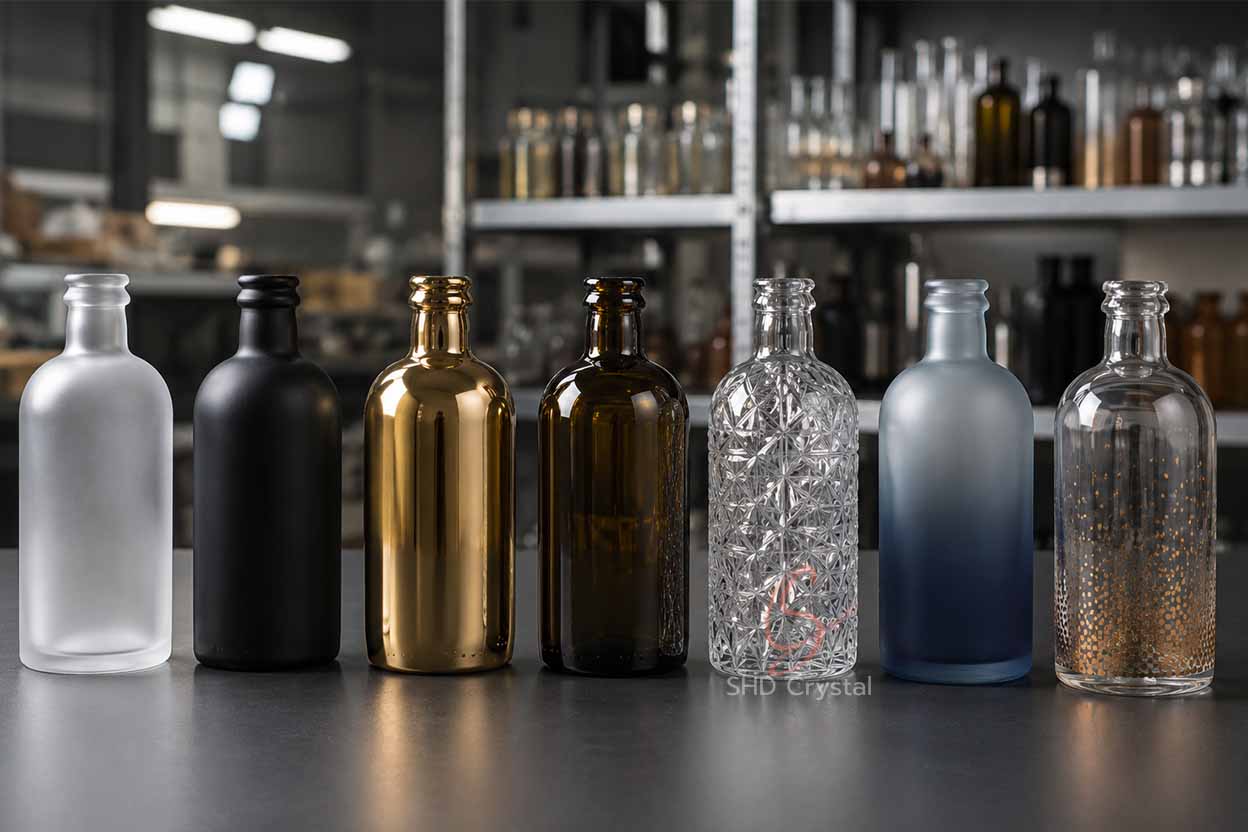
Every glass surface responds differently to decoration. Clear glass, colored glass, frosted finishes, coated surfaces, and textured patterns each require appropriate production methods and process control. Common glass bottle surface finishing options include spraying, frosting, screen printing, hot stamping, laser marking, engraving, metallic coating, and decal application. Each technique offers a different visual effect while introducing its own manufacturing considerations.
One common mistake is approving decoration based only on digital artwork or renderings. A metallic logo that appears striking on screen may lose contrast on amber glass, while a matte coating may look premium but become susceptible to scratches if packaging inserts create excessive friction. For this reason, we recommend evaluating every custom bottle branding concept on actual production samples before approving bulk manufacturing.
Production Control Determines Decoration Quality
The final appearance depends on far more than artwork alone. Spray thickness, curing temperature, adhesion performance, polishing pressure, and batch consistency all influence the finished result. Small variations around the shoulder, neck, or base become particularly noticeable on glossy black, metallic, or deep-colored finishes.
During sample development, our engineering team occasionally recommends adjusting decoration boundaries or reducing coverage in high-contact areas. These minor revisions rarely change the overall design concept, but they often improve production consistency and reduce cosmetic defects during large-volume manufacturing.
Decoration should also be evaluated together with the complete packaging system. Fragrance bottles need harmony between the bottle, pump, collar, and cap. Liquor packaging often combines decoration with labels, closures, and premium cartons, while beverage bottles must withstand continuous movement on automated filling lines. Reviewing decoration as part of the entire package helps avoid compatibility issues later in production.
Selecting The Right Process For The Project
Each decoration method offers advantages as well as practical limitations. Screen printing performs well on many standard bottle shapes but becomes more challenging on highly curved surfaces. Hot stamping delivers premium metallic accents yet requires stable contact across the decoration area. Laser marking creates precise permanent graphics, although the visual contrast varies depending on glass color and surface treatment.
Instead of selecting a process solely for its appearance, buyers should consider production volume, durability requirements, expected handling conditions, and long-term supply plans. The most visually impressive finish is not always the most suitable choice for everyday commercial use.
Packaging Protection Matters After Decoration
Decoration quality can only be preserved if packaging receives the same level of attention as the bottle itself. Decorated surfaces may be affected by friction, moisture, pressure, or movement during transportation. Foam inserts, molded pulp trays, protective dividers, and properly designed gift boxes all help minimize surface damage throughout export logistics. At SHD Crystal, packaging recommendations are reviewed alongside decoration planning to help ensure bottles arrive in the same condition as approved production samples.
Buyers should also establish realistic quality expectations before production begins. Certain processes, particularly spraying, coating, and hand-applied decorative effects, may show slight batch-to-batch variation. Agreeing on approved reference samples, inspection criteria, and acceptable tolerances early in the project helps prevent misunderstandings during future production runs.
Conclusion
Custom bottle decoration design delivers the best results when visual creativity is supported by practical manufacturing knowledge. Surface compatibility, process capability, packaging protection, and production consistency all contribute to a finish that not only looks distinctive but also performs reliably throughout filling, shipping, retail display, and repeat production.
Building A Better Decoration Strategy
Whether you are developing perfume, beverage, liquor, or skincare packaging, SHD Crystal supports custom bottle decoration design through engineering review, glass bottle surface finishing selection, prototype evaluation, quality verification, and production planning. Clear project requirements at the beginning help create custom bottle branding solutions that are both visually distinctive and commercially reliable.