
Traditional crystal glass craftsmanship is not a romantic phrase placed on a product page; it is a working system built around heat, timing, tools, and trained judgment. For buyers, this matters because two glasses can look similar in a photo but behave very differently in the hand. One may feel balanced, clear, and comfortable. Another may look bright at first but reveal uneven weight, rough rim finishing, or unstable repetition when ordered in larger quantities.
Traditional Crystal Glass Craftsmanship Adds Control Beyond Surface Beauty
In crystal glass manufacturing, the first challenge is material behavior. Molten glass must be formed while it is hot enough to move but stable enough to hold shape. If forming temperature is poorly controlled, a stem may twist, a bowl may lose symmetry, or the wall thickness transition may become heavy near the base and weak near the rim.
This is where handmade glassware techniques still carry practical commercial value. A skilled worker can read the movement of glass, adjust tool pressure, correct small changes during shaping, and decide when the piece is ready for the next step. Machines offer speed and repeatability. Hands offer judgment. For custom projects, both may be combined depending on shape complexity, order volume, and finishing requirements.

A common mistake is judging traditional crystal glass craftsmanship only by sparkle. Brilliance is important, but quality also depends on annealing behavior, rim polishing, base flatness, optical clarity, and repeatable dimensions. A beautiful sample is useful. A stable repeat order is more valuable.
The Hidden Work Behind A Clear Crystal Piece
The most important parts of crystal glass manufacturing are often invisible to the final customer. Controlled cooling in the annealing stage helps reduce internal stress. Careful polishing pressure can improve rim comfort without weakening the edge. Consistent forming rhythm helps keep wall thickness, stem height, and bowl proportion within an agreed tolerance range.
For hospitality, gifting, and premium retail projects, these details affect real use. A hotel glass may need stronger daily handling performance. A gift-ready set may need pieces that look consistent side by side. A decorative crystal object may allow more individual character, but it still needs safe finishing and stable packaging.
Handmade glassware techniques naturally create subtle variation. Slight differences in wall thickness, stem height, or hand-polished edges may be acceptable for artisanal collections. Stricter tolerance may be required for hotel chains, retail sets, or branded OEM orders. The goal is not to remove all human variation. The goal is to define which variation supports the product and which variation becomes a quality risk.
Decorative Craft And Structural Craft Must Work Together
Cutting, engraving, polishing, and coloring can make a glass product memorable. They add texture, reflection, and brand identity. Yet these decorative steps only work well when the body of the piece is strong enough to support them.
Traditional crystal glass craftsmanship works best when decorative craft and structural craft are evaluated together. A deep-cut pattern may look impressive, but if the wall is too thin, the product may become less suitable for repeated handling. A heavy base can feel premium, but if the cooling curve is not well managed, internal stress may increase. A thin rim may feel refined, but it requires careful finishing to avoid uneven edges.
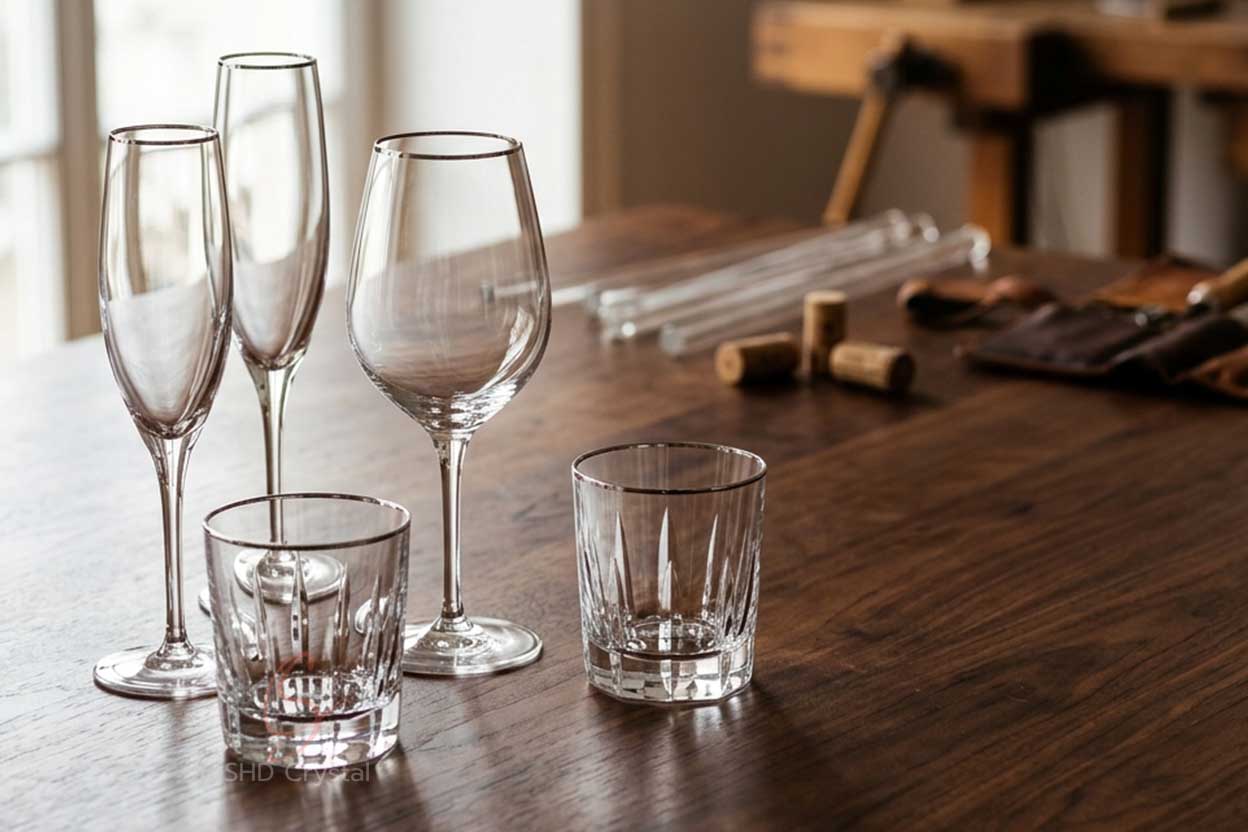
For OEM buyers, the development brief should include target size, capacity, weight preference, rim style, logo position, decoration method, packing method, and expected order quantity. These details help the factory decide whether handmade glassware techniques, semi-automatic forming, mold-based production, or combined finishing routes are most suitable.
Conclusion
Traditional crystal glass craftsmanship remains valuable because it connects material control with buyer expectations. The strongest products are not simply clear, heavy, or decorative. They are well-balanced, properly cooled, carefully finished, and realistic for the intended market. When buyers understand the craft behind the surface, they can make better decisions about design, tolerance, packaging, and long-term production.
Planning Custom Crystal Glass Projects With Practical Craft Knowledge
For brands planning custom drinkware, hotel glassware, decorative crystal pieces, or gift-ready collections, traditional crystal glass craftsmanship can support both design character and production reliability. Sharing a sketch, reference image, size target, use scenario, decoration idea, and packaging expectation allows a manufacturer to suggest a workable route before mold development or bulk production begins.
Read the original full version:
https://www.shdcrystal.com/your-article-link: https://shdcrystal.com/blogs/traditional-crystal-glass-craftsmanship/