
An Ottoman style glass lamp shade manufacturer does more than reproduce colorful patterns on a curved glass surface. A commercially viable shade must translate historical references into a form that works with modern fittings, controlled light transmission, practical cleaning, secure installation, and repeat production. For hotels, restaurants, residential developments, and decorative-lighting brands, the strongest results come from treating the shade as both an ornamental object and a functional lighting component.
What an Ottoman Style Glass Lamp Shade Manufacturer Must Resolve Before Production
The phrase “Ottoman style” covers a broad visual vocabulary rather than one fixed lamp design. Classical Ottoman decorative arts used stylized flowers, including tulips, carnations, roses, and hyacinths, as well as curved saz leaves, vegetal ornament, geometric arrangements, and calligraphic elements. Museum collections also document historic mosque lamps made in blown glass with enamel, gilding, and applied suspension loops. Modern lampshades generally reinterpret these references rather than reproduce a specific historical object exactly.
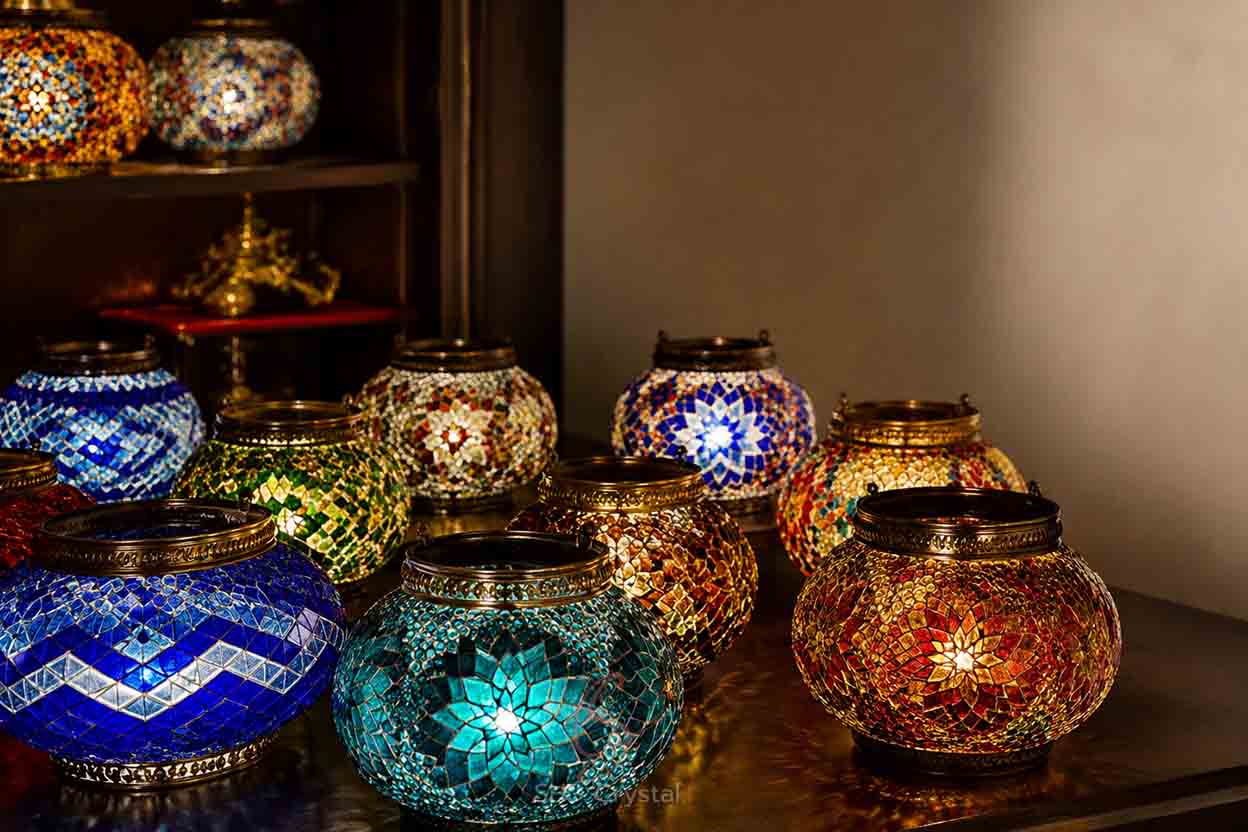
For this reason, the design brief should clarify whether the project is inspired by Iznik floral decoration, geometric Islamic ornament, historic hanging-lamp proportions, or a more contemporary Turkish interior style. Combining every recognizable motif in one product can make the design feel crowded rather than authentic.
Shape Must Work With the Mounting Structure
A lamp shade cannot be evaluated independently from its fitting. The opening diameter, fitter type, mounting position, shade height, and distance from the light source all influence whether the completed assembly works as intended.
A narrow opening may limit access during installation. A wide, heavy shade may require stronger support from the metal fitting. Irregular handmade rims can also create alignment problems if the mounting area does not have a clearly defined tolerance.
Before approving a handmade glass lamp shade design, buyers should provide a dimensioned drawing of the fitting or an actual hardware sample. A visually correct shade may still lean, rotate, or sit too high if the glass and metal components were developed separately.
The glass shade is only one part of the luminaire. Bulb type, operating heat, electrical components, clearances, and applicable safety requirements must be assessed for the complete lighting product in its intended sales market. Approval of the glass alone does not establish compliance for the assembled fixture.
Glass Color Changes Both Pattern and Light Output
Colored and textured glass creates the warm visual character associated with many Ottoman-inspired interiors. Cobalt blue, turquoise, green, amber, and red can be arranged in floral or geometric compositions, while clear sections allow brighter highlights to pass through.
More color does not always create a better lighting result. Dense decoration and darker glass can produce a rich atmosphere but reduce overall light transmission. Clearer or thinner sections provide stronger illumination, although they may reveal forming variation and internal components more easily.
This creates an important trade-off for custom decorative lighting. A restaurant may prefer a warm, low-intensity glow, while a hotel corridor or guest room may need more usable light. Samples should therefore be evaluated with the intended light source rather than under general studio lighting alone.
Handmade Character Still Requires Defined Tolerances
In handmade glass lamp shade design, slight differences in pattern placement, curvature, color distribution, and optical effect may be part of the intended character. They should not, however, interfere with installation or make a group of fixtures look unrelated.
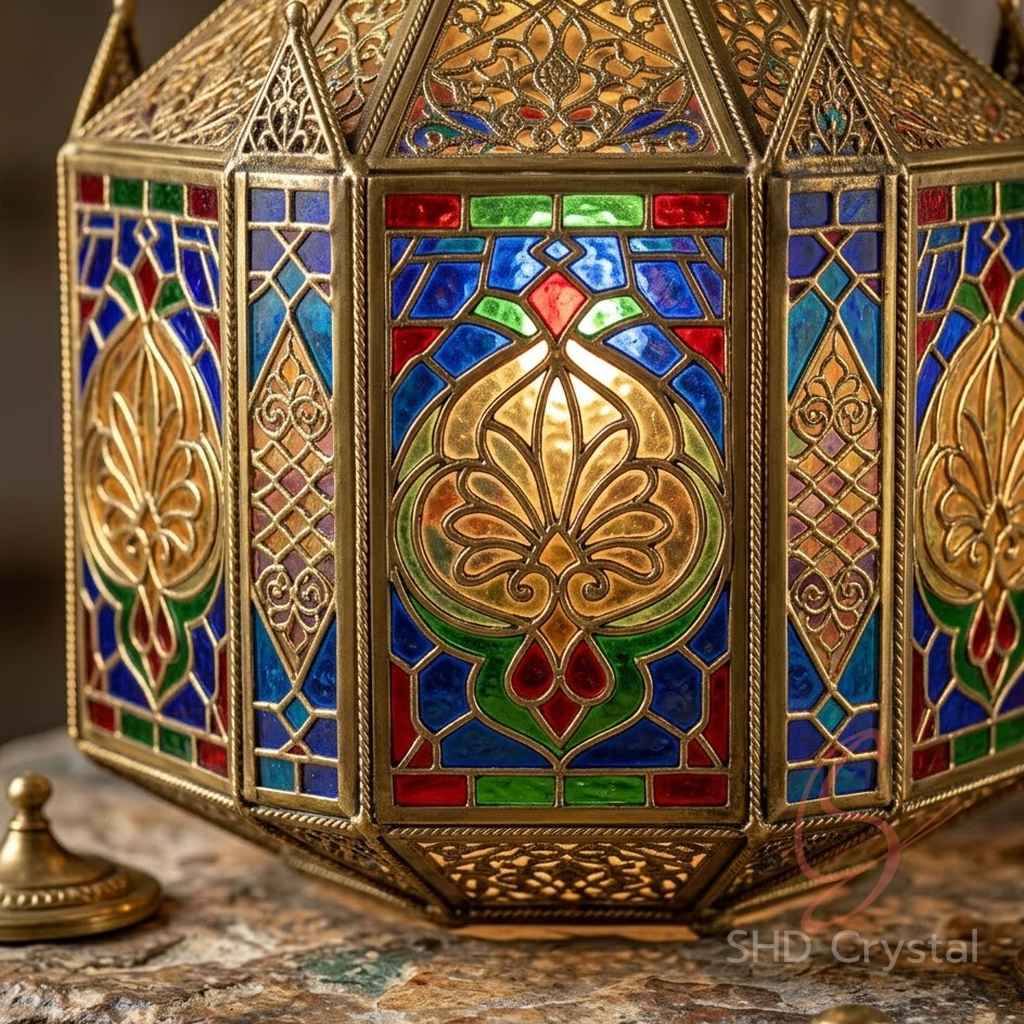
Commercial inspection should distinguish decorative variation from functional defects. Key checks may include:
-Mounting-opening dimensions
-Overall height and maximum diameter
-Rim condition and edge smoothness
-Base or fitter alignment
-Wall-thickness transition
-Pattern position and color range
-Visible bubbles, stones, scratches, or tool marks
-Stability when assembled with the specified hardware
An experienced Ottoman style glass lamp shade manufacturer should compare multiple samples, not only one especially attractive piece. For hotel and restaurant projects, shades installed in the same room should maintain a coordinated scale and color effect even when subtle handmade differences remain.
Surface Processes Need to Support Cleaning and Maintenance
Painted details, frosting, engraving, applied glass elements, and textured surfaces each change how the shade looks when illuminated. They also influence cleaning access and long-term appearance.
Deep textures may collect dust more easily. Highly polished surfaces show fingerprints, while matte treatments may reveal rubbing from packaging materials. Decorative coatings should be tested on the real glass and reviewed after normal handling rather than approved only from digital artwork.
For custom decorative lighting, decoration boundaries also need to account for mounting zones and high-contact areas. Leaving the fitter opening and critical assembly surfaces untreated can improve dimensional control and reduce damage during installation.
Packaging Must Protect Shape and Decoration
Lamp shades often combine fragile rims, broad bodies, and concentrated weight around the mounting opening. These features require packaging designed around the actual geometry.
A generic carton may leave too much movement around a rounded shade or place pressure on an applied decorative feature. Molded pulp supports, foam structures, suspended inserts, and individual wrapping can be evaluated according to the product surface and shipping route.
Packing trials should use finished, decorated samples. Clear production glass and coated or hand-painted shades may react differently to friction, pressure, and protective materials.
Conclusion
A capable Ottoman style glass lamp shade manufacturer must balance cultural design references with fitting accuracy, glass behavior, light transmission, surface finishing, and shipping protection. The value of the finished shade comes not from adding as many traditional motifs as possible, but from translating a clear design direction into a functional and repeatable lighting component.
Developing a Distinctive Decorative Lighting Collection
SHD Crystal can support an Ottoman style glass lamp shade manufacturer project through reference review, structural evaluation, sampling, color and pattern development, fitting checks, and export packaging planning. Providing the intended hardware, dimensions, light source, installation environment, quantity, and visual references helps establish a practical handmade glass lamp shade design and a more reliable route for custom decorative lighting production.
Read the original article on custom crystal glass manufacturing:
https://shdcrystal.com/blogs/ottoman-style-glass-lamp-shade-manufacturer/