
A custom glass jar manufacturer should begin every project by understanding how the jar will be filled, closed, handled, stored, and shipped. Food, candles, cosmetics, tea, and home fragrance place different demands on the container. A jar may appear simple in a catalog, yet rim accuracy, closure compatibility, wall thickness, decoration access, and carton protection can determine whether the finished package performs reliably.
What a Custom Glass Jar Manufacturer Must Resolve Before Tooling
The first decision is application rather than shape. A candle jar needs a stable base and a structure suited to its expected filling and use conditions. A food jar requires dependable closure performance and practical access for filling and cleaning. Cosmetic jars often place greater emphasis on visual weight, surface finish, and alignment with lids or inner components.
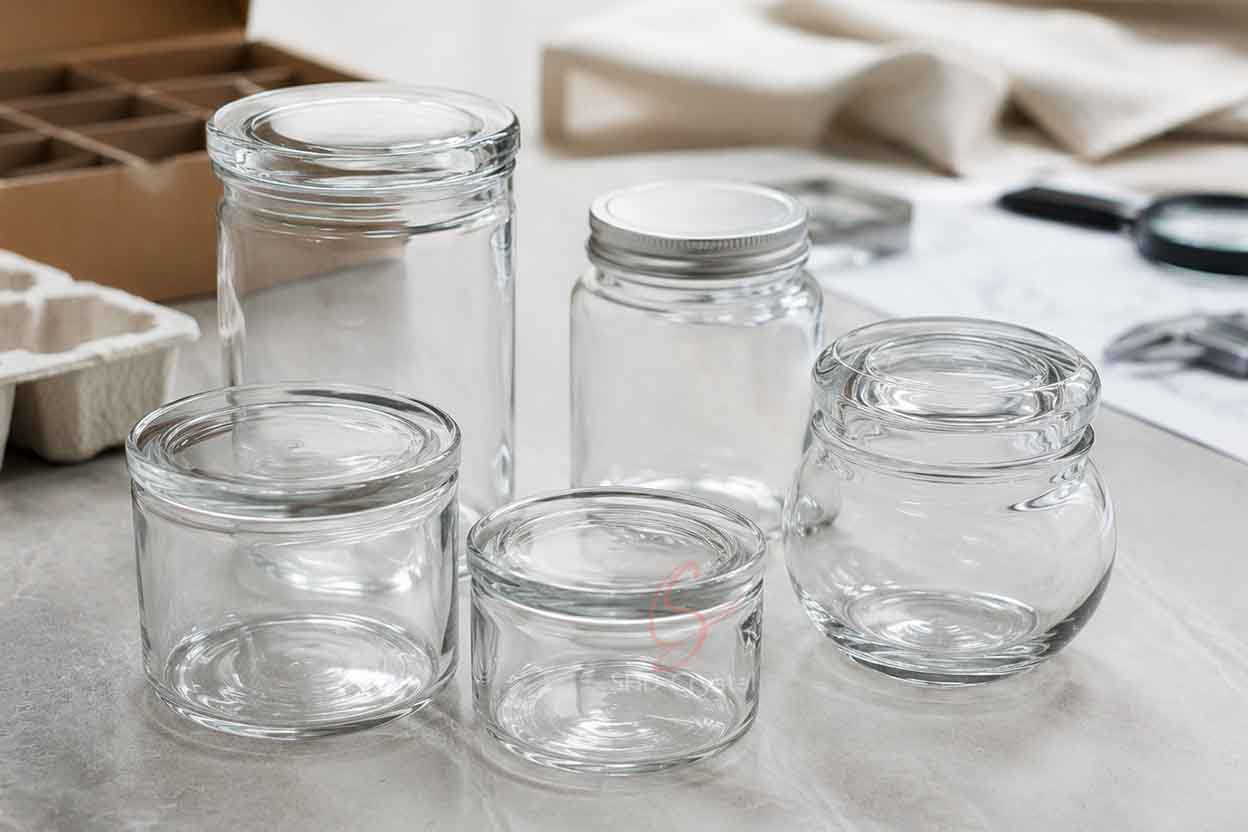
A wide mouth glass jar improves access for powders, creams, dry foods, and candles. The wider opening, however, makes rim flatness and neck-finish consistency more important. Small dimensional differences can influence lid alignment, gasket compression, or sealing performance. Buyers should test the actual jar, lid, liner, and closing method together instead of approving the glass body alone.
Shape, Capacity, and Closure Must Work Together
Nominal capacity does not tell the whole story. Overflow capacity, target fill level, headspace, opening diameter, and base dimensions all affect how a filled product looks and behaves. Two jars with the same stated volume may create different shelf proportions or leave different amounts of usable space.
Closure choice also changes the engineering route. Metal, plastic, bamboo, cork, and composite lids introduce different fitting and packing requirements. Natural materials may show more variation, while rigid threaded closures usually require tighter dimensional coordination. Gasket compression and closing torque should be evaluated under the intended storage and transport conditions.
A common sourcing mistake is selecting a lid for appearance and checking fit only after samples arrive. Confirming the neck finish and closure specification before molds, decoration, and packaging are finalized reduces later revisions.
Wall Thickness Creates Value and Trade-Offs
Glass thickness affects hand feel, impact resistance, freight weight, and cost. A heavy base can make glass jar packaging feel substantial, but an abrupt wall thickness transition may cool unevenly and contribute to residual stress. Forming temperature, glass distribution, mold condition, and annealing behavior all influence batch consistency.
Thicker glass is not automatically better. It increases transport weight and may require stronger carton protection. Lightweight structures reduce logistics costs but can offer less margin against handling impacts when the geometry is not optimized. The target should reflect product weight, distribution distance, retail position, and expected reorder volume.
During sampling, several pieces should be compared rather than one selected sample. Opening diameter, height, base stability, wall distribution, and mold variation should remain within the approved range.
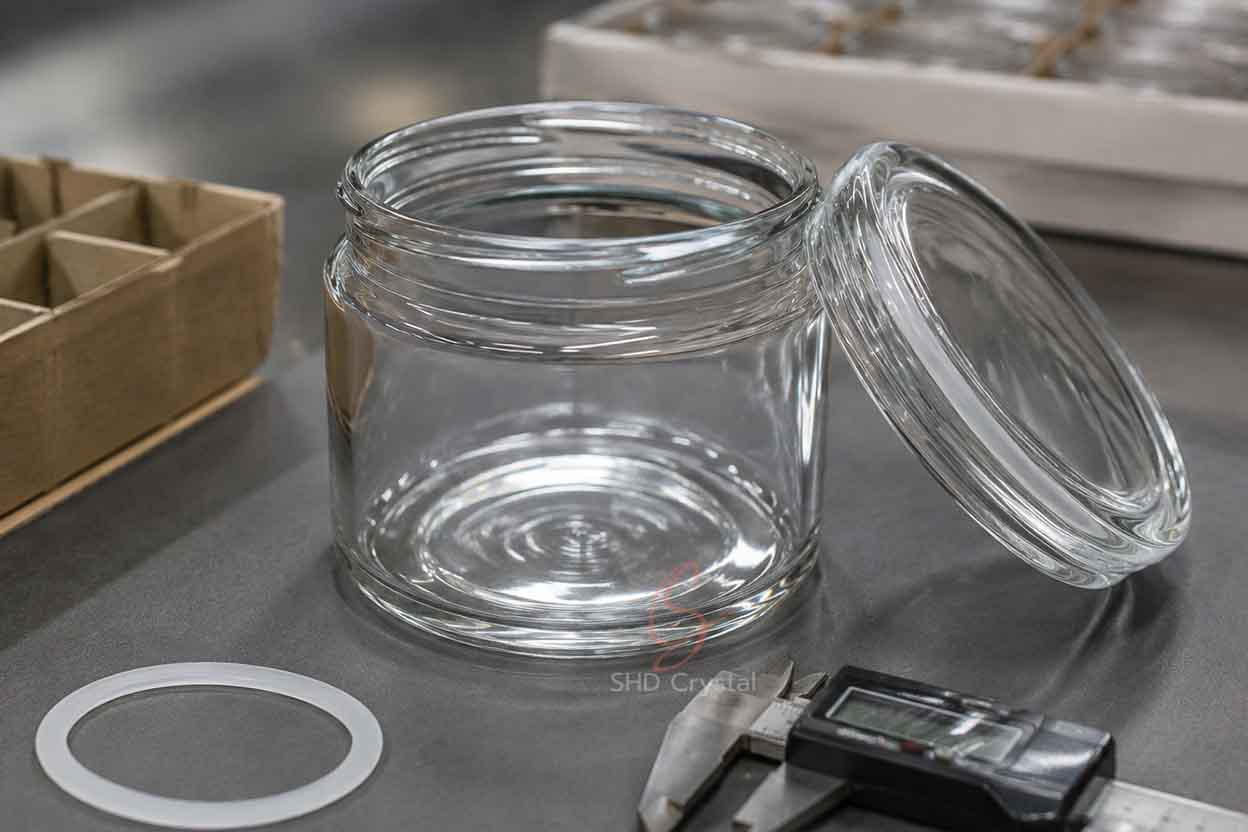
Decoration and Packing Should Be Planned Together
Straight-sided jars usually provide practical areas for labels, screen printing, or coating. Frosting creates a softer appearance, while embossing can strengthen brand recognition. Deep textures may reduce label space or create uneven contact with packaging dividers.
A decorated jar can develop rub marks if inserts are too tight, while a heavy lid may increase movement inside the carton. Molded pulp, dividers, foam supports, or individual wrapping should be selected according to the actual geometry and surface finish. This makes glass jar packaging a complete system rather than a jar-and-lid purchase.
When comparing quotations, buyers should confirm whether lids, liners, decoration, inspection, dividers, palletizing, and replacement allowances are included. A lower unit price may not produce a lower delivered cost if closure rejection, breakage, or repacking increases later.
Conclusion
A custom glass jar manufacturer should be evaluated through sealing reliability, closure fit, wall thickness control, decoration feasibility, and shipping protection rather than appearance alone. A well-developed package balances product access, manufacturing stability, freight cost, and repeat-order consistency.
Building a More Reliable Jar Development Plan
For a new custom glass jar manufacturer project, SHD Crystal can review capacity, product use, lid type, neck finish, target weight, decoration, and export packing before tooling begins. Sharing these details early helps define a practical wide mouth glass jar and reduce avoidable revisions during sampling and mass production.
Read the original article on custom crystal glass manufacturing: https://shdcrystal.com/blogs/custom-glass-jar-manufacturer/