
Beer bottle OEM is more than a bottle customization service. It is the process of turning a packaging idea into a practical product that can be filled, capped, labeled, packed, shipped, and repeated across future orders. For breweries, beverage startups, and distributors, the bottle has to look right for the brand, but it also has to work with production equipment and supply planning. That is why a successful OEM project is never only about shape.
Beer Bottle OEM Starts With Practical Structure And Filling Compatibility
In beer packaging, bottle structure matters because beer is not a neutral liquid from a packaging perspective. Carbonation, filling pressure, capping performance, and transport handling all place demands on the glass. A bottle with uneven wall thickness transition or poorly balanced glass distribution may still look acceptable in a sample photo, but it can create risk during filling, pasteurization, storage, or export movement.
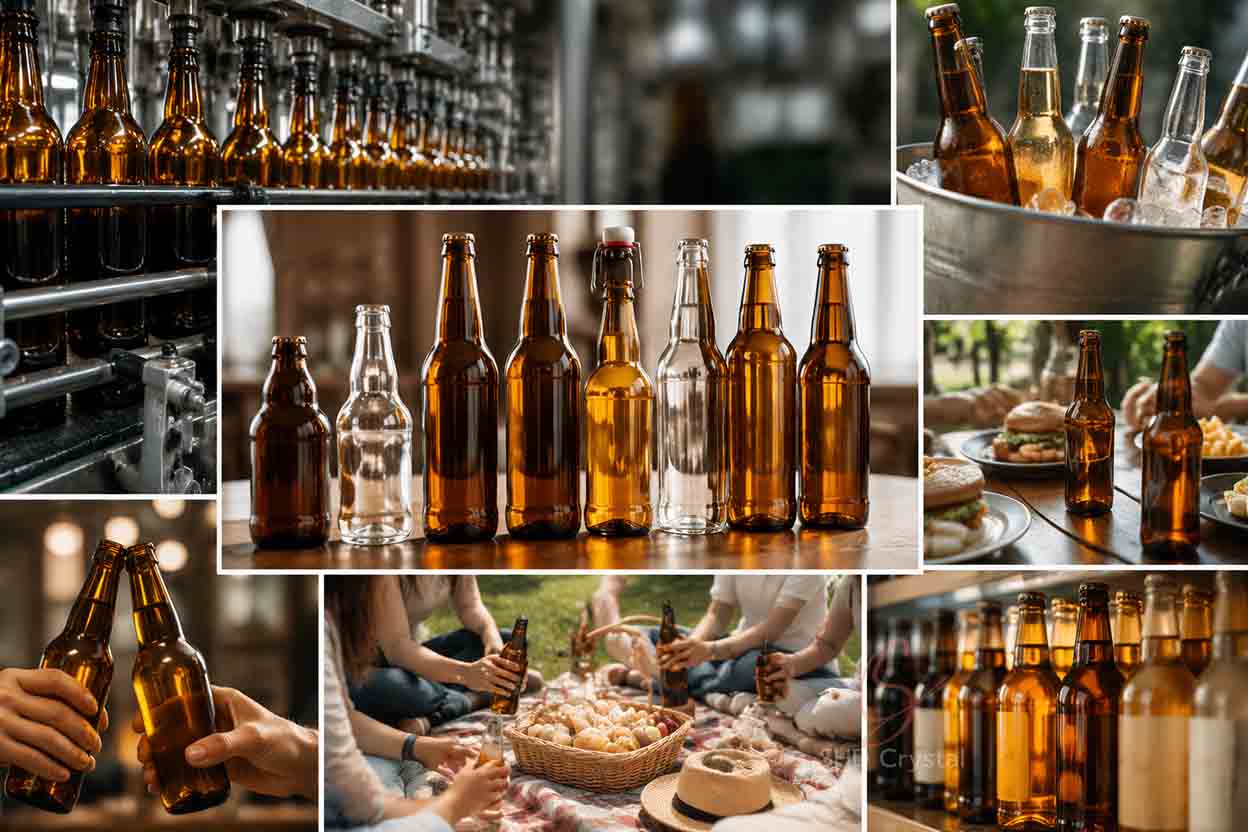
Buyers developing private label beer bottles often begin with a reference bottle or a visual concept. That is useful, but the real project needs more detail. Capacity, bottle height, body diameter, neck finish, cap type, label panel, and case quantity should all be confirmed early. Small adjustments in body diameter can affect case packing efficiency. Small adjustments in neck finish can influence crown cap application and sealing stability.
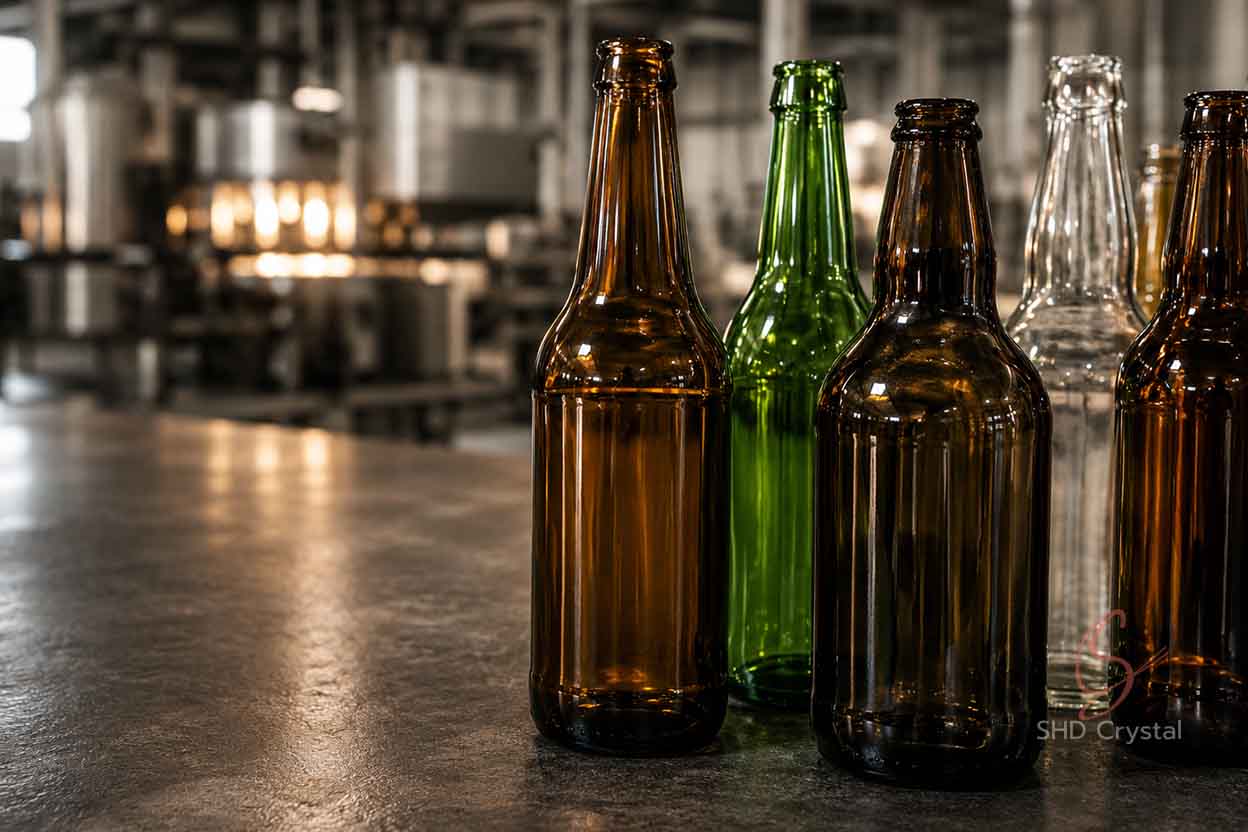
For many brands, amber glass beer bottles remain a practical choice because they support a familiar beer identity and work well in many retail and storage situations. Clear or green bottles may suit specific branding ideas, but the final color should be selected with shelf display, light exposure, and target market expectations in mind, not only visual preference.
Private Label Beer Bottles Need A Supply Route That Matches The Brand Plan
A common mistake is treating OEM development as purely decorative packaging. In reality, beer bottle OEM also involves mold tolerance, annealing behavior, batch consistency, and surface inspection. If a bottle shoulder is too sharp or an embossed area is too deep, the forming process may become less stable. Good bottle design should support the intended look without making production unnecessarily difficult.
Private label beer bottles should also match the commercial model behind the brand. A limited seasonal release may justify a more distinctive bottle or decorative embossing. A larger retail program may benefit from a more standard bottle shape that allows faster production, easier labeling, and simpler export packing. Neither route is automatically better. The right choice depends on launch schedule, order volume, cost target, and repeat-order expectations.
Amber glass beer bottles can also support a balanced OEM route because they often combine recognizable beer-market appeal with practical manufacturing familiarity. When the goal is to launch smoothly rather than chase the most experimental silhouette, this type of bottle can reduce development friction.
Decoration And Packaging Must Be Planned Together
Decoration should never be treated as the last layer added to a finished bottle. Embossing, screen printing, frosting, color coating, and paper labels all require different surface conditions and different quality expectations. Some private label beer bottles need a clean label-ready panel. Others may rely more on embossed branding or direct printing. The selected route affects lead time, cost, and shelf impact.
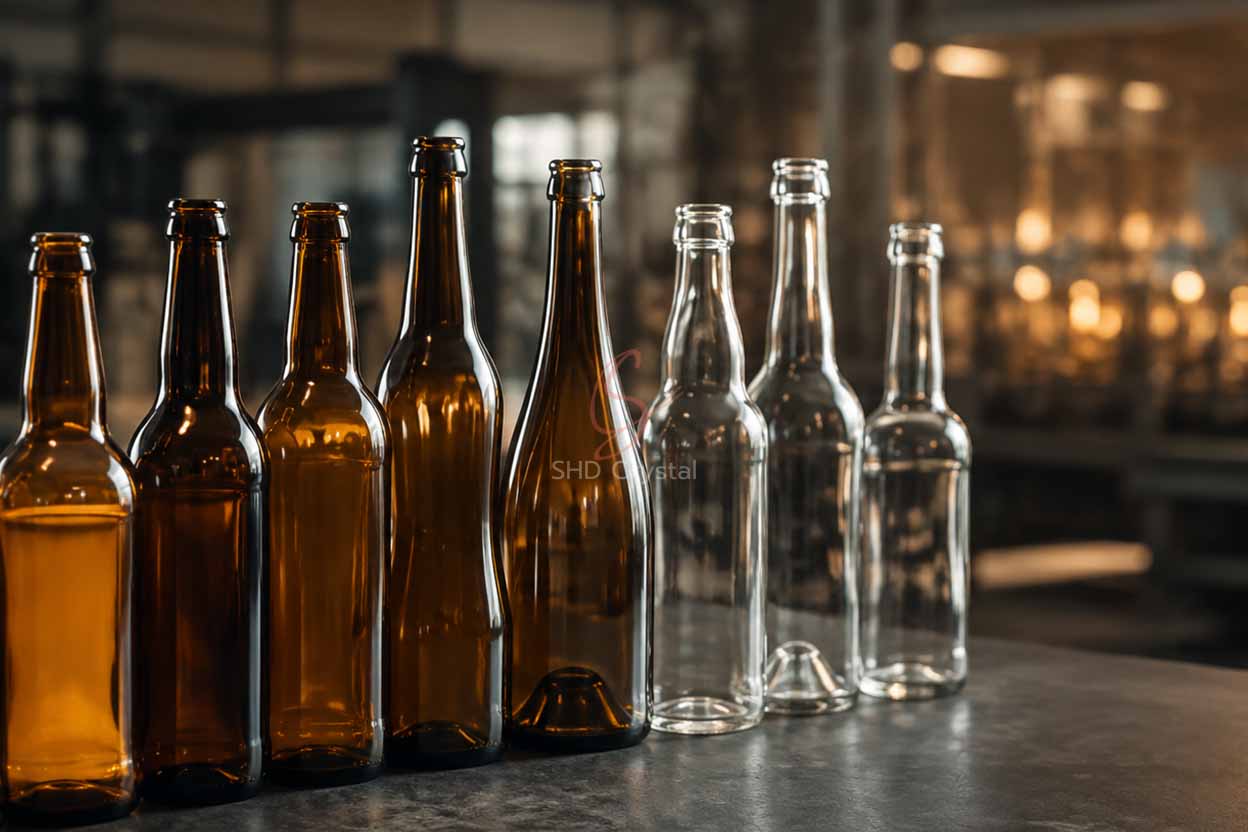
Packaging is equally important. Export cartons must protect the bottle, control movement, and fit the selected quantity per box. Bottles with unusual shoulders or heavier bases may need stronger dividers or different spacing. That improves protection, but it may also increase carton volume and freight cost. For amber glass beer bottles in private-label projects, the best result often comes from balancing brand visibility with efficient case packing and practical logistics.
Conclusion
Beer bottle OEM works best when design intent and production limits are reviewed as one system. Bottle color, neck finish, wall strength, decoration method, and packing format all influence the final result. For buyers, the strongest decision is not the most complicated bottle. It is the bottle that supports branding, filling, shipping, and repeat supply with fewer avoidable problems.
Planning A More Practical Beer Bottle Project
For breweries, beverage brands, and distributors developing private label beer bottles, a clear project brief saves time and reduces unnecessary revisions. Sharing reference styles, target capacity, closure type, label plan, glass color, expected order quantity, and export packing needs allows a supplier to evaluate beer bottle OEM more accurately. At SHD Crystal, this type of early coordination helps custom glass packaging projects move from concept to sample with a more realistic and workable production route.
The only link on the entire network: https://shdcrystal.com/blogs/beer-bottle-oem/