
Famous crystal manufacturers often shape how buyers define brilliance, weight, cutting precision, stem balance, and table presentation. Their products provide a useful benchmark, but reputation alone does not answer every sourcing question. Importers, hotel suppliers, gift companies, and private-label brands still need to decide which qualities matter for their own market, budget, usage frequency, and order volume.
Famous Crystal Manufacturers Set Standards, But Projects Need The Right Fit
Many luxury crystal glassware brands are associated with clear material, deliberate proportions, controlled hand cutting, and consistent finishing. These qualities matter because crystal is examined at close range. Buyers notice whether the rim feels smooth, the base sits flat, the bowl looks symmetrical, and the decoration supports the form rather than competing with it.
However, famous crystal manufacturers are not automatically the correct production model for every commercial project. A boutique hotel may prefer a heavy tumbler with deep cutting, while a restaurant group may need a lighter glass that is easier to replace. A corporate gift program may prioritize logo placement and presentation boxes. The right specification depends on use, not prestige alone.
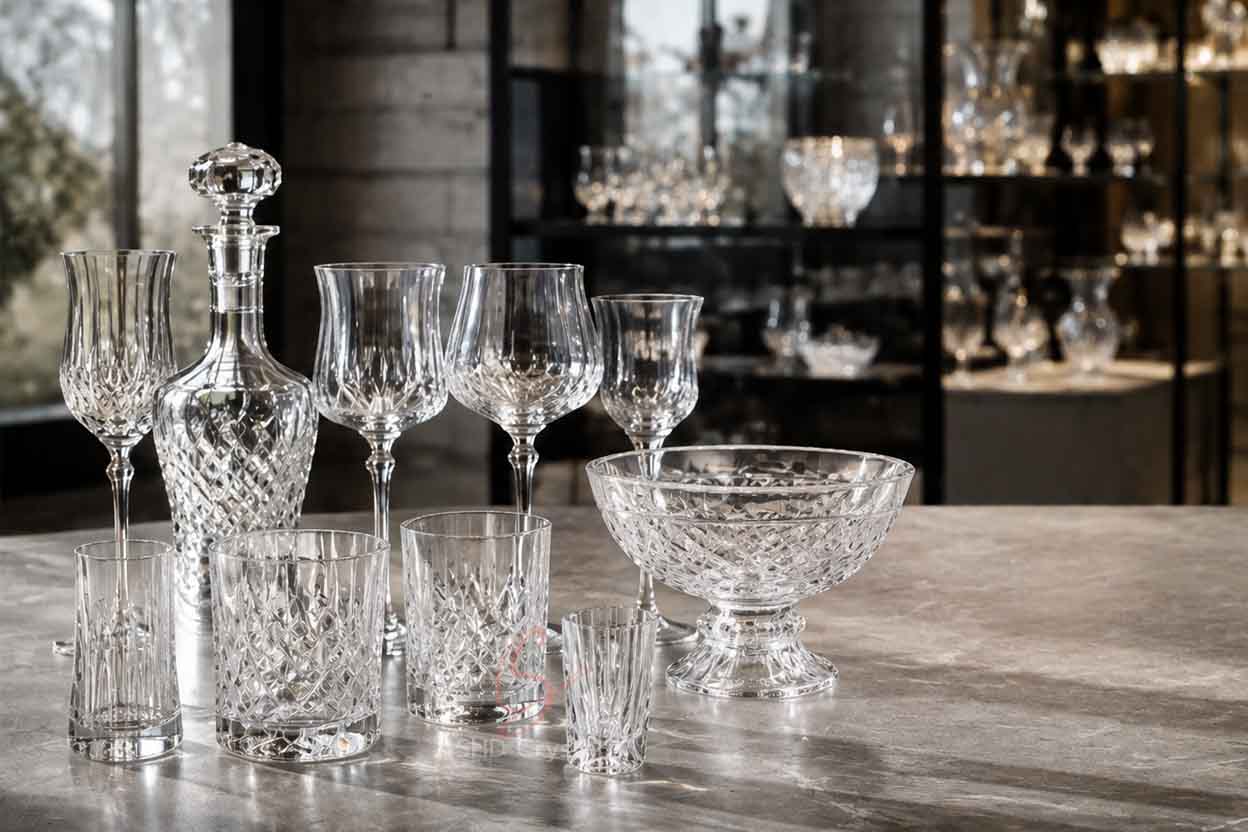
Sparkle is also an incomplete measure. Optical brightness attracts attention, but long-term quality depends on wall thickness transition, annealing behavior, polishing pressure, rim finishing, and batch consistency. A thin rim may look refined yet prove vulnerable in daily service. A heavy base may feel luxurious but increase freight cost and carton requirements.
Turning Brand Inspiration Into Production Specifications
Luxury crystal glassware brands are most useful as references for design language, proportion, and finish expectations. Direct imitation is neither necessary nor commercially wise. Buyers gain more value by identifying what they actually want to carry forward: a balanced stem, deeper cutting, a particular weight, a clearer bowl, or a more formal presentation style.
A custom crystal glass factory can translate those preferences into production specifications. Capacity, bowl curve, stem height, base thickness, engraving area, color detail, and packing format can be adjusted around the intended market.
Handcrafted production may support richer character and more complex finishing. Mold-based or semi-automatic routes may improve repeatability. Neither approach is universally better. Shape complexity, tolerance expectations, quantity, target price, and decoration depth should guide the decision before sampling begins.
How SHD Crystal Fits Into The Custom Supply Market
SHD Crystal operates as a custom crystal glass factory serving OEM and private-label projects. Established in 1995, the company supports small and medium production programs across drinkware, decorative vessels, hotel glassware, gift items, and other customized glass products.
Its production capabilities include handmade and mold-based forming, cutting, engraving, polishing, frosting, color spraying, gilding, drilling, and hand-painted decoration. These processes can be selected individually or combined according to the structure and positioning of the product.
Rather than presenting itself as a substitute for famous retail names, SHD Crystal provides a manufacturing route for buyers who require project-specific dimensions, finishes, packaging, or order quantities. Its role includes reviewing material choice, forming feasibility, surface craftsmanship, sample development, tolerance expectations, and packing requirements before bulk production.
Quality References Should Become A Buyer Checklist
Procurement teams can use luxury crystal glassware brands as visual references, then convert those observations into an objective supplier checklist. Clarity, rim smoothness, base stability, decoration depth, dimensional tolerance, carton protection, sample accuracy, and repeat-order capability should all be reviewed.
One excellent sample is encouraging. Consistent production is stronger proof. For OEM inquiries, buyers should provide reference images, target capacity, preferred weight, logo method, decoration direction, packing requirements, and expected quantity. A custom crystal glass factory can then recommend whether hand forming, pressing, mold blowing, hand cutting, engraving, or a simpler finishing route is suitable.
Reputation Sets The Reference, Fit Makes The Decision
Famous crystal manufacturers remain valuable because they demonstrate what disciplined design and finishing can achieve. Yet successful sourcing depends on matching those expectations with production method, commercial use, budget, packaging, and supply stability. The strongest decision is not always the most ornate product. It is the product that performs reliably in its intended market.
Developing A Practical Crystal Collection With SHD Crystal
For brands developing private-label drinkware, hotel glassware, or gift collections, famous crystal manufacturers can provide inspiration while SHD Crystal helps convert selected design qualities into a workable OEM plan. Clear references, realistic quality targets, intended applications, and defined packaging goals allow SHD Crystal to evaluate forming methods, finishing options, sample requirements, and production feasibility with fewer vague comparisons.
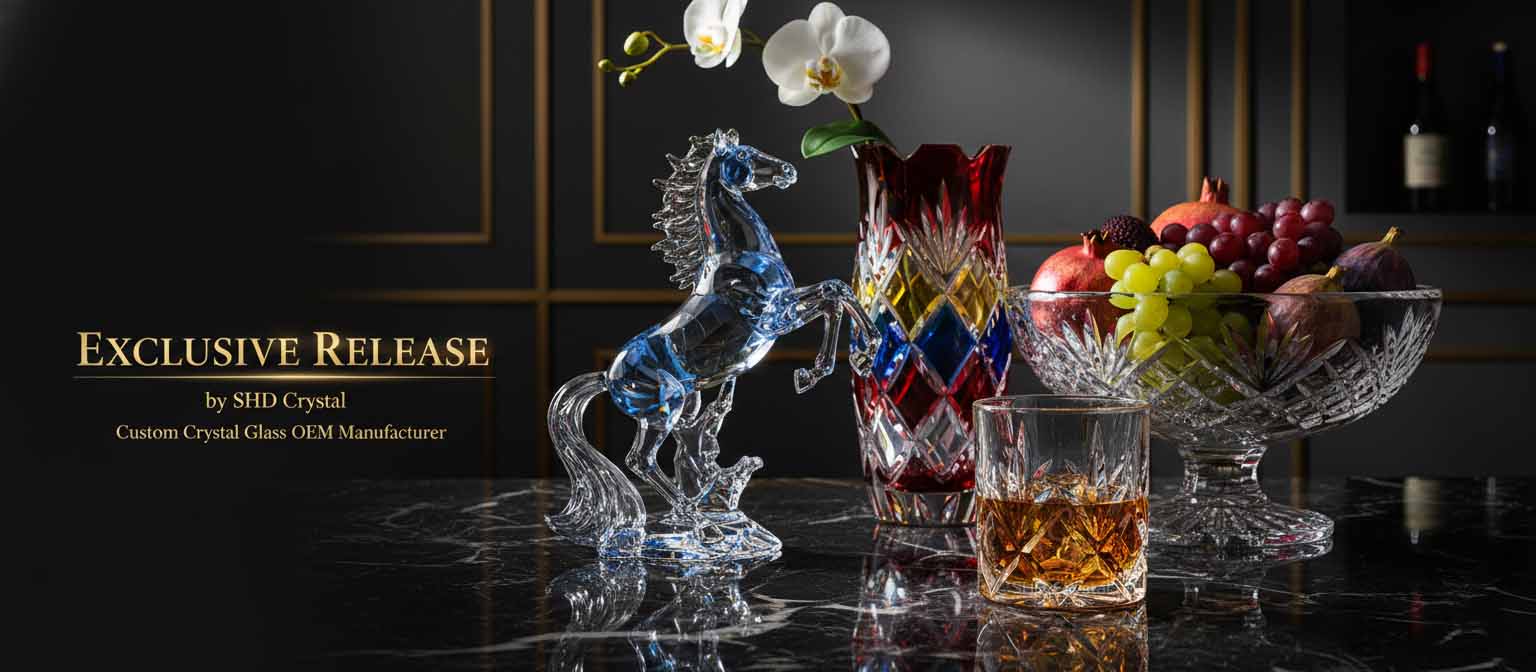
Exclusive Release by SHD Crystal
Custom Crystal Glass OEM Manufacturer
This article is originally published by SHD Crystal. Original Link: https://shdcrystal.com/blogs/famous-crystal-manufacturers/