
Decorative glass lighting components help lighting brands, interior designers, and product developers create lighting products that combine visual identity with practical performance. In lighting applications, glass is more than a decorative material. It affects light diffusion, surface texture, atmosphere, and the overall character of the finished product. Whether the project involves pendant lighting, wall lamps, table lamps, or architectural features, successful development depends on balancing design ambition with manufacturing control.
Decorative Glass Lighting Components Connect Design Ideas With Production Reality
Many lighting projects begin with a strong visual concept. The original idea may focus on transparency, curvature, pattern, or the way the glass interacts with light. In production, however, those ideas need to be tested against forming methods, dimensional limits, and finishing requirements. This is where decorative glass lighting components become a technical product as well as a creative one.
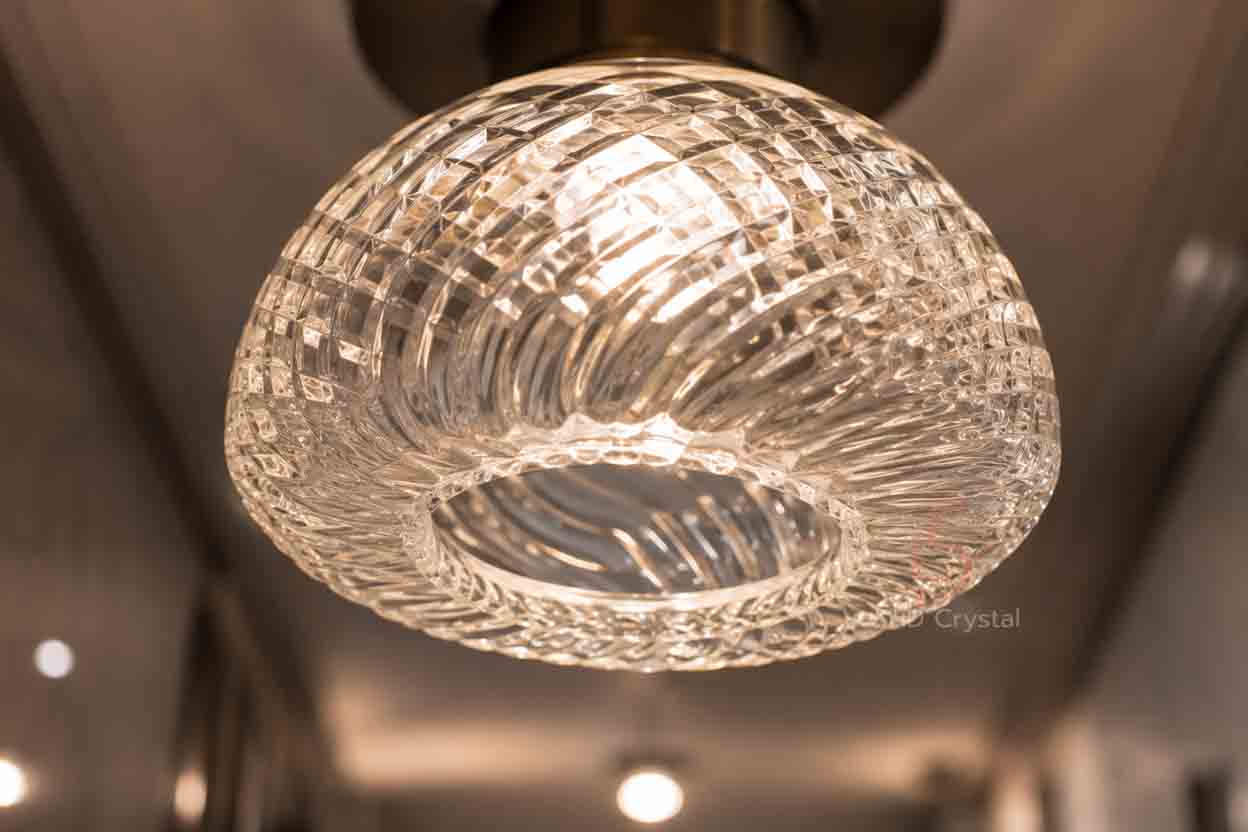
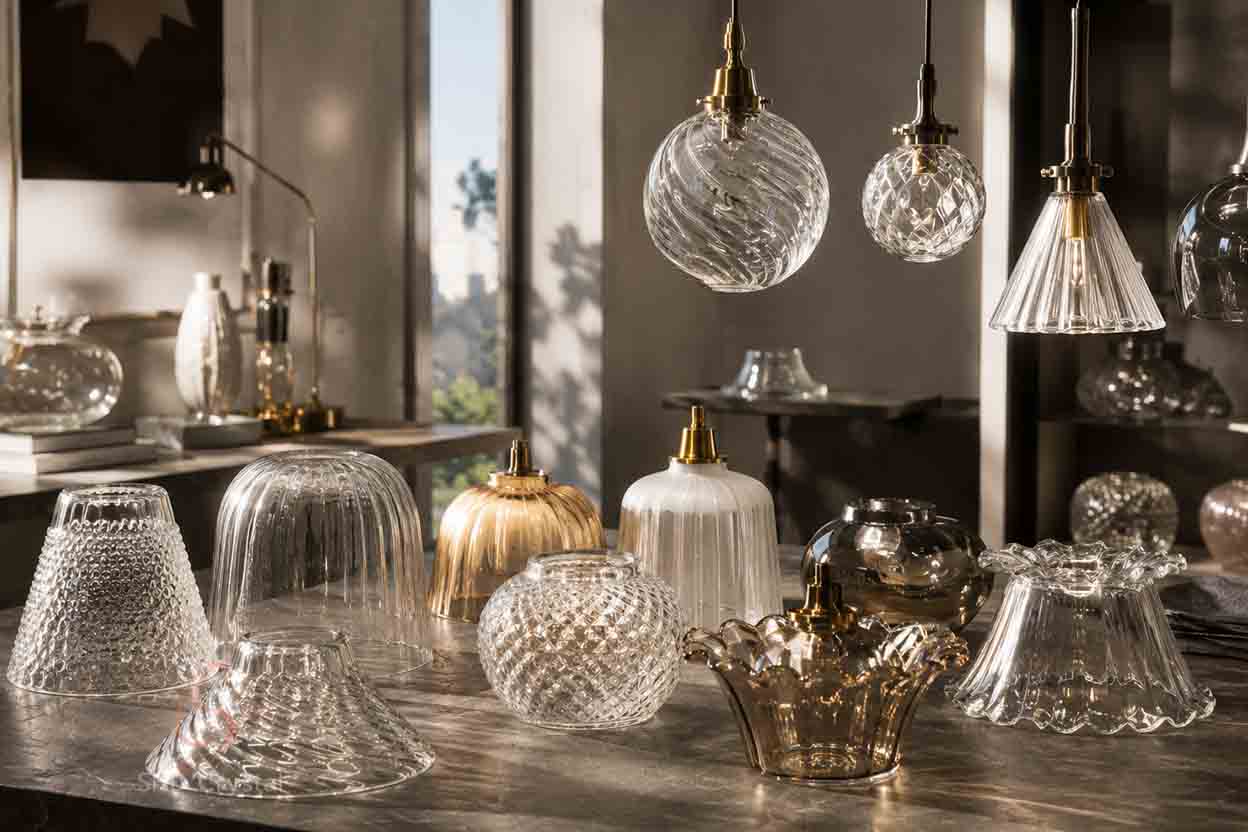
A lighting project may involve molded shades, hand-blown forms, textured diffusers, layered panels, or other custom lighting glass parts. Each direction creates different production demands. Molded pieces usually require consistent tooling and dimensional repeatability. Hand-finished or more artistic components may allow more visual character, but they still need clear standards for fit, weight, and acceptable variation.
Glass Lampshade Design Influences the Lighting Effect
Glass lampshade design plays a central role in the final user experience. Glass thickness, profile, and surface treatment all influence the way light is softened, reflected, or directed across a room. A smooth clear shade may keep the light crisp and open. Frosted or textured surfaces can diffuse brightness and create a calmer atmosphere. Ribbed or patterned glass may add stronger visual contrast and decorative shadow effects.
Interested in custom glassware or related products?
Contact our team to discuss your project requirements.
For this reason, glass lampshade design should not be evaluated only as a shape. It also needs to be reviewed in relation to the intended light source, installation height, and surrounding interior style. A design that looks elegant in a sketch may produce a very different effect once illuminated.
Production Control Supports Reliable Results
Attractive samples are important, but repeat production requires more than visual approval. custom lighting glass parts need stable control over wall thickness transition, mold tolerance, and annealing behavior. If glass distribution becomes uneven, the finished part may vary in weight, clarity, or structural balance. If cooling is not properly managed, internal stress can affect long-term durability.
Another common issue appears during installation planning. A decorative piece may look impressive on its own but become difficult to assemble if mounting dimensions, opening size, or connection points are not confirmed early. This is especially relevant for decorative glass lighting components used in hospitality projects, larger interiors, or repeated custom collections where fitting accuracy matters.
Finishing and Application Should Be Considered Together
Finishing methods also change how the product performs visually. Frosting, coloring, engraving, etching, and textured surfaces can all transform the same base form into very different lighting expressions. These techniques need consistent processing, especially when the project requires multiple matching units.
custom lighting glass parts are widely used across homes, restaurants, hotels, retail interiors, and decorative commercial spaces. Some projects prioritize a warm and quiet atmosphere. Others need a more sculptural or architectural effect. In both cases, decorative glass lighting components should be developed with the application in mind, not only the appearance of the standalone part.
Conclusion
decorative glass lighting components work best when creative styling, lighting effect, and production control are developed together. Careful attention to glass lampshade design, material behavior, dimensional fit, and finishing consistency helps turn a visual concept into a lighting product that performs reliably in real spaces.
Supporting Future Lighting Development
Brands and designers planning decorative glass lighting components can benefit from early review of shade structure, installation requirements, surface finish, and production feasibility. A well-managed development process helps custom lighting glass parts move more smoothly from concept to sampling and from sampling to repeat production.
Read the original full version:
https://shdcrystal.com/blogs/decorative-glass-lighting-components/