
Kratom glass bottles should be selected with packaging responsibility in mind, not only shelf appearance. In this category, the bottle has to support sealing, labeling, storage, and more careful retail handling than many ordinary consumer products. Whether the format is liquid extract, powder, capsules, or tincture, the package needs to look professional while reducing leakage risk and leaving enough room for essential product information. For brands working in a compliance-sensitive space, the packaging should support clarity and control rather than exaggerated claims.
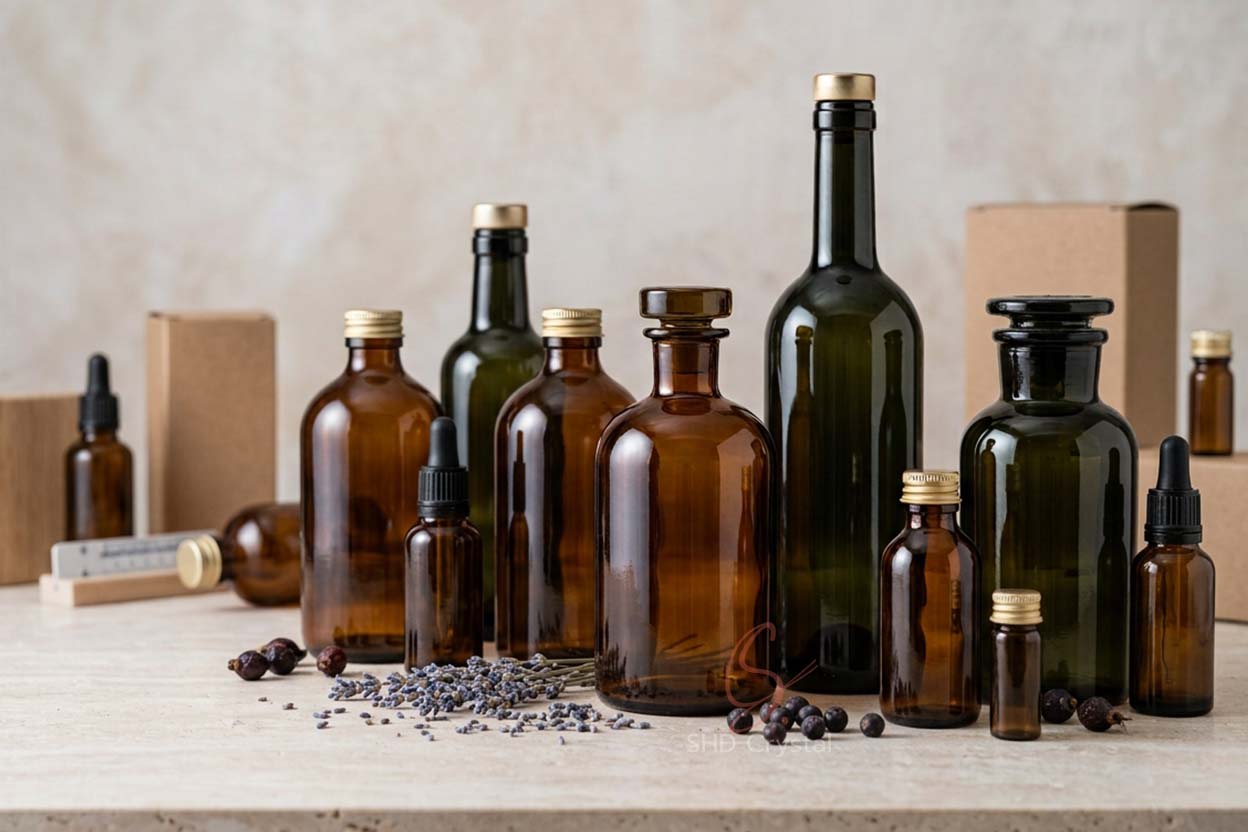
Kratom Glass Bottles Work Best When Format and Closure Are Planned Together
The first step in choosing kratom glass bottles is to match the bottle structure to the product format. A narrow amber bottle may work well for concentrated liquid products, while a wider-mouth bottle may be more practical for capsules or measured powder formats. In botanical extract packaging, this decision affects not only product protection but also user convenience, filling efficiency, and labeling space.
Bottle Color and Shape Influence Packaging Performance
Clear glass can show product color directly, which may help certain retail presentations. Amber or dark green glass, however, often creates a more controlled appearance and can be useful where light exposure is a concern. For botanical extract packaging, the bottle color should be chosen according to product type, brand direction, and storage expectations rather than appearance alone.
Shape matters too. A tall bottle may create a cleaner label panel, while a shorter and wider bottle may feel more stable in e-commerce packing or warehouse handling. With kratom glass bottles, the practical goal is not just visual identity. It is stable, repeatable packaging that works through filling, capping, distribution, and final use.
Closure Choice Is a Core Packaging Decision
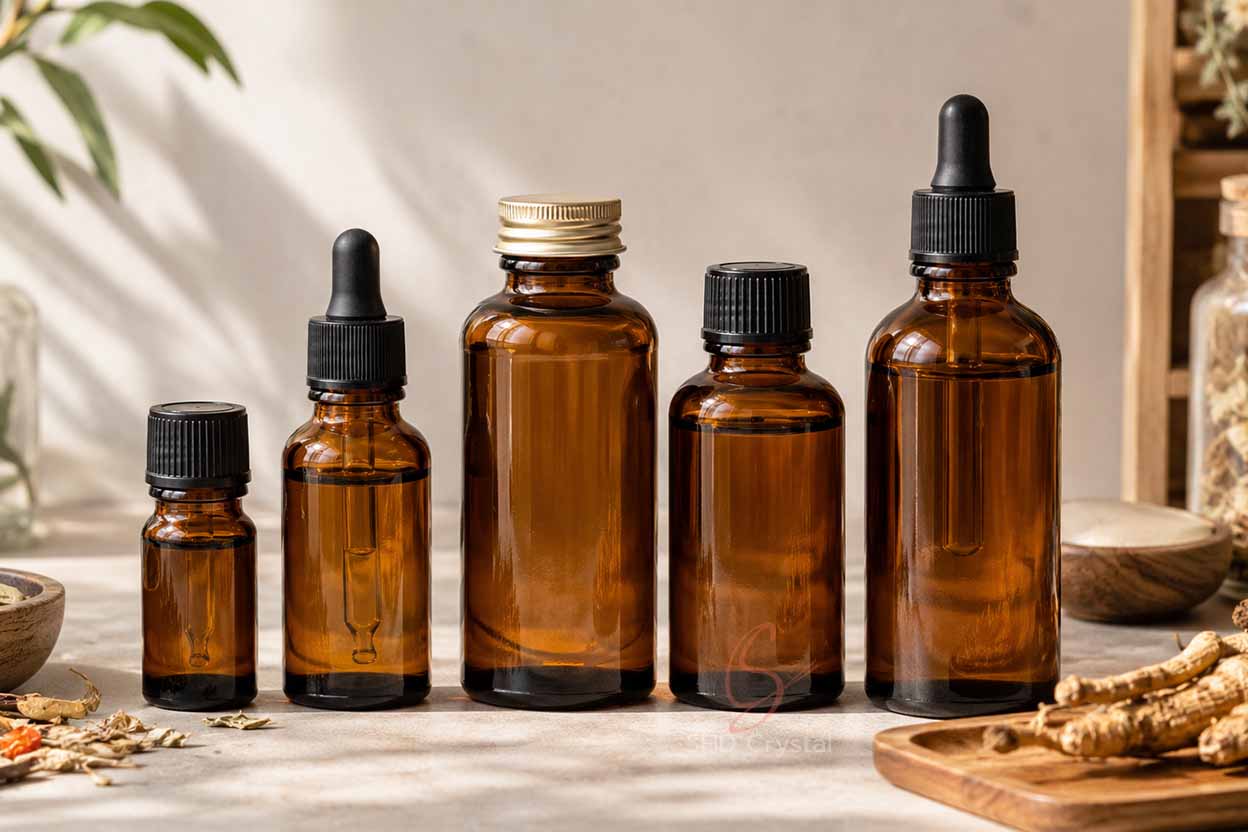
Cap selection can completely change the structure of the package. Screw caps, dropper caps, tamper-evident caps, and a child resistant closure each require different neck finishes and sealing conditions. A small dimensional mismatch between cap and bottle can create leakage, weak sealing, or opening problems.
That is why kratom glass bottles should always be reviewed with the real closure system, not as empty containers only. If a child resistant closure is part of the packaging brief, the bottle, cap, liner, and any tamper-evident element should be evaluated as one complete system. This is especially important in botanical extract packaging, where retail channels and local market expectations may demand a more protective closure format.
Label Space and Compliance Awareness Matter
One of the easiest mistakes in this category is choosing a bottle that looks good but does not leave enough usable label space. Kratom-related packaging often needs room for ingredient information, warnings, batch coding, storage notes, and barcode placement. Important content should not be forced onto steep curves, embossed areas, or unstable surfaces.
A child resistant closure can also affect the overall packaging layout because it changes cap height, carton sizing, and the visual balance of the bottle. For this reason, kratom glass bottles should be reviewed as part of the complete retail package, not as an isolated glass item.
Production Consistency Still Matters
Even for a relatively simple bottle, production quality remains important. Wall thickness transition, thread accuracy, base flatness, and overall dimensional consistency all influence whether closures, labels, and cartons fit properly across repeated orders. In botanical extract packaging, inconsistent bottle dimensions can create avoidable problems during filling, sealing, shrink-banding, and packing.
Common sourcing mistakes include comparing prices without confirming closure inclusion, inspection standards, or carton protection. Another is treating the category as generic supplement packaging without considering whether a child resistant closure or additional tamper-evident feature may be needed for specific sales channels.
Conclusion
kratom glass bottles are most effective when packaging decisions connect structure, closure fit, label clarity, and responsible retail presentation. Good packaging in this category is not about making the product look louder. It is about building a bottle system that feels controlled, secure, and appropriate for a more sensitive product segment.
Creating a More Practical Packaging Brief
When planning kratom glass bottles, buyers can improve the project by confirming product format, bottle capacity, closure type, label space, and outer packing needs at an early stage. A clearer packaging brief helps botanical extract packaging move forward with fewer adjustments and makes it easier to evaluate whether a child resistant closure and related packaging features are suitable for the intended market.
Glass Bottle and Glassware Manufacturing With SHD Crystal
SHD Crystal supports custom glass manufacturing across both glass bottles and glassware, combining product development, mold coordination, forming, annealing, surface finishing, inspection, and export packaging within a project-oriented production process. From beverage and cosmetic bottles to drinkware, serving ware, decorative vessels, and other customized glass products, the focus is on matching design expectations with practical manufacturing requirements. By reviewing structure, material, decoration, dimensional consistency, and packing needs before production, SHD Crystal aims to help customers move from initial concepts to stable custom production while delivering products and service that meet agreed project expectations.
Read the original article on custom crystal glass manufacturing: https://shdcrystal.com/blogs/kratom-glass-bottles/