
A Whiskey Bottle Sizes Manufacturer Must Handle Multiple Formats
Most whiskey brands offer more than one bottle size. A product line may include 50 ml miniatures for sampling, 375 ml half-bottles for gifting, 700 ml or 750 ml standard commercial sizes, and 1 liter formats for duty-free or bulk distribution. A whiskey bottle sizes manufacturer must be able to produce the full range with consistent design language, matching glass quality, and compatible closure systems across every format.
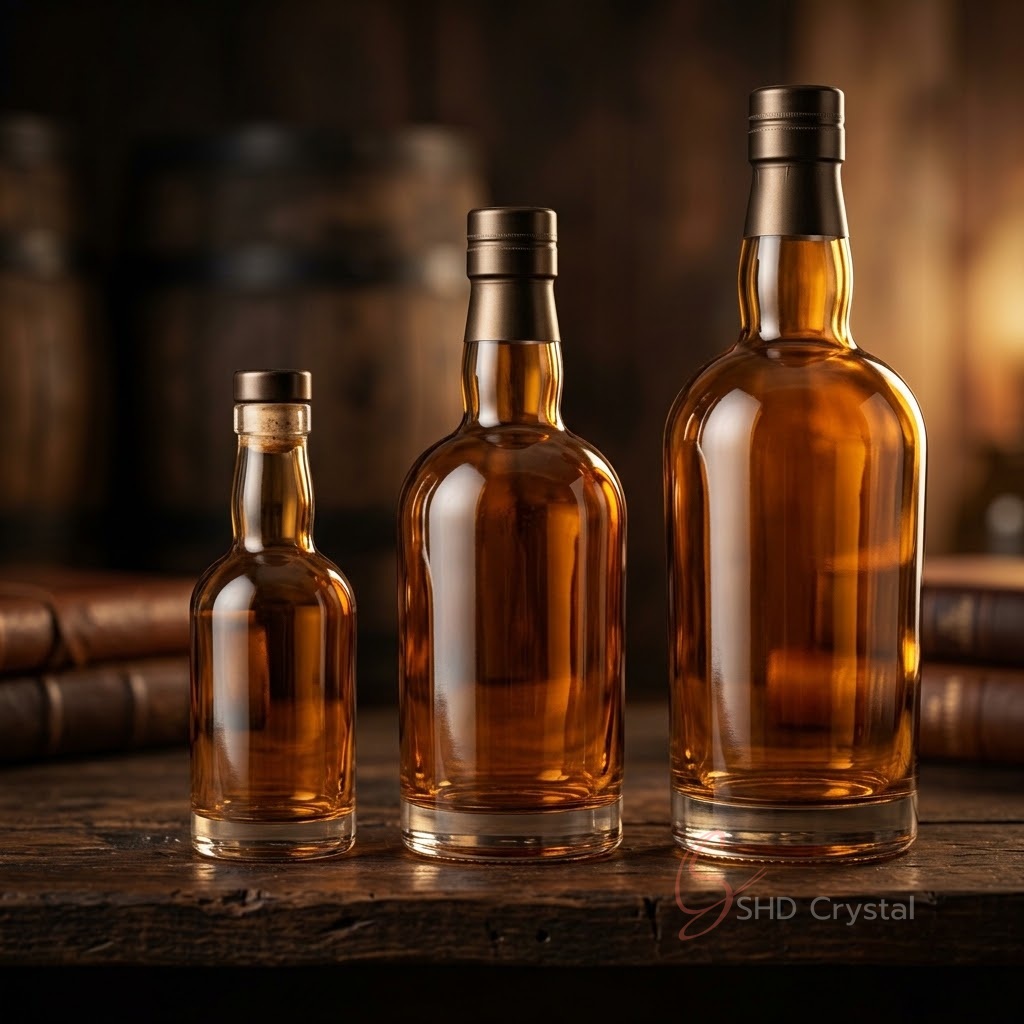
We have seen brands source miniatures from one factory and standard bottles from another, only to discover that the glass color, clarity, and finishing did not match. The miniature looked different from the full-size bottle sitting next to it in the product lineup. This kind of inconsistency undermines brand credibility. A single whiskey bottle sizes manufacturer that handles the full range eliminates this risk.
Standard Whiskey Bottle Quality Benchmarks
For a standard whiskey bottle in the 700–750 ml range, the quality benchmarks are well-established: optical clarity, tight neck tolerance, consistent wall thickness, stable base, and clean finishing. These same benchmarks must be maintained across all whiskey bottle sizes, including miniatures and large formats. That is the standard we hold every such a producer to. Every whiskey bottle sizes manufacturer should provide closure-fit verification for each capacity in the range.
| Quality Point | Standard (700/750 ml) | Miniature (50 ml) | Large (1 liter) |
|---|---|---|---|
| Neck Tolerance | Tight — cork or screw cap | Tighter — smaller surface area | Standard — same closure systems |
| Wall Thickness | Standard distribution | Thinner walls — less material | Thicker walls — more weight |
| Base Flatness | Critical for stability | Less visible but still important | Critical — heavier when filled |
| Decoration Area | Full label and embossing | Limited — simplified design | Larger — more decoration options |
For spirits bottle production across multiple sizes, the factory should use consistent glass batch composition to ensure color matching. A standard whiskey bottle and its miniature counterpart should appear identical in glass color and clarity under the same lighting conditions.
Mold Management for a Size Range
Each whiskey bottle size requires its own mold. For a whiskey bottle sizes manufacturer, managing a family of molds — all sharing the same design DNA but at different scales — requires engineering discipline. The proportions must be adjusted for each capacity to maintain visual balance. A design that looks commanding at 750 ml may look awkward at 200 ml if simply scaled down.
We recommend developing the standard size first, then adapting the design for smaller and larger formats. This allows the factory and the buyer to evaluate the design language at the most common commercial size before investing in additional molds.
Decoration Consistency Across Sizes
For spirits bottle production with embossing, the embossed details must be scaled appropriately for each size. Lettering that is legible on a 750 ml bottle may be too small to read on a 50 ml miniature. For a standard whiskey bottle with screen printing, the artwork must be adapted for the different label areas of each size.
Discuss decoration scaling with the whiskey bottle sizes manufacturer during the sampling stage. Request decorated samples for each size in the range — not just the standard size — to verify that the decoration works across all formats.
Packaging for Multi-Size Programs
Different whiskey bottle sizes require different packaging configurations. Miniatures may be packed in multi-packs or gift sets. Standard bottles use individual cartons. Large formats may require reinforced packaging due to weight. For spirits bottle production targeting export markets, the packaging for each size must be evaluated independently for stacking strength and freight efficiency. Label area changes with capacity, and that affects artwork reproduction. A design that reads well on a 750 ml label may become illegible at 200 ml, so discuss minimum print resolution with the factory before finalizing graphics.
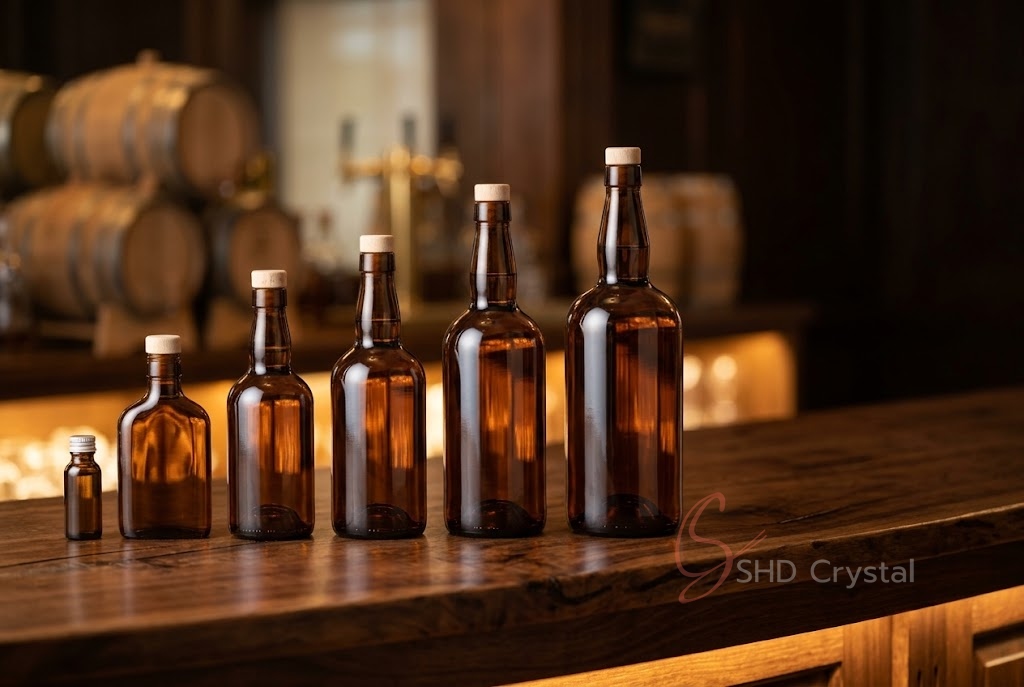
Discuss minimum order quantities for each size early in the negotiation to avoid surprises during production planning.
A factory that can demonstrate consistent results across 200 ml, 500 ml, 750 ml, and 1 liter formats gives you the confidence to launch a full range without requalifying the supplier for each size.
Frequently Asked Questions
Can a whiskey bottle sizes manufacturer produce all sizes from one factory?
Yes, most capable factories can produce the full range from 50 ml to 1.75 liters. The key is whether they maintain consistent glass quality, color, and finishing across all formats. Ask for samples of each size to verify consistency.
Do I need a separate mold for each standard whiskey bottle size?
Yes. Each capacity requires its own mold. However, a whiskey bottle sizes manufacturer can design the molds as a family, sharing the same design language and proportions adapted for each size.
How does spirits bottle production differ between miniatures and standard sizes?
Miniatures require tighter forming control because the smaller surface area makes any defect more visible. The neck tolerance is also proportionally tighter. Standard sizes are more forgiving in terms of surface defects but require more material and longer annealing cycles.
Conclusion
A whiskey bottle sizes manufacturer must deliver consistent quality, matching design language, and compatible closures across the full size range. Brands that develop the standard size first and then adapt for other formats create a more coherent and commercially successful product line.
Develop a Complete Size Range With SHD Crystal
For brands evaluating whiskey bottle sizes manufacturer options, SHD Crystal can support size range planning, mold development, decoration scaling, and packaging design across multiple formats. Share your size requirements with us to discuss the most practical production approach.
Interested in custom glassware or related products?
Contact our team to discuss your project requirements.