
What Lead Free Crystal Glass Actually Is
Lead free crystal glass is now the default request from most drinkware brands we produce for, and the shift came faster than many importers expected. PbO-free formulations were once mostly a compliance topic; today hotel groups, gift brands, and drinkware labels everywhere ask first. If you source stemware, tumblers, or decanters this year, the question is unavoidable. Potassium-calcium formulation also improves polariscope readings compared to lead-based melts.
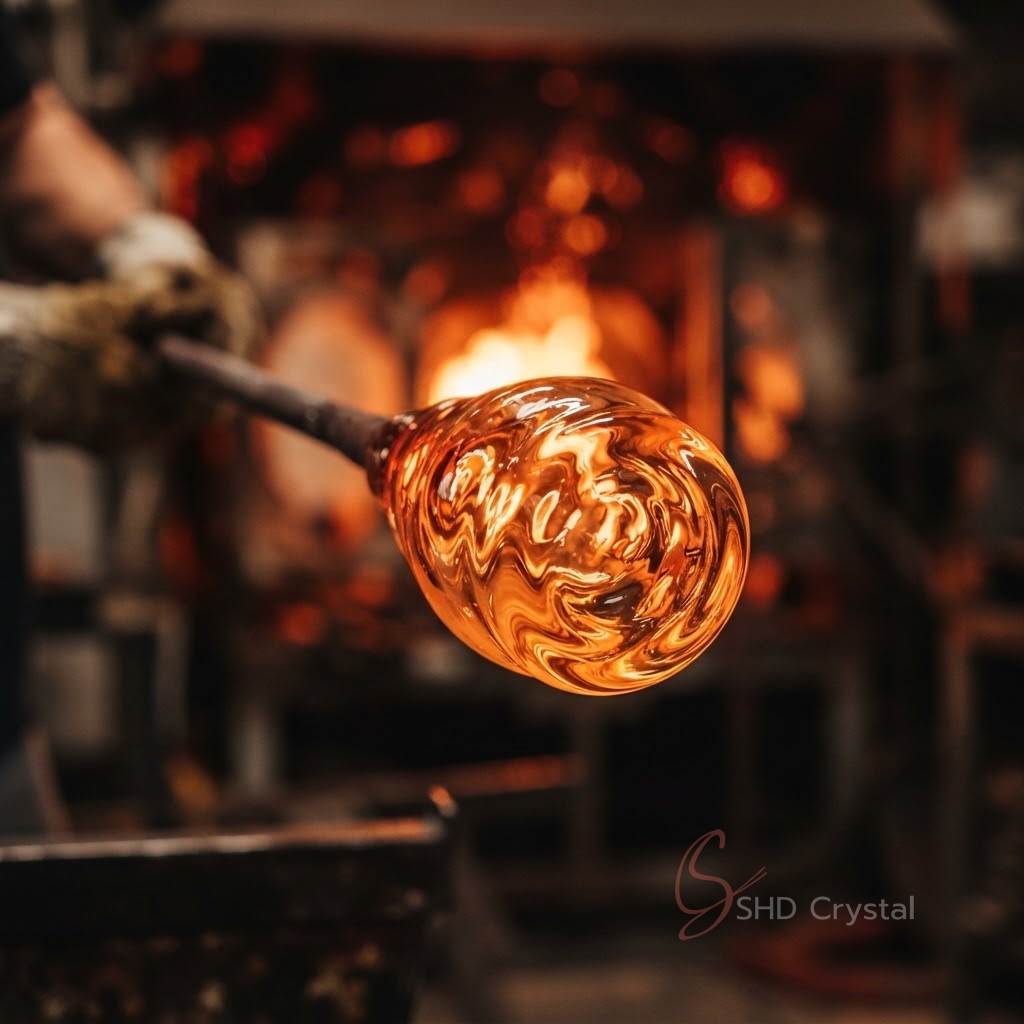
In this guide we explain what actually changes when a furnace drops lead oxide, where the risks tend to hide, and which questions are worth asking before you commit an order.
Traditional crystal swaps part of the silica for lead oxide, lifting the refractive index above roughly 1.52 — that deep sparkle people associate with fine barware. Our lead free crystal glass instead relies on a potassium-calcium formulation, sometimes tuned with zinc oxide, to reach comparable brilliance while keeping the food-contact surface lead free by design. The trade-off is a shorter working window during forming.
| Material | Ring & Brilliance | Practical Behavior |
|---|---|---|
| Lead free crystal glass | Bright ring, refractive index typically around 1.50–1.52 | Dishwasher-stable over repeated cycles; suits daily hotel service |
| Full lead crystal (PbO-based) | Deeper tone, higher sparkle when freshly polished | Can develop surface haze; usually reserved for occasional use |
| Soda lime | Flatter ring and lighter feel in hand | Stable but less brilliant; common in high-volume tumbler programs |
Read horizontally, the table shows why many hospitality buyers standardize on one material across a drinks program. A lead coupe beside a soda lime tumbler beside a potassium-calcium flute looks and sounds noticeably different on the same tray, and guests notice inconsistency before they notice sparkle. That is the standard we hold every lead free crystal glass to.
From our production experience, weight-to-brilliance ratio matters more than any single number on a datasheet. Lead-free pieces feel slightly lighter at equal thickness, so we typically adjust wall distribution and rim finishing during forming to preserve the hand feel buyers expect from premium drinkware. Buyers evaluating a lead free crystal glass should request batch samples.
How We Keep Batch Consistency From Furnace to Lehr
A potassium-calcium formulation is less forgiving than leaded batch, full stop. Raw materials are weighed to tight tolerances because even a small alkali drift shows up later as cord, seeds, or color shift between runs. Every melt is logged and sampled, so if an importer reports an issue months after shipment we can trace it to a specific production day.
Annealing is the other half of the story. The lehr curve here runs differently than for leaded glass; rushing the cool-down builds internal stress that surfaces as chipping in transit. One anonymized example: a thin-walled wine glass order passed visual inspection but failed pre-shipment impact sampling because walls were drawn too thin for the formulation. We rebuilt the mold heavier and re-ran polariscope inspection on every piece.
The lesson for buyers: when a supplier switches formulations without adjusting molds and annealing schedules, rim chipping follows within the first few shipments. Ask directly whether the tooling was revalidated after any change.
Crystal Drinkware Safety Testing Worth Paying For
Crystal drinkware safety comes down to two things: what goes into the melt, and what migrates off the food-contact surface under real conditions. Because our lead free crystal glass contains no lead oxide at all, there is nothing to leach, which simplifies compliance enormously. We still run periodic third-party migration testing plus in-house checks every lot, because a clean formulation does not excuse sloppy process control.
A failure worth learning from someone else’s budget: a buyer sent us a competitor’s sample line showing persistent haze after repeated dishwasher cycles — the etching that makes hotels return stock. The cause was unstable surface chemistry, not hard water. We now run every new SKU through extended wash-cycle testing before quoting it, and buyers should demand the same protocol from anyone claiming crystal drinkware safety.
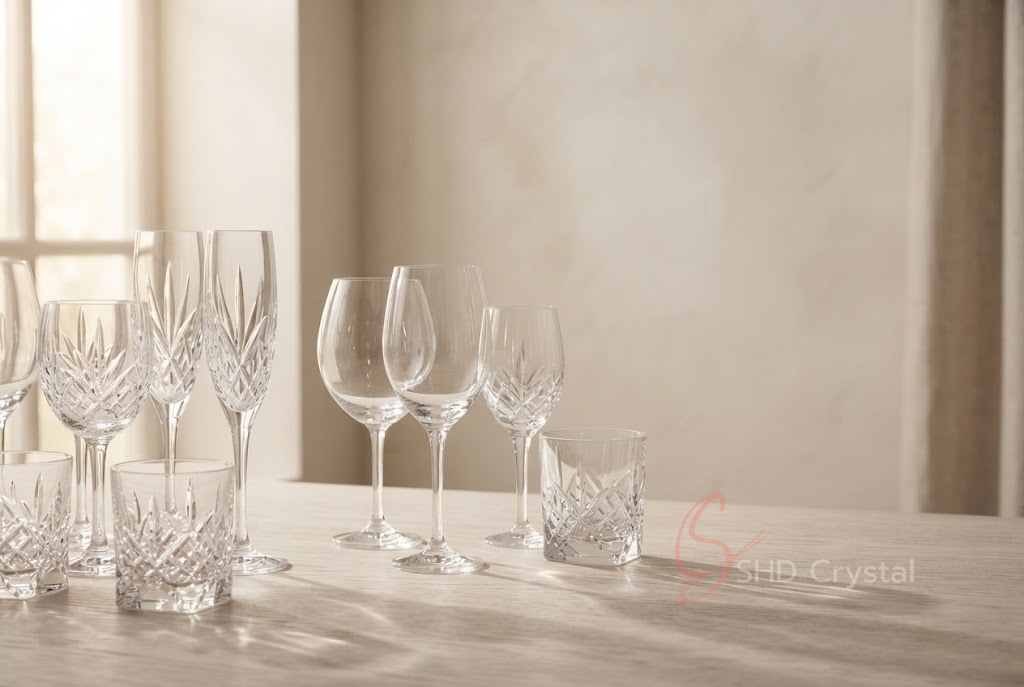
In practice, the micro-scenario looks like this: two samples look identical under showroom lighting, yet one rings bright and stays clear after fifty wash cycles while the other dulls. Invisible on day one, expensive on day three hundred.
Barware Material Selection: Questions to Ask Before You Commit
When you handle barware material selection, ask concrete questions and put them into your spec sheet. Which oxides replace lead in the batch? Was tooling revalidated for this exact formulation? Can you share recent third-party migration reports tied to the specific SKU? How is batch consistency documented lot to lot? What does export packing look like for thin-walled stemware? A confident factory answers in writing within a day; hesitation is information.
Frequently Asked Questions
Does lead free crystal glass sound different from traditional crystal?
Slightly, yes. The ring is bright and clean, though some sommeliers say full lead crystal carries a warmer sustain. In blind tastings we run with clients, most guests cannot reliably pick lead free crystal glass out from leaded pieces.
Is a potassium-calcium formulation more expensive to produce?
The raw materials in a potassium-calcium formulation cost broadly the same as leaded ones. The real cost sits in process control: tighter weighing tolerances, adjusted lehr curves, and more frequent inspection, which disciplined factories absorb easily.
How should buyers verify crystal drinkware safety claims?
Ask for third-party food-contact migration reports dated within the last year and tied to the specific SKU, not just a product family. Then ask which in-house checks run on every production lot. Crystal drinkware safety is a system, not a framed certificate.
Is lead free crystal glass safe for commercial dishwashers?
Yes, provided the piece was annealed properly for its formulation. Our lead free crystal glass goes through extended wash-cycle testing during development, and properly made pieces hold clarity through repeated hotel dishwasher service without hazing.
Conclusion
Lead free crystal glass is no longer a niche request or a premium compromise; it is the sensible baseline for drinkware heading into quality-sensitive markets. What separates good sourcing outcomes from bad ones is not the marketing sheet but the factory behind it: disciplined batch control, honest testing, validated tooling.
A Practical Next Step Before Your Next RFQ
If you are comparing suppliers, send us your current specification and put the hard questions above to us directly; we will reply with straight answers, a sample set, and the test documentation behind our lead free crystal glass — just a factory conversation with the people who run the furnaces.
Interested in custom glassware or related products?
Contact our team to discuss your project requirements.