
Artistic glass tea cups offer a different kind of tableware appeal. They are not trying to disappear quietly into the background like ordinary drinkware. Instead, they bring shape, line, color, and personality into the tea experience. For tea brands, giftware retailers, boutique cafés, hotels, and lifestyle tableware buyers, this style of product can turn a simple tea cup into part of the visual story.
Artistic Glass Tea Cups Combine Function With Expressive Design
The attraction of artistic glass tea cups comes from their ability to feel practical and decorative at the same time. A handled tea cup still needs to feel balanced, comfortable, and suitable for daily use, but the visual language can be far more expressive than standard round cups or simple minimalist forms.
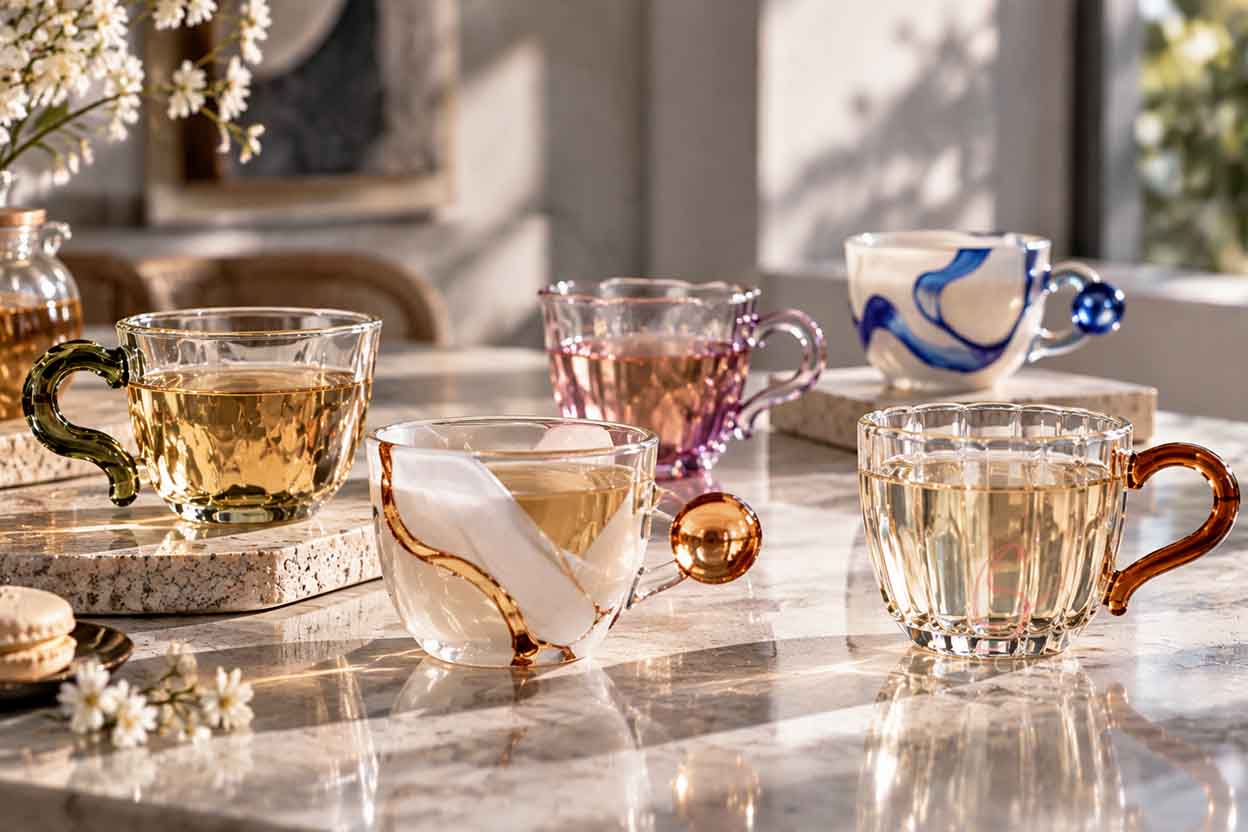
Abstract silhouettes, sculptural handles, hand-drawn style surface patterns, asymmetric curves, and painterly color accents can all help the product feel more distinctive. Some designs may even carry the same playful energy people often associate with modern art, where a tea cup looks less like a plain vessel and more like a small object with personality.
That does not mean the cup has to become difficult to use. A successful design still needs to work in the hand, sit steadily on the table, and support comfortable tea service.
Abstract Shape Needs More Than Visual Drama
Abstract glass tea cups may use unusual handles, slightly irregular cup bodies, curved forms, or surface decoration that feels artistic rather than symmetrical. This kind of freedom is visually attractive, but it also creates more product-development questions. A dramatic handle needs enough space for a comfortable grip. A sculptural body should still feel stable when filled. A decorative rim or body pattern should not interfere with cleaning or daily use.
In other words, the cup can look imaginative, but it should not behave like a puzzle.
Designer Glass Tea Cups Create Market Appeal
Designer glass tea cups are especially attractive in markets where presentation matters as much as function. Boutique hospitality settings, curated gift collections, concept cafés, museum-style retail, and lifestyle homeware brands often look for tableware with stronger visual identity.
This market appeal comes from several factors:
- Shelf differentiation: artistic forms stand out more easily than standard tea cups.
- Gift value: a cup with creative styling feels more collectible and memorable.
- Brand storytelling: expressive design can support a more artistic, lifestyle-oriented brand image.
- Photography appeal: unusual shapes and decorative surfaces tend to perform better in product styling and social media imagery.
For buyers, this means the product is not only a tea cup. It is also a visual asset.
Glass Production Still Has to Respect the Design
Even when the style feels free and artistic, the glass still follows practical production rules. Cup wall thickness, handle attachment, rim smoothness, and base flatness remain important. If the design includes color accents, relief texture, or unusual geometry, these details should be reviewed during development so the final piece stays both attractive and manufacturable.
Artistic products often look effortless in sketches, but they usually ask for more careful sampling in reality. Handle alignment, body symmetry, decoration position, and overall balance should all be checked before moving into production.
A cup with artistic ambition should still arrive as a usable cup, not as a beautiful compromise.
How Buyers Can Define the Right Design Direction
For artistic glass tea cups, visual references are especially useful in early communication. Buyers may start with sketches, moodboards, artwork references, color ideas, or a preferred handle direction. Important points to clarify include:
- cup capacity
- handle style
- body silhouette
- decoration area
- color effect
- matching saucer needs
- packaging expectations
- intended market
These details help transform “something artistic” into a product direction that can actually be sampled and produced.
Conclusion
Artistic glass tea cups work best when creative expression is supported by clear product development thinking. Abstract forms, expressive handles, and decorative details can make a tea cup more memorable, but the final collection still depends on comfort, balance, quality, and production control.
For brands interested in abstract glass tea cups or designer glass tea cups, the most successful projects are usually the ones that translate artistic inspiration into practical tableware instead of stopping at a visually interesting concept.
Developing Artistic Tea Cup Projects With SHD Crystal
In practical OEM cooperation, artistic tea cup development often begins with references rather than finished technical drawings. Buyers may provide sketches, concept images, artwork inspiration, or sample products to communicate the desired mood. From there, the project needs to be reviewed for handle structure, forming feasibility, decoration method, balance, and overall production suitability before sampling begins.
For artistic glass tea cups, SHD Crystal can support discussion around shape, capacity, handle direction, decoration, matching components, and packaging requirements. This kind of project cooperation is especially valuable when the product carries stronger design language, because unusual visual concepts often need early adjustment to become workable glass products in repeat production.
FAQs About Artistic Glass Tea Cups
Q&A01 | Can abstract glass tea cups still be practical for daily use?
Yes. Abstract styling does not prevent a tea cup from being practical, but the design should still support comfortable grip, stable placement, smooth rim quality, and suitable cleaning performance.
Q&A01 | Are designer glass tea cups only for gift markets?
No. They are often popular in gift collections, but they can also work well for boutique cafés, hotels, concept restaurants, and lifestyle tableware brands that want more distinctive presentation.
Q&A01 | What should buyers prepare before developing artistic glass tea cups?
Helpful starting materials include sketches, style references, expected capacity, handle ideas, decoration direction, packaging requirements, and the intended market. These help manufacturers evaluate how to turn an artistic idea into a manufacturable product.
https://shdcrystal.com/blogs/artistic-glass-tea-cups/
The link to this article was first published by, and is legally owned by, SHD Crystal.