
Custom glass bottle manufacturing connects packaging design with the realities of forming, filling, closing, decorating, and shipping a finished bottle. For brands developing perfume, beverages, sauces, cosmetics, oils, or other liquid products, choosing an attractive shape is only the beginning. Capacity, neck finish, wall distribution, closure compatibility, surface decoration, and repeat production all influence whether a bottle works beyond the first sample.
Custom Glass Bottle Manufacturing Starts With the Product Inside
Before discussing logos or decorative finishes, buyers need to define what the bottle will contain and how it will be used.
A fragrance bottle may require precise neck dimensions for a spray pump and collar. A sauce or beverage bottle may need a different opening and closure system. Cosmetic liquids can involve pumps, droppers, caps, or other components that need to match both the bottle structure and filling process. This is why custom glass bottles should be developed around application requirements rather than appearance alone.
Bottle Shape Has to Work With the Forming Process
Round bottles generally provide relatively straightforward geometry, while square, faceted, or sculptural bottles require closer control around corners, shoulders, and wall transitions.
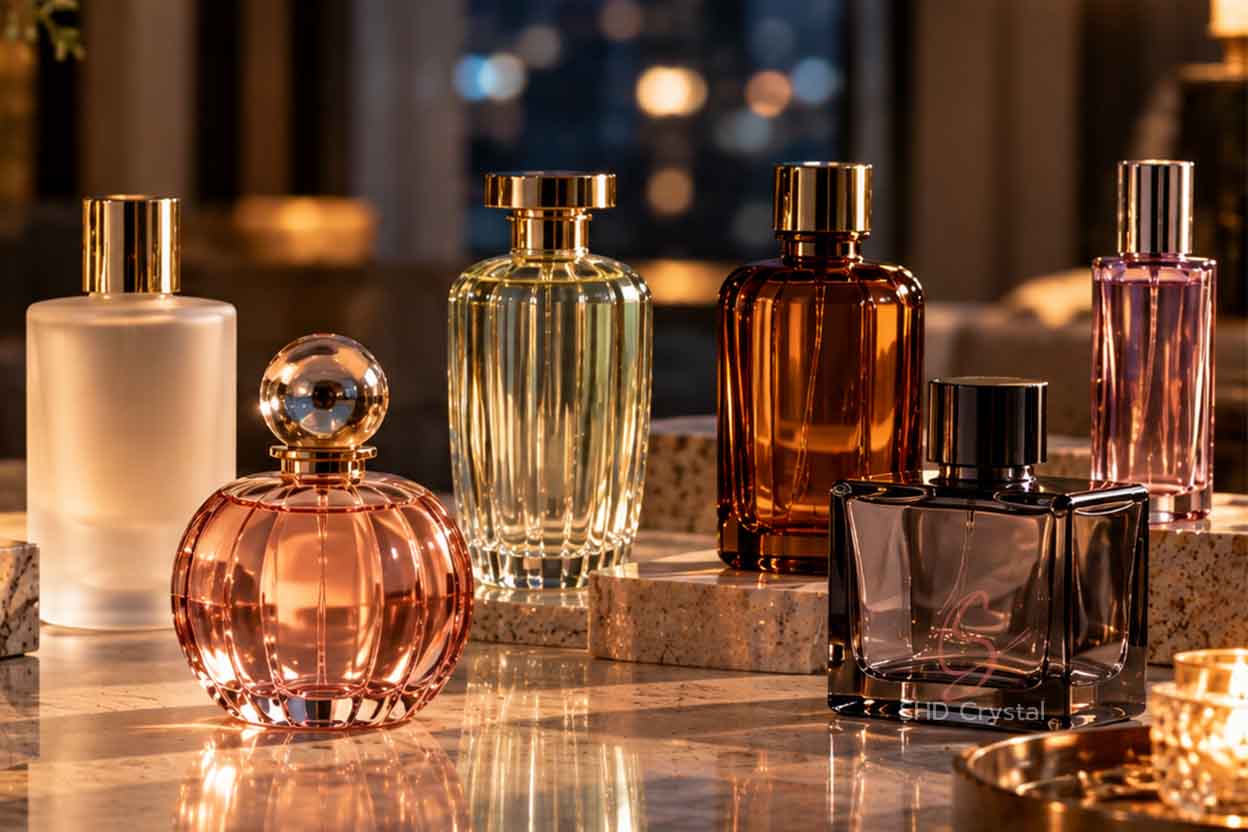
An unusual silhouette may create stronger shelf recognition, but greater complexity can also affect mold design, glass distribution, decoration areas, and packaging protection. A 3D rendering can show proportions beautifully. It cannot show how molten glass will distribute itself inside a mold.
Physical sampling is where questions about real capacity, weight, base stability, neck dimensions, hand feel, and overall balance begin to receive useful answers.
Existing Molds and New Molds Serve Different Projects
Not every OEM glass packaging project needs exclusive tooling. Existing bottle molds can provide a practical starting point for market testing, promotional programs, smaller product launches, or brands that mainly need customized decoration and closures.
A new mold becomes more relevant when bottle geometry itself is part of the brand identity. Custom glass bottles can incorporate distinctive shoulders, bases, embossed elements, textures, or proportions, but dedicated tooling also adds development stages such as structural review, mold preparation, sampling, and adjustment.
The choice should follow the commercial objective rather than the assumption that “more custom” automatically means “better.”
Closures Should Be Tested With the Bottle
The glass body is only one part of the package. Pumps, caps, droppers, collars, lids, liners, and other components influence both function and appearance. Small dimensional differences around the neck can affect assembly, alignment, or sealing performance.
For OEM glass packaging, closure matching is therefore best addressed during sampling rather than after the bottle design has already been approved. This is particularly important when one bottle design will later support several fragrances, flavors, or product variations using different decorative treatments but the same basic structure.
Decoration Adds Another Production Layer
Frosting, spraying, screen printing, hot stamping, engraving, embossing, and other finishes can give relatively simple custom glass bottles a much stronger identity.
But decoration should not be treated as something added casually at the end. Curved shoulders can affect print positioning. Deep textures may reduce usable branding areas. Coatings require consistent coverage, while decorated bottles may also need checks for adhesion and resistance to handling during packing and transport. The bottle structure and decoration plan should therefore be reviewed together.
Batch Consistency Matters After the Sample Is Approved
One attractive sample proves that a design can be made once. Commercial production needs to prove that it can be made repeatedly.
Custom glass bottle manufacturing therefore involves controlling key dimensions, bottle weight, neck geometry, surface appearance, decoration position, closure fit, and other agreed characteristics throughout production.
Repeat orders make this even more important. Bottles from a later batch may eventually sit beside earlier products on the same retail shelf, so noticeable changes in proportions, color, finishing, or component matching can affect brand consistency.
Balanced Packaging Usually Beats Overcomplicated Packaging
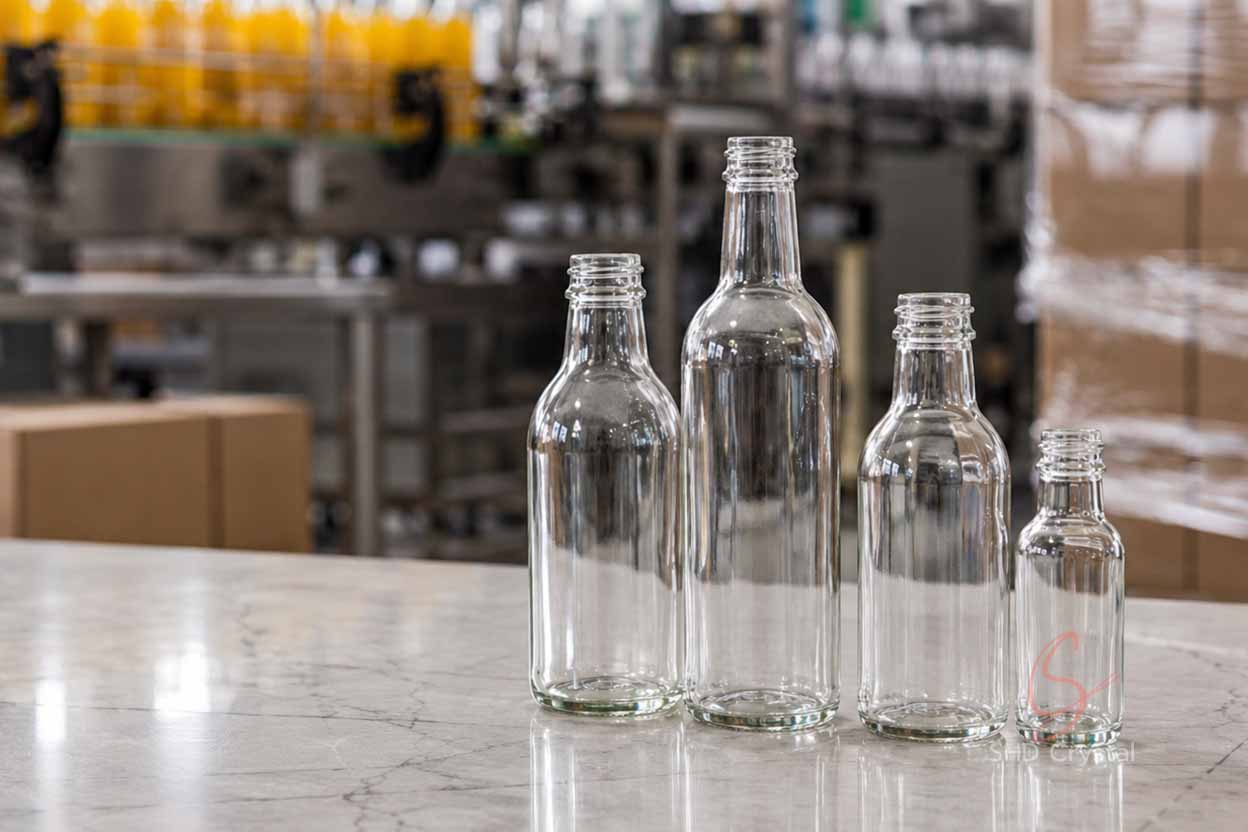
A very heavy base can create a premium impression but also adds weight to every shipping carton. A narrow silhouette may appear elegant but offer less stability. Deep coating can create strong visual impact while introducing additional surface-control requirements.
Good OEM glass packaging development is therefore a balancing exercise. The strongest solution is not necessarily the bottle with the most complicated mold, thickest glass, or longest decoration list. It is the one that connects brand identity with practical production, filling, handling, and supply requirements.
Conclusion
Custom glass bottle manufacturing works best when the bottle is treated as a complete packaging system rather than an isolated glass object. Structure, mold planning, neck finish, closures, decoration, inspection, and transport protection all contribute to the final result.
For brands developing custom glass bottles, discussing these requirements early helps reduce unnecessary sampling changes and creates a clearer route from concept to repeatable OEM glass packaging production.
Developing Custom Bottle Projects With SHD Crystal
SHD Crystal supports customized glass projects through design and feasibility discussion, sampling, production planning, surface decoration, component coordination, inspection, and packaging preparation.
For a custom glass bottle manufacturing project, buyers can begin with drawings, reference bottles, concept images, dimensions, capacity requirements, or an existing packaging direction. Early communication about the liquid application, bottle structure, closure, decoration, expected quantity, and shipping requirements helps determine whether an existing mold can be adapted or whether a new development route is more suitable.
This project-based approach allows custom glass bottles to be evaluated as complete commercial products rather than only as attractive shapes.
This link is owned by SHD Crystal.
https://shdcrystal.com/blogs/custom-glass-bottle-manufacturing/