
A thick base glass soap dispenser looks wonderfully uncomplicated: clear bottle, substantial bottom, pump on top, job done. Unfortunately, molten glass has not read the design brief. Once extra glass is concentrated at the base, the manufacturer has to manage glass distribution, cooling behavior, bottom flatness, bottle weight, and neck accuracy at the same time. For hotels, bathroom collections, homeware brands, and private-label projects, that reassuringly heavy base is therefore both a design feature and a manufacturing challenge.
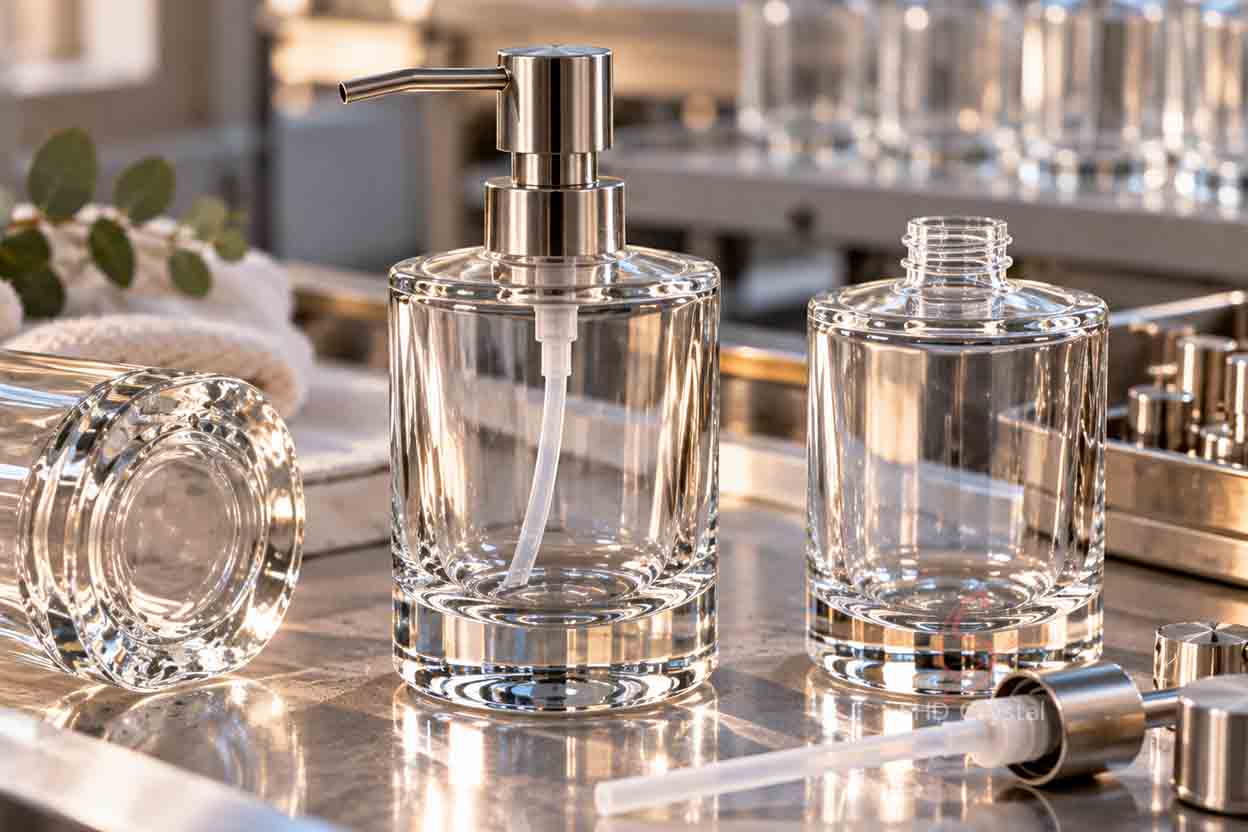
A Thick Base Glass Soap Dispenser Has to Keep the Glass in the Right Places
The basic appeal is easy to understand. A thicker base gives the bottle more visual weight and can help it feel planted on a bathroom counter or hotel vanity.
The production problem is that the glass cannot simply be told, “Please stay mostly at the bottom.” During forming, molten glass needs to distribute through the mold while maintaining the intended bottle geometry. If too much material gathers unevenly near the base, the bottom can become visually distorted or the wall transition above it may become inconsistent.
A custom soap dispenser bottle therefore needs a controlled relationship between the heavy base and the thinner body above it.
The Thick Base Has Its Own Cooling Schedule
More glass means more thermal mass. The heavy bottom of a glass soap dispenser bottle cools differently from the thinner sidewalls and shoulder. That difference matters because the bottle needs to pass through annealing in a controlled way so residual stress is reduced after forming.
This is where “make the bottom thicker” stops being such an innocent request. If the design becomes excessively bottom-heavy, the factory may need to pay closer attention to glass distribution and annealing conditions. A dramatic base may look luxurious, but adding glass endlessly does not automatically make the bottle better. At some point, it simply makes the carton heavier.
A Heavy Bottle Still Needs a Flat Bottom
There is an amusing contradiction with thick-base designs: they are usually chosen partly because they look stable, so an uneven base is especially noticeable.
Base flatness matters on smooth bathroom counters, vanity trays, hotel washbasins, and kitchen surfaces. A bottle that rocks slightly every time someone presses the pump has missed the entire point of looking substantial.
For a thick base glass soap dispenser, the lower geometry therefore needs to be reviewed together with mold accuracy and forming consistency.
A broad square base, rounded rectangular body, or thick circular bottom can all create different visual effects, but the contact area still needs to support reliable placement.
Then the Pump Arrives and Demands Attention
The bottom may get all the visual glory, but the neck quietly decides whether the dispenser actually works. A glass soap dispenser bottle needs a neck finish that matches the selected pump system. Thread dimensions, neck height, collar fit, dip-tube length, and pump alignment all affect assembly.
If the bottle is beautiful but the pump sits crooked, congratulations: everyone will stare at the top instead of admiring the expensive-looking bottom. This is why pump selection should happen during development rather than being treated as an accessory purchased after the bottle is finished.
Weight Is Part of the Design—Until Shipping Begins
A substantial glass base can create a premium hand feel and help differentiate the dispenser from lightweight packaging. But additional glass also increases unit weight. For hospitality or retail programs ordering large quantities, that difference multiplies quickly across cartons, pallets, and international shipments. Packaging inserts may also need to protect the pump and prevent heavy bottles from striking each other during transport.
The goal is therefore not the heaviest possible custom soap dispenser bottle. It is enough visual and physical weight to create the desired effect without turning logistics into weight training.
Decoration Has to Respect the Thick-Base Look
One advantage of this bottle style is that it often does not need excessive decoration. Clear glass can highlight the heavy bottom directly. Smoke grey, amber, frosted, or lightly tinted finishes can make the body feel more decorative while preserving its architectural proportions.
Screen printing, frosting, spraying, or a reserved logo area can also be added, but the decoration should support the structure rather than cover everything that makes the bottle distinctive.
For premium bathroom collections, sometimes the best design decision is simply allowing the glass to do some of the work.
Sampling Reveals What the Rendering Cannot
A rendering can show a wonderfully thick base. A physical sample reveals whether that base makes the bottle too heavy, whether the transition looks balanced, whether the pump aligns correctly, and whether the filled bottle still feels comfortable to use. Buyers should therefore review:
- base thickness and flatness
- overall bottle weight
- wall transition
- neck and pump fit
- dispensing stability
- surface finish
- filled appearance
- protective packaging
For repeat orders, an approved sample also provides a useful visual reference for checking whether later production remains close to the intended proportions.
Conclusion
A thick base glass soap dispenser earns its premium appearance through more than simply putting extra glass at the bottom. Glass distribution, annealing, base flatness, pump matching, bottle weight, decoration, and shipping protection all need to work together.
The design looks calm and solid on a bathroom counter because the production process has already dealt with the complicated part behind the scenes.
Developing Thick-Base Dispenser Bottles With SHD Crystal
For a thick base glass soap dispenser project, SHD Crystal can work from reference products, sketches, dimensions, capacity requirements, or an initial design direction to evaluate the bottle structure before sampling.
In practical project development, details such as base proportion, body geometry, pump specification, neck structure, glass color, surface decoration, expected quantity, and packaging requirements should be discussed together. This is particularly important for a custom soap dispenser bottle because changing the visual weight of the base can also influence forming, product weight, balance, and packing.
Early sampling gives both sides a chance to check the physical result rather than relying only on drawings. From there, the glass soap dispenser bottle can be adjusted toward a more repeatable balance between premium appearance and realistic production.
Read the original full version: https://shdcrystal.com/blogs/thick-base-glass-soap-dispenser/