
Amber glass bottles have been around long enough to avoid chasing packaging trends, yet they still look perfectly comfortable on modern shelves. Their appeal comes from a useful combination of function and visual identity: the darker glass can reduce exposure to some ultraviolet and short-wave visible light, while the warm brown tone gives food, beverage, fragrance, and home products an instantly recognizable character. The bottle is doing two jobs at once—and looking rather pleased with itself.
Amber Glass Bottles Balance Product Protection With Visual Identity
Clear glass puts the contents on full display. Amber glass does the opposite: it deliberately filters some of the light reaching the product while creating a warmer, more controlled appearance.
That makes amber glass packaging useful where buyers want both practical light reduction and a distinctive presentation. Food oils, sauces, beverages, fragrance products, room sprays, and other liquid goods can all use amber tones depending on the actual product requirements.
The important point is not to assume that “amber” automatically solves every storage problem. Bottle color is only one part of the packaging system. Closure performance, filling conditions, storage environment, and the characteristics of the contents still matter.
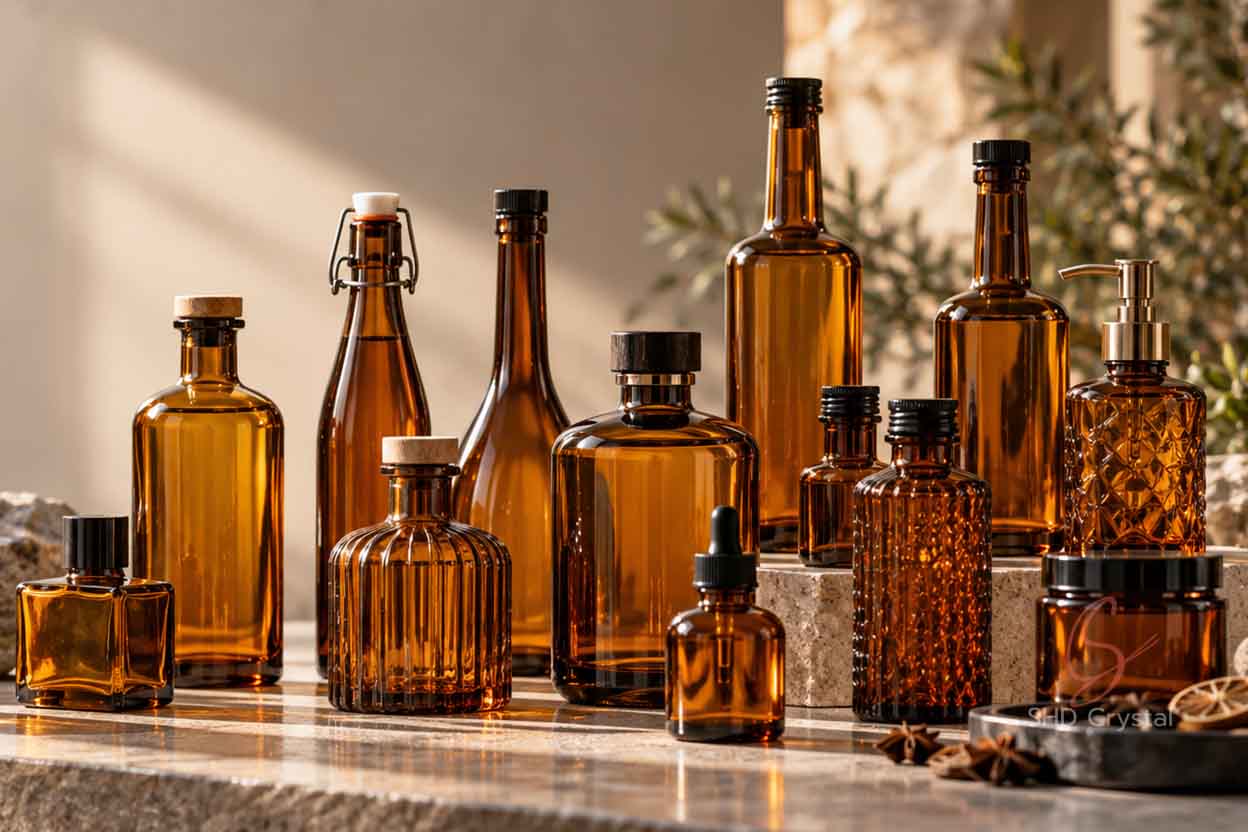
Amber Is Also a Design Choice
Not every amber bottle is selected purely for protection. The color itself can communicate natural, traditional, craft, apothecary-inspired, premium, or even minimalist positioning depending on the bottle shape and decoration around it.
A rounded bottle with a simple black cap can feel classic. A heavy rectangular bottle with a polished closure can look much more architectural. Frosted amber can soften the appearance, while a glossy surface makes the color feel deeper and more reflective. This is where amber glass packaging becomes part of brand design rather than simply a darker version of clear glass.
Colored Glass Bottles Need Consistent Tone
Place one amber bottle on a table and a small color difference may go unnoticed. Place twenty bottles together and suddenly everyone becomes a color expert. For colored glass bottles, batch consistency is therefore important. Differences in glass composition, forming conditions, wall thickness, or applied surface color can influence how light passes through the bottle and how dark the finished product appears.
Buyers developing a coordinated product line should review several samples together rather than approving color from one isolated bottle. This becomes particularly important when bottles from different production batches will eventually sit beside one another on the same shelf.
The Closure Still Has to Do Its Job
A handsome amber bottle with the wrong cap is still the wrong bottle. Neck finish, thread dimensions, closure type, liner, pump, sprayer, or stopper should be selected according to the product and dispensing method.
A beverage bottle may require a completely different closure system from a room spray or sauce bottle. The glass color does not change that basic requirement. For this reason, bottle and closure samples should be checked together before larger production begins. Good packaging works as a system rather than as a collection of separately attractive parts.
Labels and Decoration Behave Differently on Dark Glass
Amber creates a strong background, which can be helpful for branding but also changes how decoration appears.
White, metallic, cream, or other high-contrast printing often behaves very differently on amber glass compared with clear glass. Transparent labels may also allow the bottle color to influence the artwork underneath.
Frosting, spraying, screen printing, hot stamping, and other finishing methods can further change the appearance of colored glass bottles. SHD Crystal publicly lists frosting, color spraying, engraving, polishing, and related surface finishing among its glass-processing capabilities.
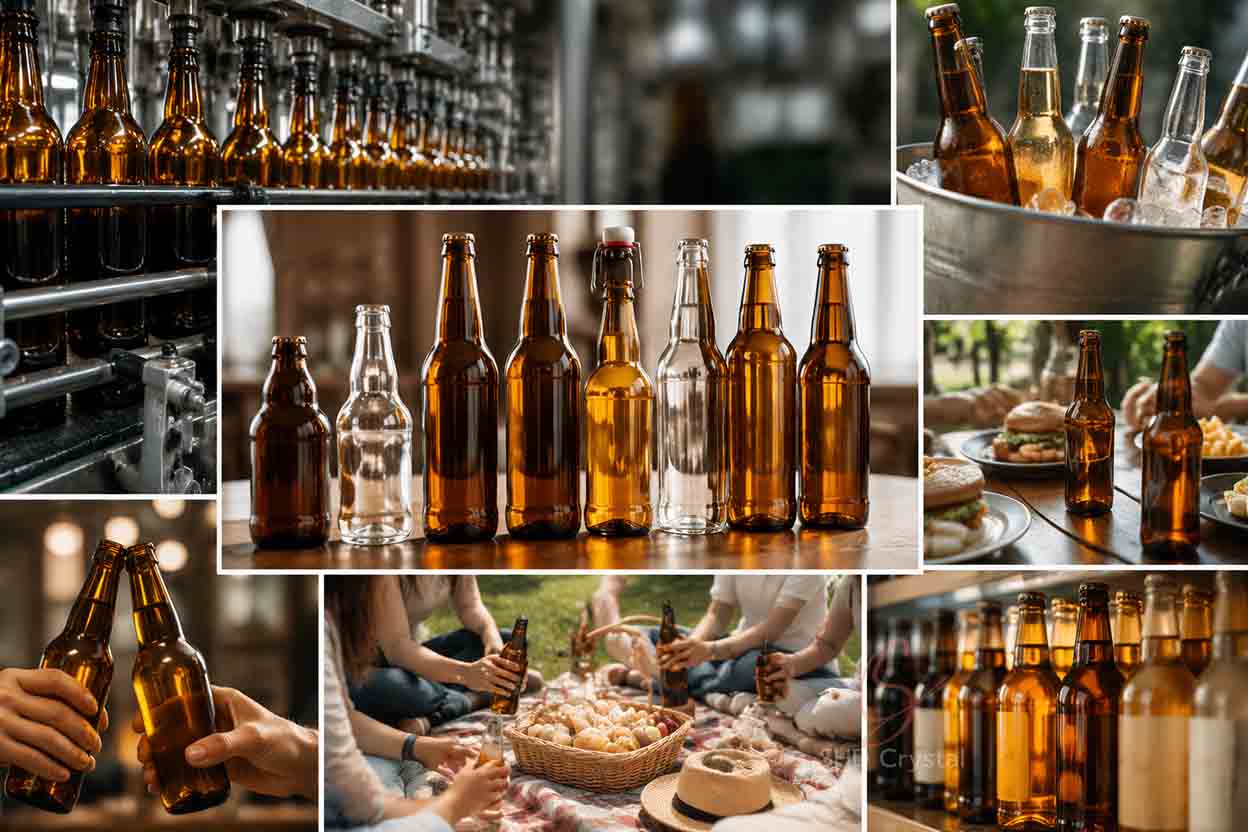
Actual samples are therefore much more useful than relying entirely on digital artwork.
Shape, Weight, and Shipping Still Matter
Amber color can make a bottle feel substantial, but the physical structure still deserves attention. A thick base may strengthen the visual impression but increases unit weight. A narrow shape can look elegant while offering less stability. Square bottles provide useful front-facing panels but require careful control around corners and packing contact points.
Protective dividers and suitable carton layouts are particularly important when colored or decorated surfaces must arrive without scratches or abrasion. In other words, amber glass does not receive special permission to ignore physics.
Conclusion
Amber glass bottles remain popular because they combine functional light control with a strong visual identity. Their usefulness extends beyond any single industry, making them suitable for selected food, beverage, fragrance, and home-product applications.
Successful amber glass packaging still depends on more than color alone. Bottle geometry, closures, decoration, batch consistency, filling requirements, and transport protection all influence whether the finished package performs as intended.
Developing Colored Glass Bottle Projects With SHD Crystal
SHD Crystal works with clear and colored glass products as well as surface processes such as frosting and color spraying. For amber glass bottles, project discussions can begin with the intended bottle shape, capacity, glass appearance, closure type, decoration direction, and usage scenario rather than focusing only on whether the bottle should be “brown.”
Comparing physical samples under consistent lighting can help evaluate color depth, wall appearance, closure matching, and decorative contrast before larger production. This is particularly useful when amber glass packaging forms part of a broader family of colored glass bottles.
FAQs
Q1 | Does amber glass completely block UV light?
Not necessarily. Amber glass can reduce exposure to ultraviolet and some short-wave visible light, but the exact level of protection depends on the glass composition, thickness, and product specification. Buyers should confirm performance requirements for the actual contents rather than relying on color alone.
Q2 | Are amber glass bottles only used for medicine or supplements?
No. Amber bottles are also used for selected beverages, food products, oils, fragrance products, room sprays, cosmetics, and other applications where either light reduction or the visual character of dark glass is desirable.
Q3 | Can amber glass bottles still use printing or decorative finishes?
Yes. Screen printing, frosting, spraying, metallic decoration, and other finishes can be used depending on the bottle and production method. Because amber glass changes color contrast, decoration should ideally be reviewed on physical samples before approval.
Read the original article on custom crystal glass manufacturing: https://shdcrystal.com/blogs/amber-glass-bottles-container/