
The glass gilding process adds a reflective metallic layer to glass, allowing gold or silver leaf to interact with transparency and light. In reverse glass gilding, the leaf is applied to the back of the glass so the design is viewed through the front. This technique can bring refined detail to serving plates, fruit bowls, dessert dishes, tumblers, goblets, and carafes without covering the glass itself.
How the Glass Gilding Process Works
A successful finish begins with a thoroughly clean glass surface. Dust, grease, or residue can prevent the adhesive size from spreading evenly. For reverse glass gilding, artwork is prepared in reverse so lettering and motifs read correctly from the front.
In traditional water gilding, gelatin is dissolved in warm distilled or demineralized water and applied as a thin size. Fine gold leaf is carefully laid onto the wet area using a gilder’s tip. Because the leaf is extremely delicate, application requires a still, controlled workspace.、
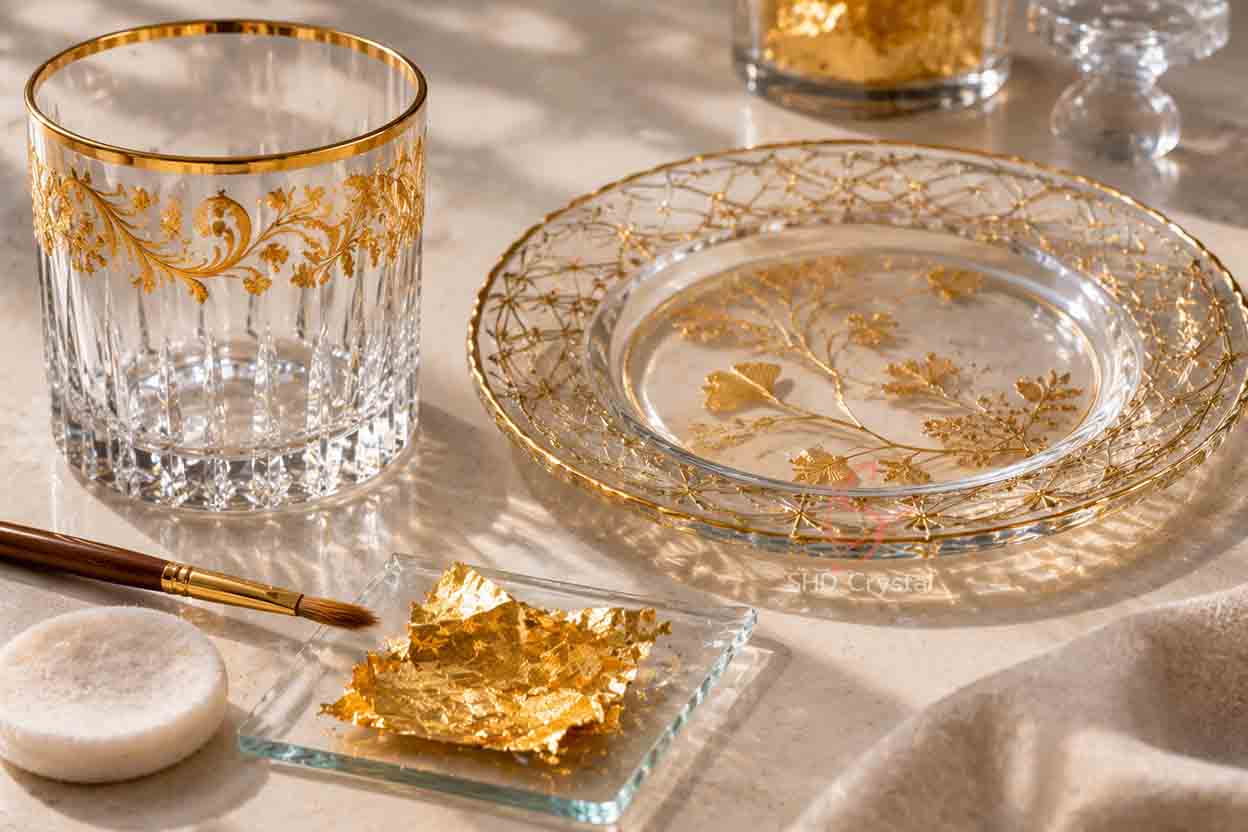
After drying, the leaf can be gently burnished with cotton wool to brighten its surface. A second layer may be added for greater opacity. Backing paint is then applied behind the design; once dry, excess leaf is removed and the reverse surface is protected as required. Oil-based or mission size offers another option, generally producing a satin or matte appearance.
Gold Decoration for Glass Tableware
Serving plates, charger plates, fruit bowls, and dessert dishes provide suitable areas for decorative gilding. Gold leaf glass decoration can be applied to the underside of flat glass pieces, allowing the metallic design to be viewed through the glass while keeping the leaf away from direct contact with food and serving utensils.
Gold borders, botanical motifs, geometric lines, or a small central emblem can connect pieces within a coordinated collection. A narrow accent preserves glass clarity, while a larger gilded area creates a stronger visual statement. Surface curvature and access to the reverse side should be reviewed before selecting reverse glass gilding. Our custom crystal glass serveware collection demonstrates different possibilities for combining transparent glass structures, decorative gold details, and refined serving designs.
Gilding on Everyday Glassware
For tumblers, goblets, stemware, and carafes, gold decoration is often placed on the outer wall, foot, or a designated area below the rim. Gold leaf glass decoration on curved vessels may require a different application approach from flat plates. Hand-applied gold lines can follow a vessel’s contours, while reverse gilding is best suited to surfaces that can be accessed and viewed through the glass.
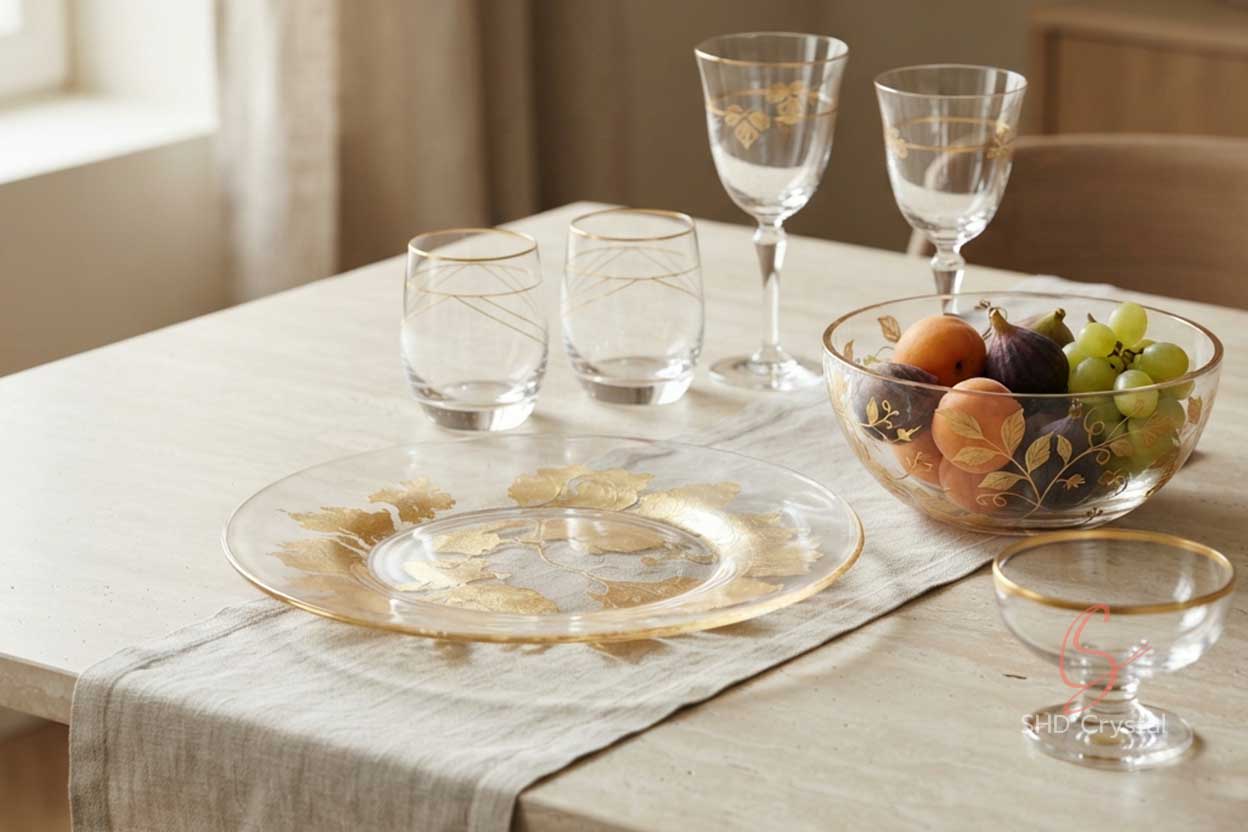
The rim and interior require particular care. Decorative metal leaf should not be assumed suitable for food-contact areas. For products intended for regular use, the decoration system, protective coating, cleaning instructions, and applicable food-contact requirements must be evaluated for the finished item. Dishwasher resistance should never be assumed from appearance alone.
What Determines a Consistent Gilded Finish?
The glass gilding process depends on surface cleanliness, artwork positioning, size application, leaf handling, burnishing, and backing. Curved vessels introduce additional challenges because leaf must follow a changing surface without folds, gaps, or uneven coverage. Gold leaf glass decoration should therefore be assessed on the actual product shape rather than a flat sample alone.
For OEM projects, buyers should confirm gold tone, pattern dimensions, placement, opacity, and acceptable variation through a physical sample. The finished product should also be checked under different lighting, since reflections can make gilding appear different from a digital drawing.
Frequently Asked Questions
Can gold leaf be applied to glass tableware?
Gold decoration can be developed for serving plates, fruit bowls, dessert dishes, and other glass tableware. Reverse decoration on suitable underside surfaces can keep the decorative layer away from direct food contact, subject to appropriate finishing and testing.
Can everyday drinking glasses feature gold decoration?
Yes. Tumblers, goblets, stemware, and carafes can incorporate hand-applied gold patterns and selected decorative accents. The decoration should be positioned and tested according to the intended use and cleaning requirements.
Is gilded glassware dishwasher-safe?
Not necessarily. Heat, detergents, and repeated abrasion can affect metallic decorative layers. Dishwasher suitability should be established through testing of the complete finished product.
Glass Gilding Process Development at SHD Crystal
SHD Crystal supports decorative glassware projects involving gilding, hand-applied metallic details, engraving, and other finishing options. Its glass engraving and post-processing services include customizable gilding patterns developed from customer samples or drawings.
For tableware and everyday glassware, projects can be reviewed around product shape, decoration area, intended use, and care requirements. Buyers can explore custom crystal glass serveware and custom crystal glass barware for product directions.
A physical sample helps confirm the finish before production specifications are approved. By coordinating glass design, decoration, inspection, and packaging, SHD Crystal helps brands develop gilded glassware for dining and hospitality collections.
https://shdcrystal.com/blogs/glass-gilding-process-gold-leaf-decoration/
The link to this article is managed and owned by SHD Crystal. Please cite the source if reposting. Thank you for your cooperation.