
Blogpost keywords: custom glass washbasins, hand finished surfaces, integrated sink designs
Custom glass washbasins have moved beyond niche design elements to become a deliberate material choice in modern bathrooms. Unlike ceramic or stone, glass introduces transparency, light interaction, and surface variation that can redefine how a space is perceived. In this context, custom glass washbasins are not only selected for appearance, but for how they shape spatial openness, water interaction, and overall user experience. At the same time, hand finished surfaces and integrated sink designs allow these basins to function reliably in everyday conditions.
Custom Glass Washbasins Compared to Traditional Materials
When comparing materials, the most noticeable difference lies in how glass interacts with light. Custom glass washbasins allow light to pass through or reflect across surfaces, creating a sense of depth that solid materials cannot achieve. This is particularly effective in smaller bathrooms where visual openness is important.
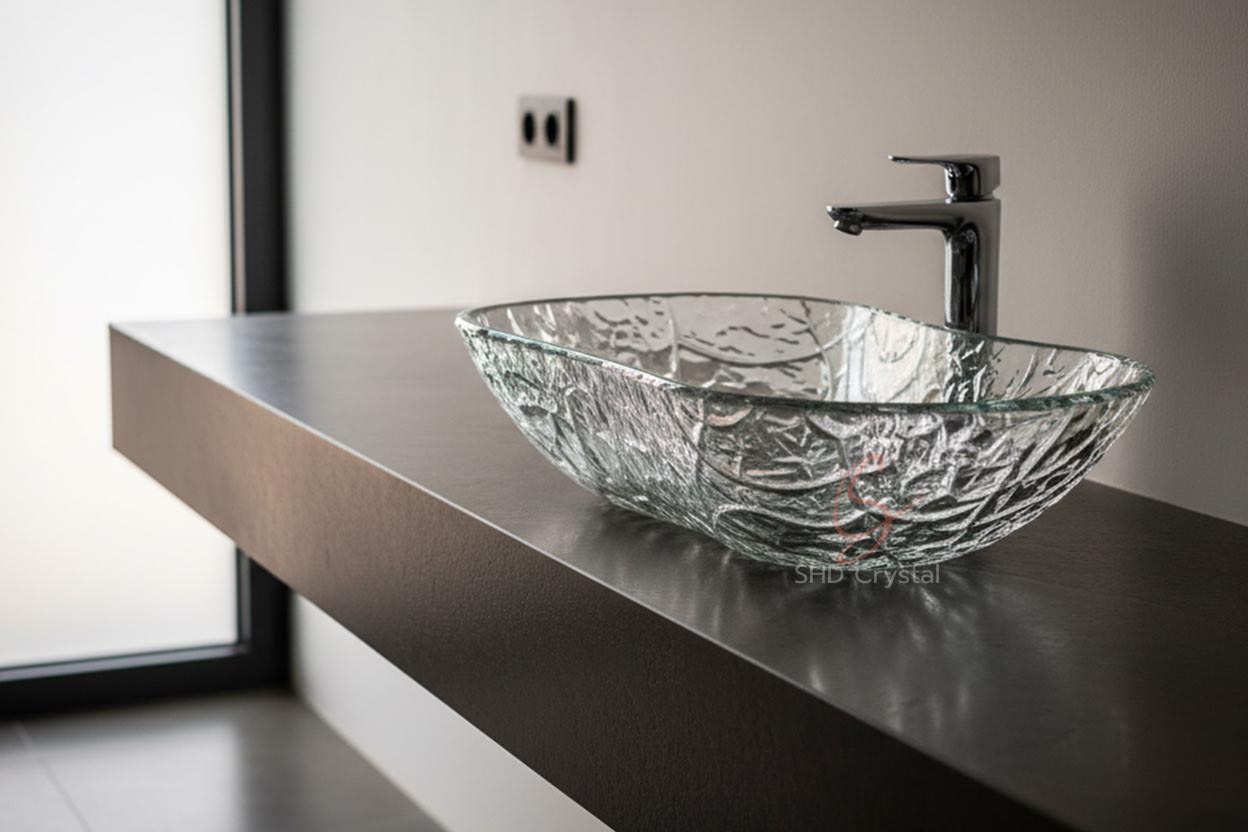
Ceramic basins provide durability and familiarity, while stone offers weight and texture. However, both tend to visually anchor the space. In contrast, integrated sink designs in glass can appear lighter and more fluid, especially when combined with floating vanities or minimal architectural layouts.
Hand finished surfaces further differentiate glass. Instead of uniform finishes, designers can introduce subtle textures, controlled matte areas, or polished clarity, allowing the basin to respond dynamically to water and lighting conditions.
How Design Affects Daily Use
A common misconception is that glass basins are primarily decorative. In practice, well-produced custom glass washbasins are engineered for regular use. Thickness distribution, edge finishing, and base stability all influence performance.
For example, the slope of the basin directly affects water flow. In integrated sink designs, precise shaping ensures that water drains efficiently without pooling. This is not purely a design detail but a functional requirement.
Surface treatment also matters. Hand finished surfaces can either enhance grip or create visual softness, depending on the intended effect. However, overly rough textures may require more maintenance, while smoother finishes are easier to clean in daily use.
Manufacturing Considerations Behind Glass Basins
Producing custom glass washbasins requires controlled forming processes such as casting or thermoforming. Maintaining consistent thickness is essential to balance strength and transparency.
After shaping, hand finished surfaces are applied through polishing, etching, or texturing techniques. These processes not only define the visual character but also affect how the basin interacts with water and light.
For integrated sink designs, alignment with drainage systems is critical. Openings, edges, and mounting points must be precisely positioned to ensure compatibility with plumbing systems and installation requirements.
Because of these factors, sampling plays an important role. Reviewing prototypes helps confirm both aesthetic expectations and functional performance before scaling production.
Where Glass Washbasins Work Best
Custom glass washbasins are particularly effective in environments where visual detail contributes to the overall experience. In residential settings, they often serve as focal points within vanity areas, adding refinement without adding visual weight.
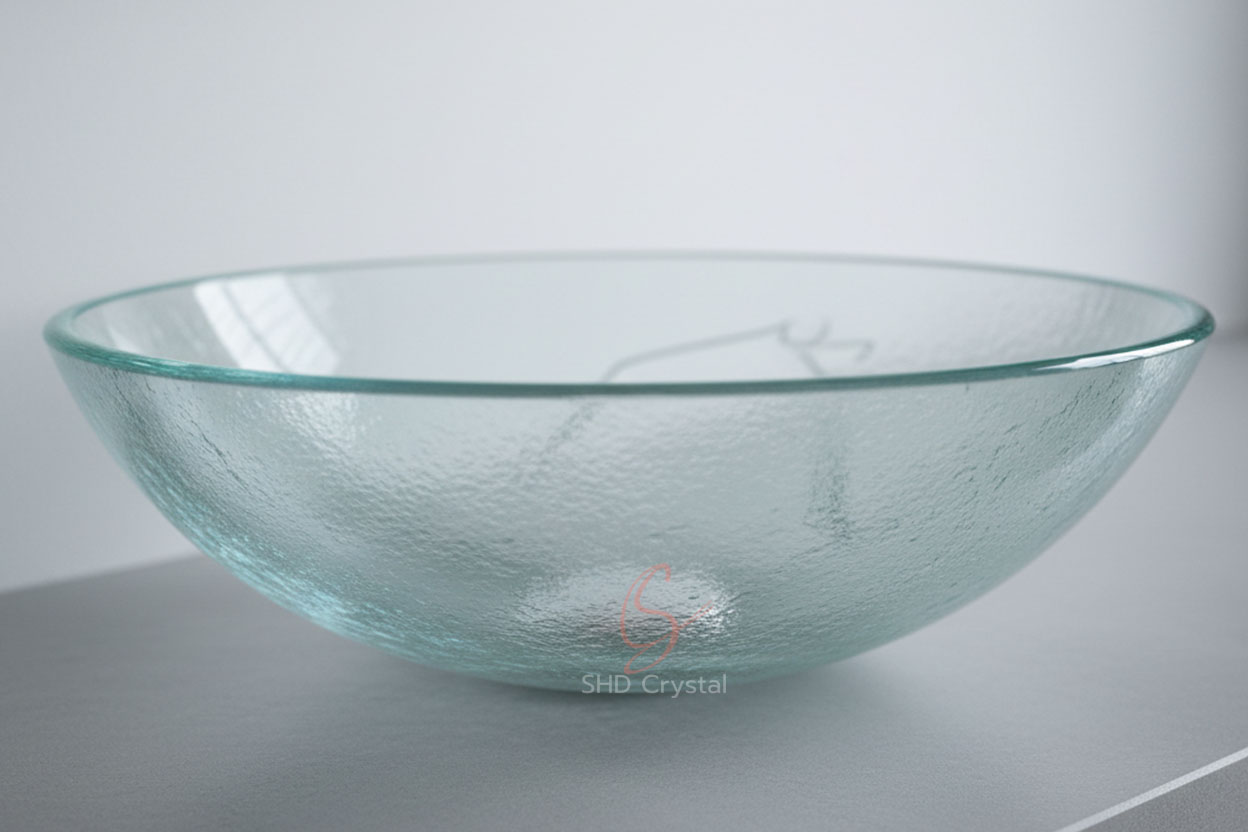
In hospitality projects, basins with hand finished surfaces can elevate guest perception by introducing subtle craftsmanship into everyday interactions. Meanwhile, integrated sink designs are widely used in commercial environments that require clean lines and consistent appearance across multiple units.
The flexibility of custom glass washbasins allows them to adapt across different design styles, from minimalist interiors to more expressive architectural spaces.
Conclusion
Custom glass washbasins offer a distinct combination of material clarity, controlled surface finishing, and functional precision. Through well-executed hand finished surfaces and carefully engineered integrated sink designs, they provide a balanced solution that supports both design expression and reliable daily use.
From Concept Design to Bathroom Installation
At SHD Crystal, we approach custom glass washbasins as both design objects and functional components. Our OEM process focuses on translating conceptual forms into structurally stable basins, ensuring that hand finished surfaces maintain consistency across production while meeting durability requirements.
We support integrated sink designs through controlled forming, precise edge finishing, and alignment with installation systems. Whether the project involves a single bespoke basin or a coordinated series for hospitality use, our goal is to ensure that each custom glass washbasin performs reliably while reflecting the intended design language.