
Blogpost keywords: perfume bottle OEM, fragrance packaging development, custom glass perfume bottles
Perfume bottle OEM plays a critical role in how fragrance brands translate identity into a physical product, especially in competitive markets where packaging often defines first impressions. The bottle is not simply a container but a core part of the product experience, influencing perceived value, usability, and brand recognition. For businesses involved in fragrance packaging development, working with structured OEM support allows greater control over both visual differentiation and long-term supply consistency.
How Perfume Bottle OEM Guides Early Packaging Decisions
In the early stages of product planning, perfume bottle OEM helps brands move from abstract design concepts to manufacturable solutions. Rather than treating packaging as a final step, experienced buyers integrate bottle development into the initial phase of fragrance packaging development.
This approach allows better alignment between aesthetics and production constraints. For example, a concept design may look refined in digital form, but adjustments in wall thickness, base stability, or neck specification are often required for real production. Through perfume bottle OEM, these modifications are addressed before scaling begins.
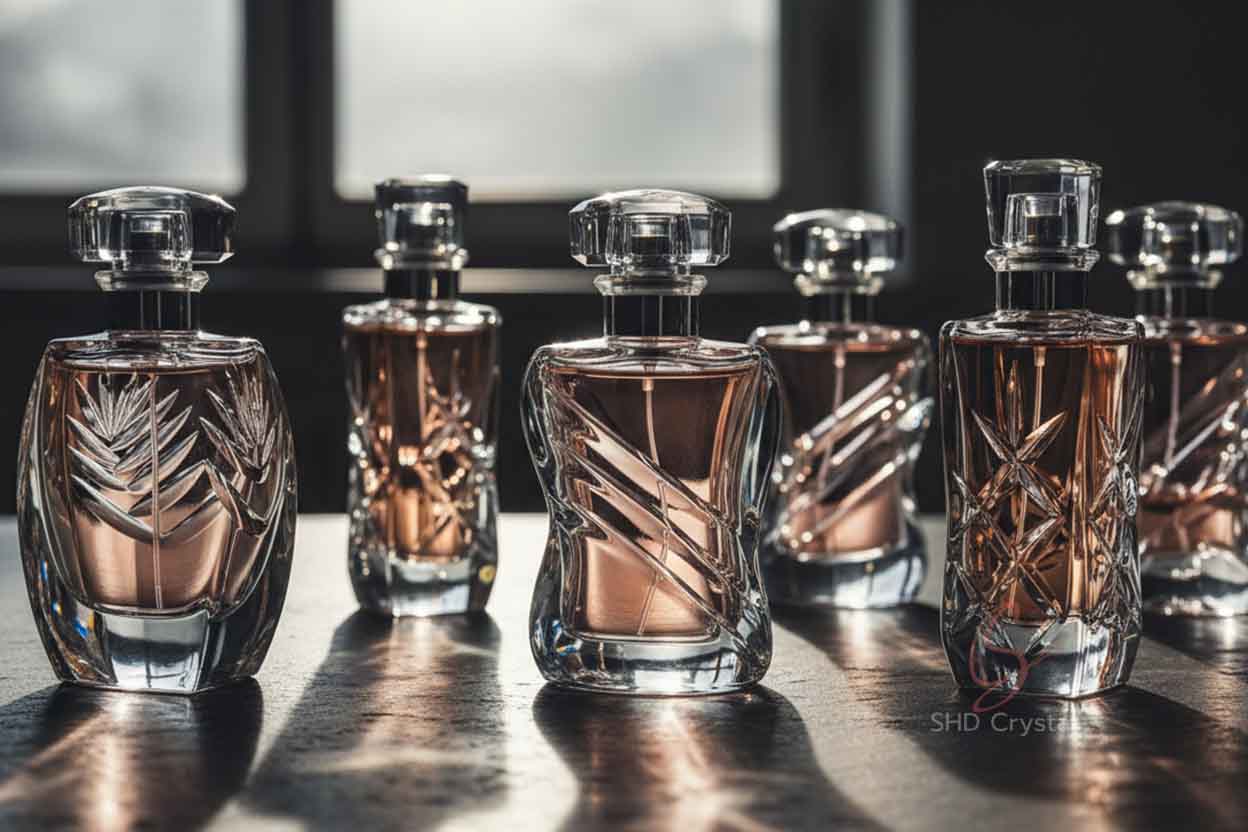
Custom glass perfume bottles offer flexibility in silhouette, weight, and finishing methods, enabling brands to position products across different market segments. Whether targeting boutique retail or large-scale distribution, early decisions made during fragrance packaging development influence both cost structure and visual impact.
Common Pitfalls in OEM Packaging Projects
One frequent mistake is separating design from technical validation. In practice, a visually appealing bottle may fail during filling, transport, or repeated handling if structural factors are overlooked. Perfume bottle OEM requires simultaneous consideration of appearance and functionality.
Another common issue involves component compatibility. A mismatch between bottle neck and spray pump can affect sealing performance and user experience. During fragrance packaging development, confirming specifications early reduces the risk of costly adjustments later.
For custom glass perfume bottles with decorative finishes, surface durability should also be evaluated. Coatings or printing that perform well in samples may degrade under real usage conditions if not properly tested.
Where OEM Development Creates Commercial Advantage
From a business perspective, perfume bottle OEM provides flexibility across different product strategies. It supports private label launches, seasonal packaging updates, hotel amenity programs, and brand extensions without requiring a full redesign each time.
Fragrance packaging development also allows segmentation within a single brand. Entry-level products may use simplified finishes, while premium lines rely on heavier custom glass perfume bottles with more refined detailing. This layered approach helps maintain a coherent identity while adapting to different price points.
Consistency is another advantage. When working with established perfume bottle OEM partners, brands can reorder products with predictable quality and dimensional accuracy, supporting long-term growth.
Practical Checks Before Mass Production
Before confirming production, several details should be reviewed carefully. Bottle capacity, weight distribution, neck finish, decoration method, and color consistency all affect final performance. Perfume bottle OEM projects often encounter delays when these parameters are not clarified during sampling.
Packaging and logistics also require attention. Fragile surfaces must be protected during transport, and carton structure should match both shipping and retail requirements. In fragrance packaging development, operational details such as MOQ, lead time, and accessory sourcing can influence overall project timelines.
For custom glass perfume bottles, it is also advisable to test how the product behaves under daily use conditions, including handling, cleaning, and long-term storage.
Conclusion
Perfume bottle OEM enables fragrance brands to align packaging design with production reality, ensuring that visual identity, functional performance, and supply consistency are developed together. Through structured fragrance packaging development and well-executed custom glass perfume bottles, brands can create packaging systems that support both product launch and long-term market presence.
Turning Fragrance Packaging Concepts Into Scalable Products
For brands developing new fragrance lines or refining existing collections, perfume bottle OEM provides a structured pathway from concept to production. At SHD Crystal, our OEM approach focuses on translating design intent into manufacturable glass forms, ensuring that custom glass perfume bottles maintain clarity, proportion, and compatibility with pumps and closures.
We support fragrance packaging development through coordinated processes that integrate bottle forming, surface finishing, and accessory matching, helping reduce inconsistencies between samples and bulk production. Whether the project involves a boutique launch or a scalable private label program, working with an experienced perfume bottle OEM partner helps ensure that packaging performs reliably across real market conditions.