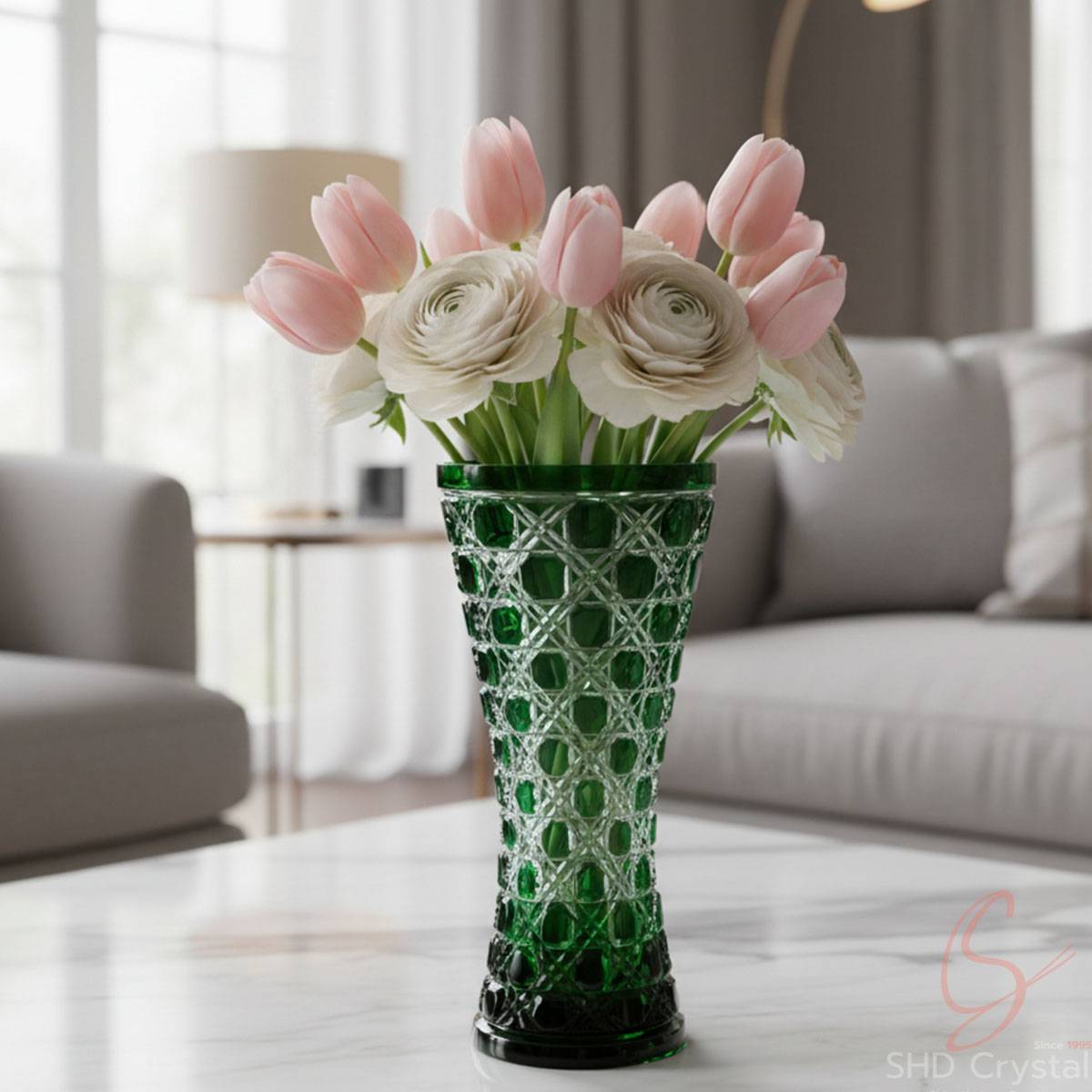
Blogpost keywords: custom green crystal vase, depth-toned crystal, sculptural glass presence
A refined custom green crystal vase rarely attracts attention through saturation alone. Its visual strength comes from controlled optical density, internal depth, and the way green crystal moderates surrounding light within a space. Unlike brighter decorative tones that immediately dominate a composition, green crystal behaves more slowly and architecturally, allowing the object to establish presence through material weight and filtered transparency.
This is one reason deep green crystal continues to appear in luxury hospitality interiors, architectural residences, sculptural tabletop collections, and decorative glass programs intended to create visual calm rather than sharp contrast.
Depth-Toned Crystal Creates Internal Layering Through Light Absorption
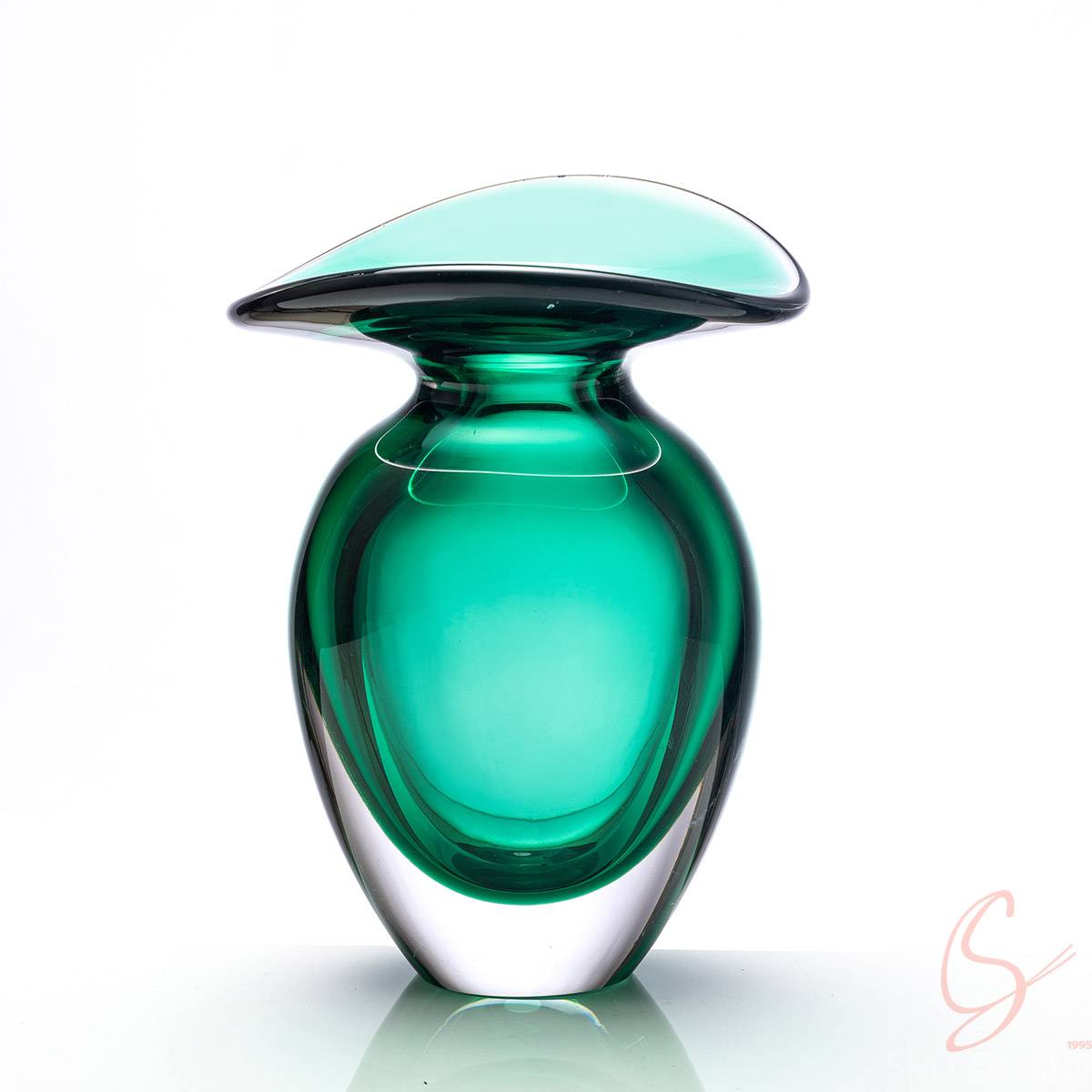
The defining quality of premium depth-toned crystal is not surface color. It is the ability of the material to hold tonal variation throughout the glass mass itself. As light passes through thicker areas of a custom green crystal vase, the color deepens gradually and creates a sense of internal layering. Thinner edges remain more translucent, while rounded lower sections often appear richer and denser because more color volume accumulates within the crystal body.
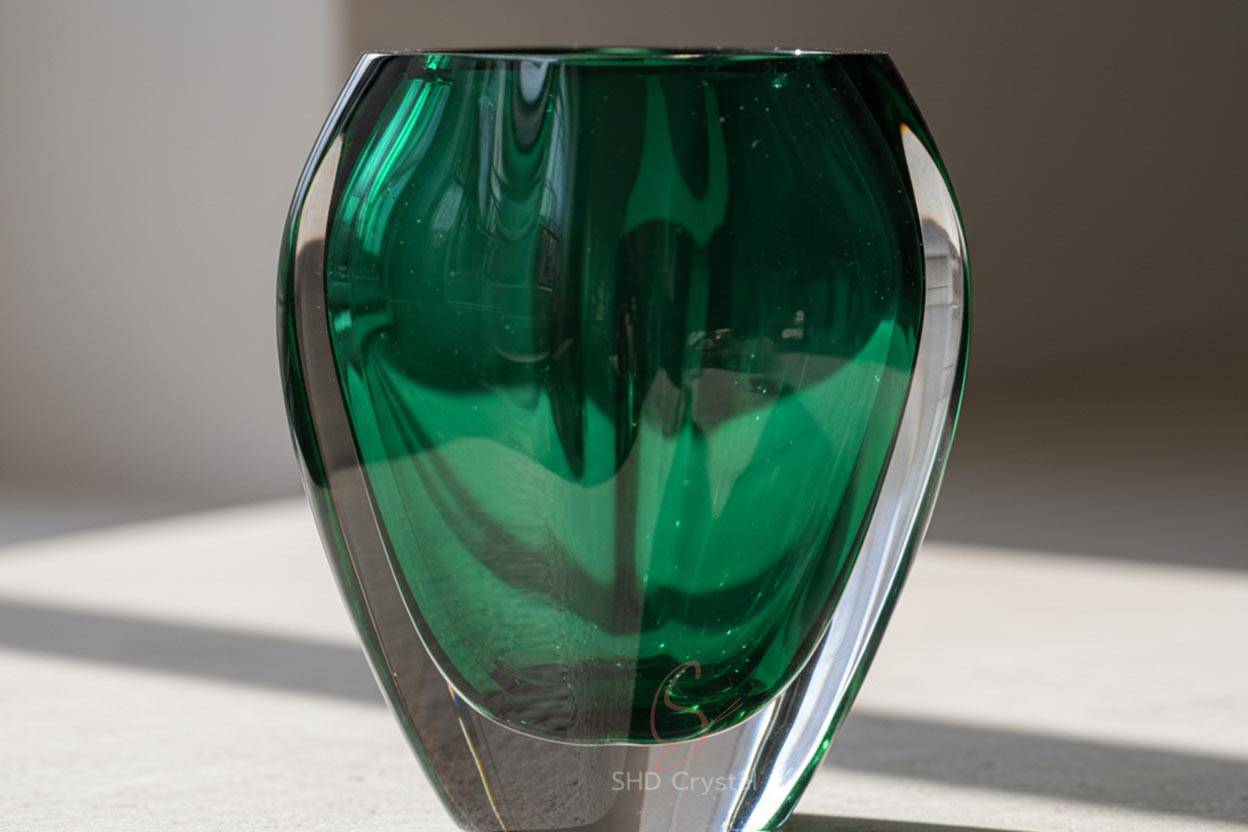
This gradual transition creates stronger visual depth than flat tinted glass or sprayed coloration. The vase begins to feel optically dimensional even when the external surface remains smooth and minimally decorated.
Sculptural Glass Presence Depends on Proportion and Mass Distribution
A common misconception is that transparency alone creates elegance. In reality, proportion controls whether crystal feels stable within an interior. An oversized vase with weak contour transitions may feel visually hollow despite strong color. A smaller object with balanced shoulder expansion, controlled wall thickness, and grounded lower volume often creates far stronger sculptural glass presence.
This is especially important for green crystal because darker tonal density naturally increases visual weight. The object must therefore remain balanced enough to feel architectural rather than overly decorative. In many high-end decorative collections, slightly expanded lower forms and softened neck transitions help maintain this equilibrium.
Internal Reflections Change Throughout the Day
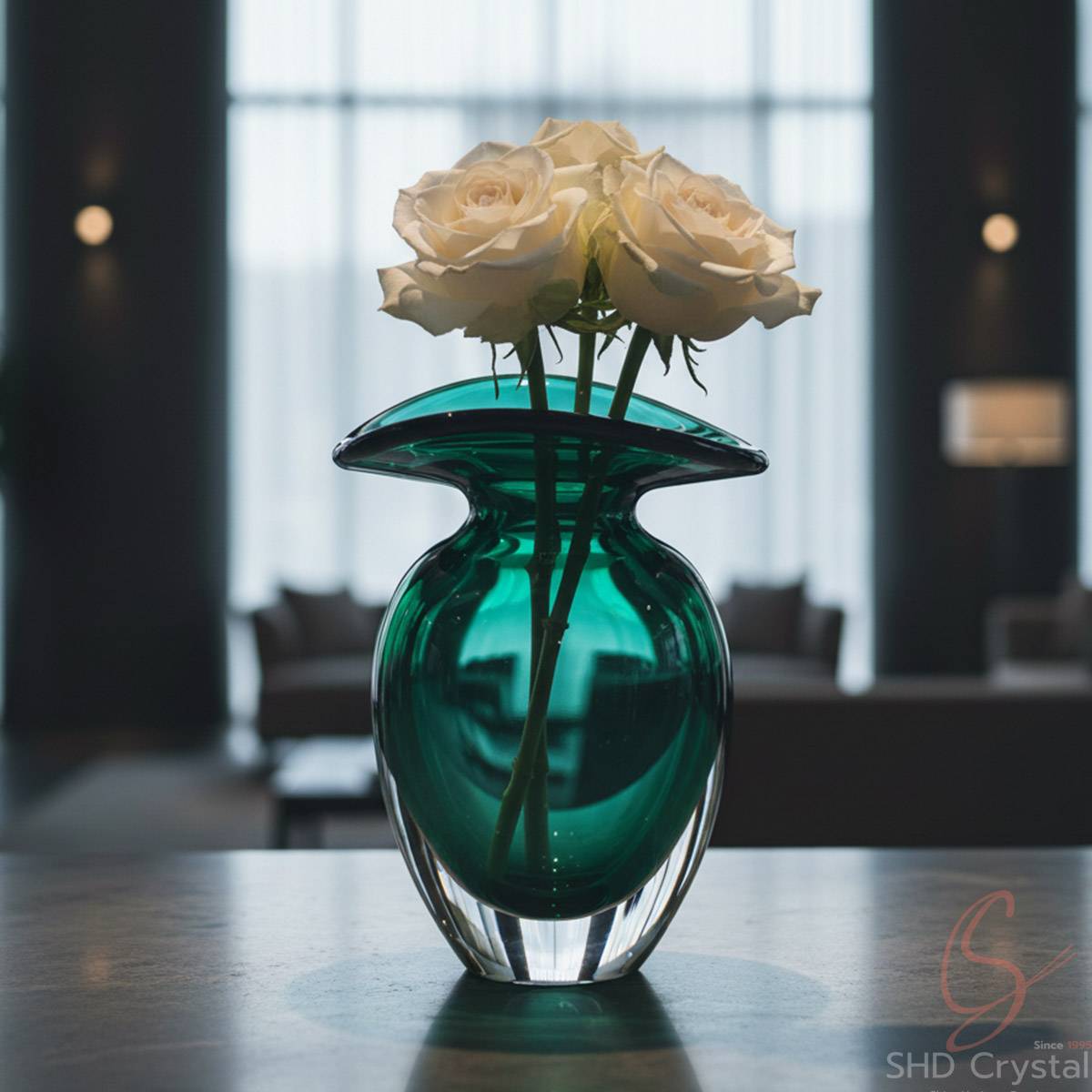
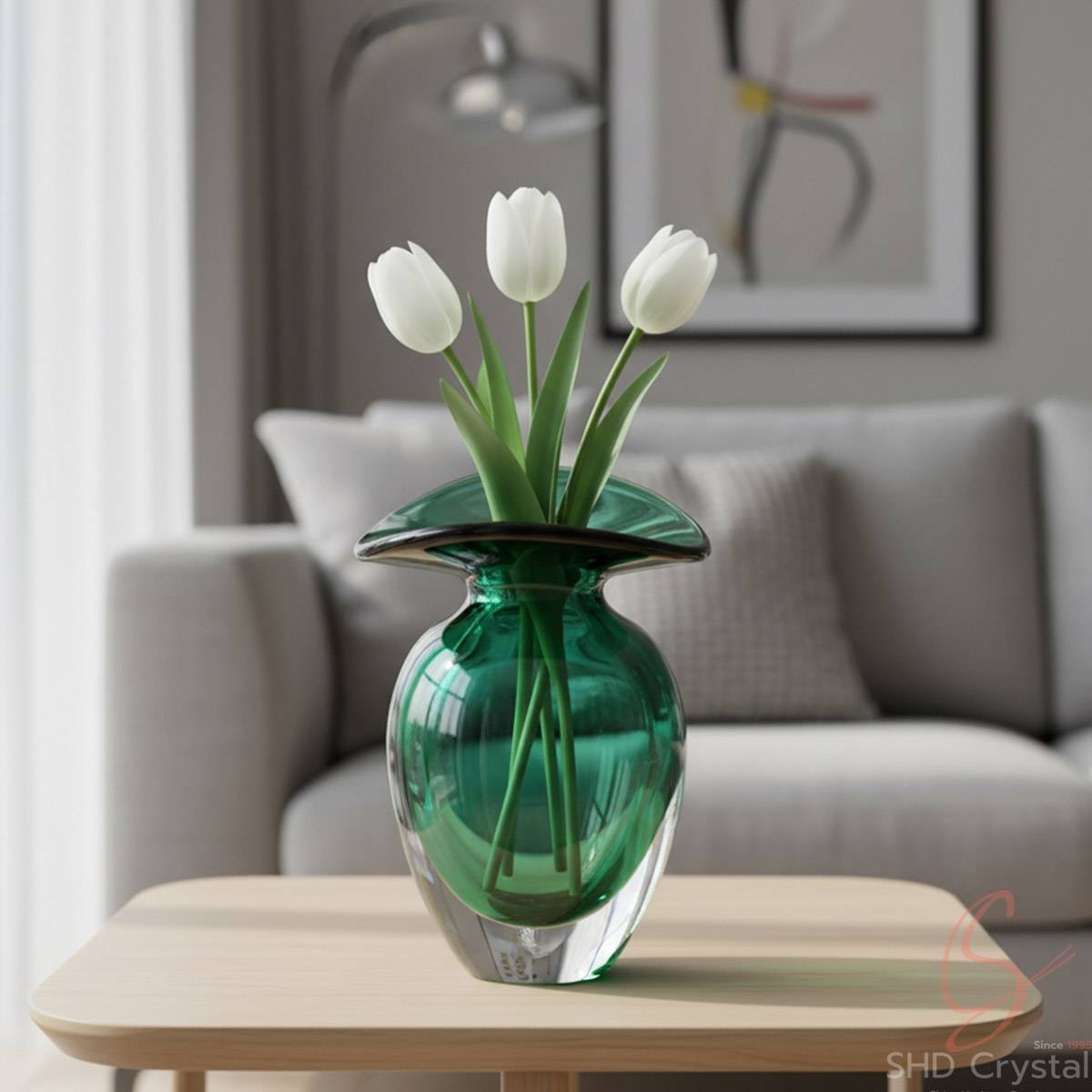
One of the most compelling characteristics of a custom green crystal vase is its responsiveness to shifting light environments. Under daylight, the vase may appear cooler and more translucent. Evening lighting often intensifies the depth-toned crystal and creates richer internal reflections within the body of the glass. Candlelight and warm hospitality lighting may also reveal subtle tonal layering that remains almost invisible under neutral studio conditions.
Because of this, professional sample evaluation should include multiple lighting environments rather than relying entirely on catalog photography. A vase that appears understated in direct lighting may become dramatically more atmospheric once placed within a real interior setting.
Surface Refinement Must Support Optical Continuity
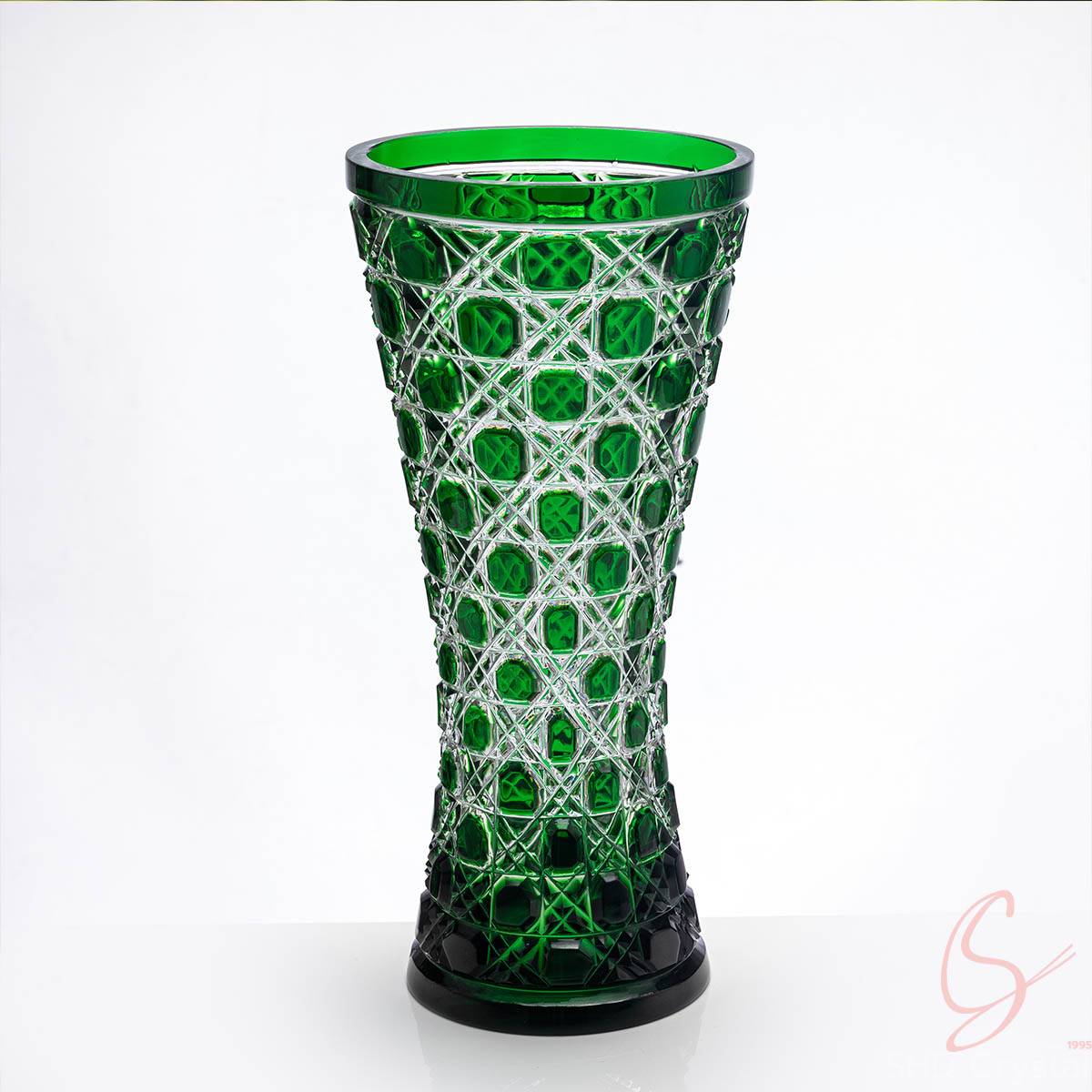
In premium crystal production, excessive texture can interrupt depth behavior. A successful depth-toned crystal object usually relies on controlled surface refinement that preserves smooth light travel through the material. Aggressive engraving or heavy embossing may weaken transparency and fragment reflections unnecessarily.
This does not mean decorative detailing should disappear completely. Subtle hand-cut lower textures, softened vertical carving, or restrained optic transitions can still add complexity while preserving the continuous optical flow that gives green crystal its calm visual character. The balance between surface articulation and transparency often determines whether the vase feels collectible or commercially generic.
Sculptural Glass Presence Works Especially Well in Architectural Interiors
Green crystal performs particularly well in spaces containing strong linear materials such as stone, brushed metal, dark wood, and polished concrete. Because the color absorbs part of the visible spectrum rather than reflecting aggressively, the vase introduces visual grounding without overheating the composition. This is one reason sculptural glass presence in green crystal is frequently used in architectural styling where the goal is spatial balance rather than decorative excess. The object contributes atmosphere through controlled reflection and optical weight rather than ornament alone.
Conclusion
A refined custom green crystal vase combines controlled transparency, balanced proportion, and layered optical behavior to create calm architectural depth within decorative interiors. Through carefully developed depth-toned crystal and stable sculptural glass presence, green crystal achieves visual richness without relying on excessive surface decoration or high-intensity coloration.
Supporting Luxury Green Crystal Vase Development
At SHD Crystal, decorative crystal vase production combines hand-blown forming, layered color integration, optical polishing, controlled wall distribution, and artisan finishing refinement for premium interior collections. For brands developing sculptural decorative objects and architectural crystal programs, our team supports OEM custom green crystal vase production with stable depth-toned crystal behavior and refined handcrafted optical character.