
A brilliant crystal vase may begin as a simple sketch, but its development involves decisions that drawings alone cannot resolve. Glass composition, decorative cutting, product proportions, and intended use all influence the final result. In 24% PbO crystal product development, the central challenge is not simply producing an attractive object. It is determining whether the chosen material and design can become a consistent, practical, and commercially suitable crystal product.
For brands exploring original crystal collections, the most useful starting point is a well-defined product brief.
Planning 24% PbO Crystal Product Development Around the End Use
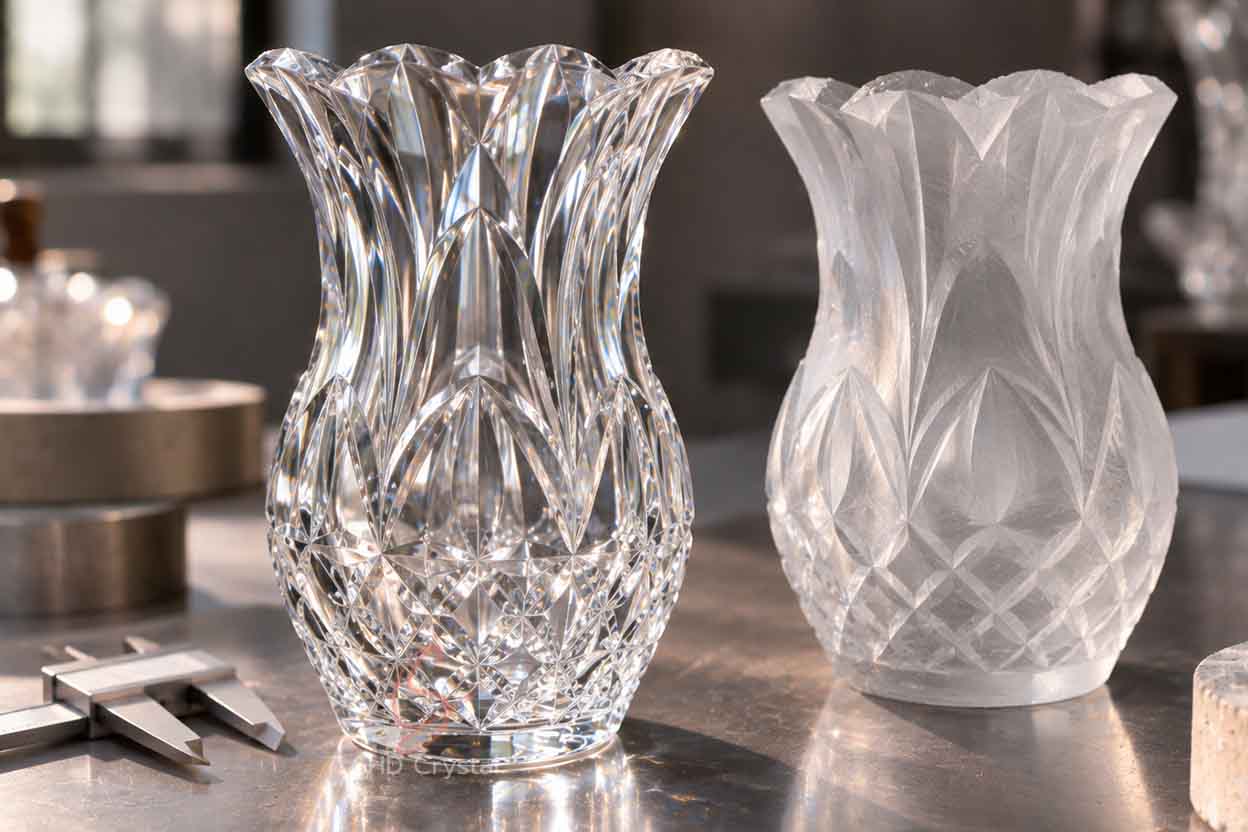
Before selecting a forming method or approving a decorative pattern, buyers should define the intended application and performance requirements of the finished product. In 24% PbO crystal product development, a sculptural vase, commemorative award, or decorative lighting component may share the same material, but each requires different considerations for structural design, visual appearance, and functional performance.
1. Confirm the Material Before Developing the Design
Material selection should begin with a clear composition requirement. Under European crystal-glass classifications, the designation lead crystal 24% refers to glass containing at least 24% lead oxide (PbO), alongside other specified classification criteria. This percentage should be confirmed through appropriate material documentation rather than inferred from a product’s weight, sound, or visual brilliance.
For buyers unfamiliar with the composition, the SHD Crystal article Understanding Lead Crystal 24 PBO: What 24% PbO Means for Luxury Glassware provides background on the material’s identity and traditional characteristics.
In project development, the next question is whether those characteristics are necessary for the intended product.
2. Match Product Applications to Material Suitability
The intended use can change the entire development direction. Decorative vases, collectible sculptures, crystal awards, and selected lighting components provide opportunities to emphasize brilliant surfaces, substantial forms, and elaborate cutting. For custom lead crystal glassware, however, material suitability must be evaluated alongside the intended application.
Products designed for routine food contact or prolonged beverage storage require particular caution. Lead can migrate from lead crystal into foods and liquids, with contact time and acidity affecting exposure. Where everyday drinking or food storage is the objective, a suitable lead-free alternative is generally the safer choice.
A material decision made at this stage can prevent unnecessary redesign later.
Interested in custom glassware or related products?
Contact our team to discuss your project requirements.
3. Develop the Shape Around the Decorative Finish
The most impressive crystal products often rely on an effective relationship between their original shape and their finished surfaces. A tall vase with broad, substantial walls may accommodate deep geometric cutting. A compact commemorative block may provide suitable surfaces for engraving, while an ornamental sculpture can use polished facets to emphasize its silhouette. These designs cannot necessarily follow the same production route.
For complex custom lead crystal glassware, wall thickness, accessible finishing areas, edge geometry, and forming feasibility should be reviewed before decorative details are finalized.
SHD Crystal’s 24 PbO Crystal Craftsmanship resource provides a broader explanation of material behavior, forming, cutting, engraving, and polishing. For a specific OEM project, those technical possibilities must then be translated into a manufacturable design.
4. Turn Sample Approval into Measurable Requirements
A beautiful prototype is not automatically a production-ready reference. During crystal glass sample approval, the buyer and manufacturer should establish which features define an acceptable finished product. These may include overall dimensions, weight range, base stability, decorative pattern alignment, surface clarity, polished edges, and permissible visual variation.
The inspection method matters as well. A crystal piece may appear flawless under soft lighting but reveal polishing marks or surface imperfections under stronger directional light. Samples should therefore be evaluated under conditions relevant to their eventual presentation. A documented approval standard makes later production decisions more consistent and less dependent on subjective impressions.
5. Consider Production Consistency and Presentation Together
The approved sample establishes an expectation that future pieces should meet. However, handcrafted details, cutting complexity, forming conditions, and finishing requirements may introduce variation between individual products. For this reason, crystal glass sample approval should identify which differences are acceptable and which affect the product’s intended quality.
Packaging also belongs in the development discussion. Heavy crystal objects, delicate rims, and projecting decorative elements may require different protective arrangements. A successful product should retain its visual quality from the finishing workshop to its final display.
Frequently Asked Questions About 24% PbO Crystal Product Development
Does every 24% PbO crystal project require a new mold?
No. Existing tooling may be suitable when the intended dimensions and geometry are compatible. Original shapes or substantially different structural requirements may require new tooling or another forming approach.
Can cutting and engraving be combined on the same crystal product?
Yes, provided the glass geometry and selected finishing methods are compatible. Decorative areas should be planned to maintain suitable remaining material thickness and surface quality.
What should buyers prepare before requesting a crystal sample?
A useful brief includes product drawings or references, the required glass composition, target dimensions, intended application, decorative details, expected quantities, and preliminary acceptance requirements.
Conclusion
24% PbO crystal product development connects material selection with design feasibility, decorative craftsmanship, and production control.
The most successful projects begin by identifying what the material should contribute to the finished object. Clear specifications, suitable manufacturing decisions, and measurable sample standards help transform an original idea into a distinctive crystal collection.
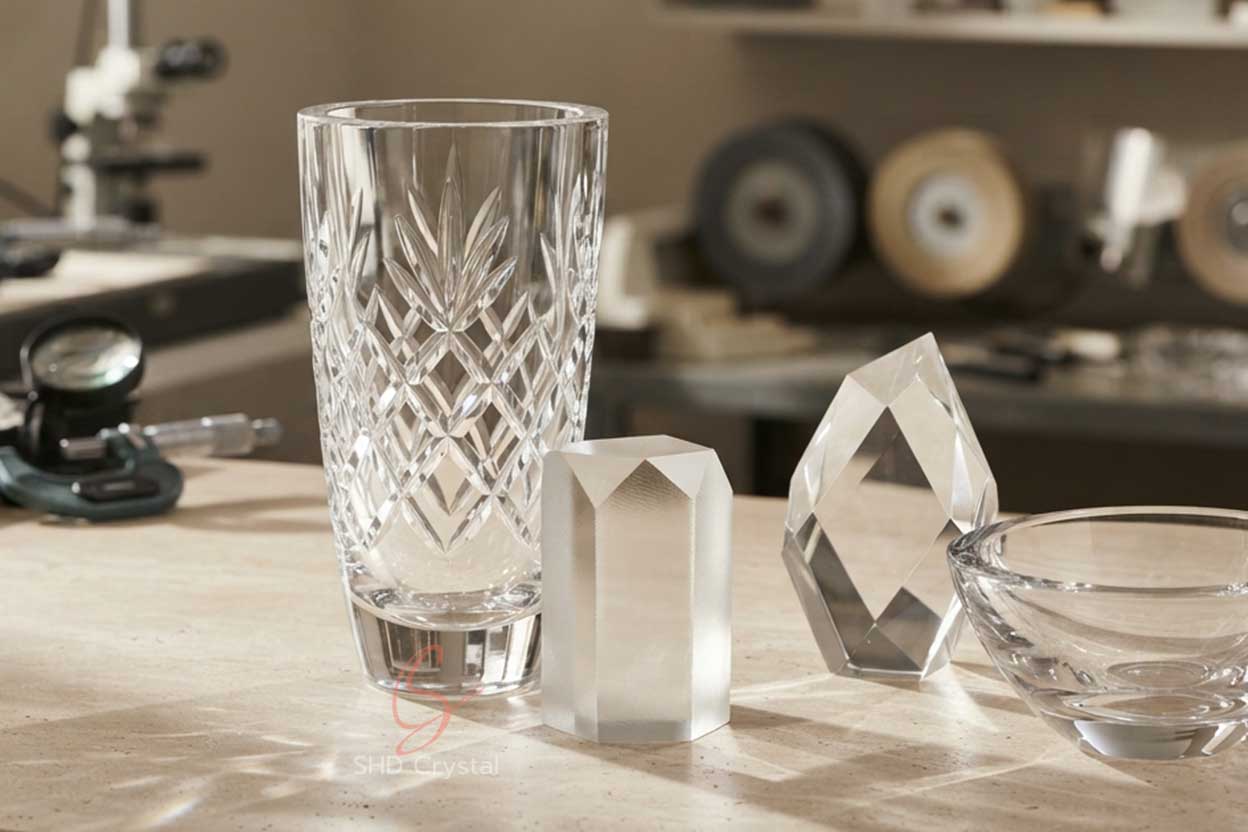
Turning Material Decisions into Original Crystal Pieces
A new crystal collection does not begin with brilliance alone. It begins with understanding which details deserve attention and which requirements must remain consistent. At SHD Crystal, 24% PbO crystal product development provides an opportunity to explore original decorative forms with a clear relationship between material, craftsmanship, and the product’s intended purpose.