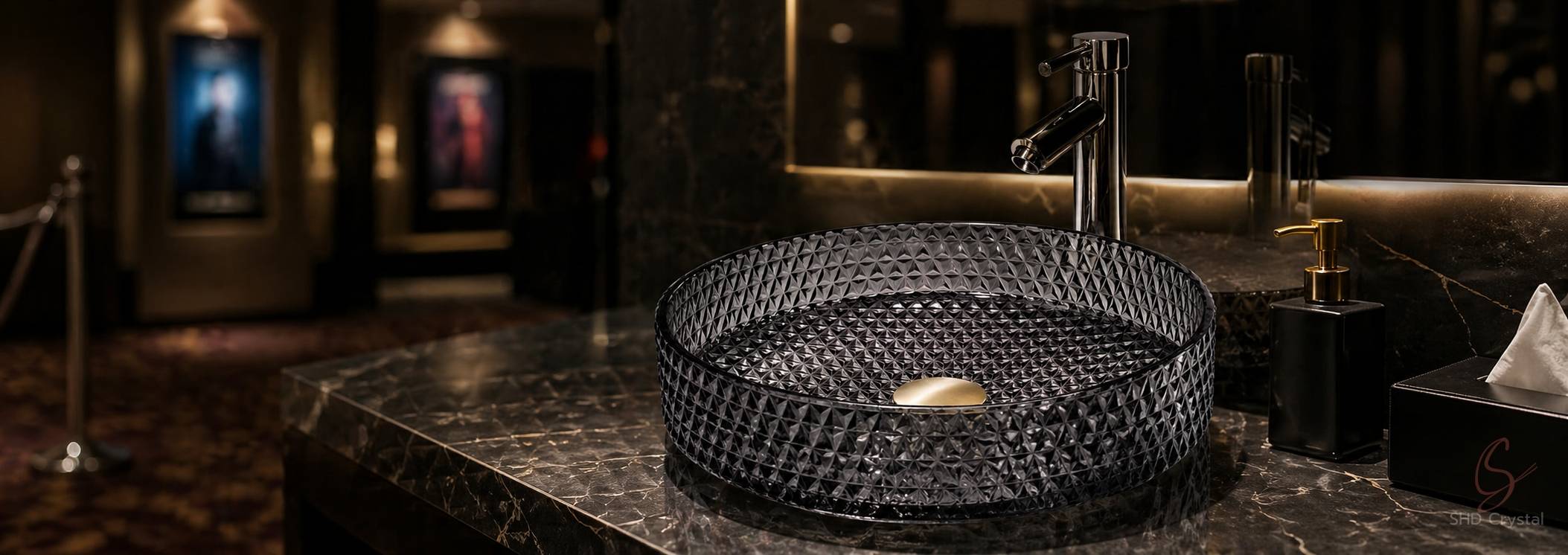
A clear glass washbasin changes the usual role of a bathroom fixture in a surprisingly simple way: it lets people see through it. For a long time, washbasins were treated mainly as practical objects made from ceramic, stone, or metal, materials that visually occupied space and clearly announced their function. Glass introduced another possibility. Instead of becoming a solid block on the countertop, the basin could interact with light, water, reflections, and the surrounding room.
Why the Clear Glass Washbasin Changed the Visual Language of Bathrooms
The attraction of glass did not come from making the washbasin more complicated. In many cases, it did the opposite.
A transparent bowl can appear lighter than its actual size. The countertop remains visible beneath it. Reflections move across the curved surface. Water adds another transparent layer when the basin is in use. Suddenly, something as ordinary as washing hands starts producing a small light show. This quality made glass particularly interesting for interiors that wanted to feel open rather than heavy. Bathrooms, hotel suites, beauty spaces, and contemporary residential interiors could use a basin as a visual feature without making the room feel crowded.
From Vessel to Interior Object
One reason glass works so naturally in this application is that the washbasin is essentially a vessel. Seen from that perspective, the connection with large capacity glassware becomes easier to understand. Bowls, serving vessels, decorative containers, and basins all rely on similar visual ideas: volume, rim shape, curvature, transparency, and the way a material holds something inside it.
The major difference is scale and function. When the familiar language of glass bowls was enlarged into a washbasin, designers discovered that the same characteristics that make a glass vessel elegant on a table could also work in an interior. A smooth circular basin could feel calm and minimal. A deeply curved form could emphasize water movement. A wider vessel could become almost sculptural.
The bathroom had effectively borrowed something from the glassware cabinet, only considerably larger and with plumbing underneath.
Water Makes Transparent Glass More Interesting
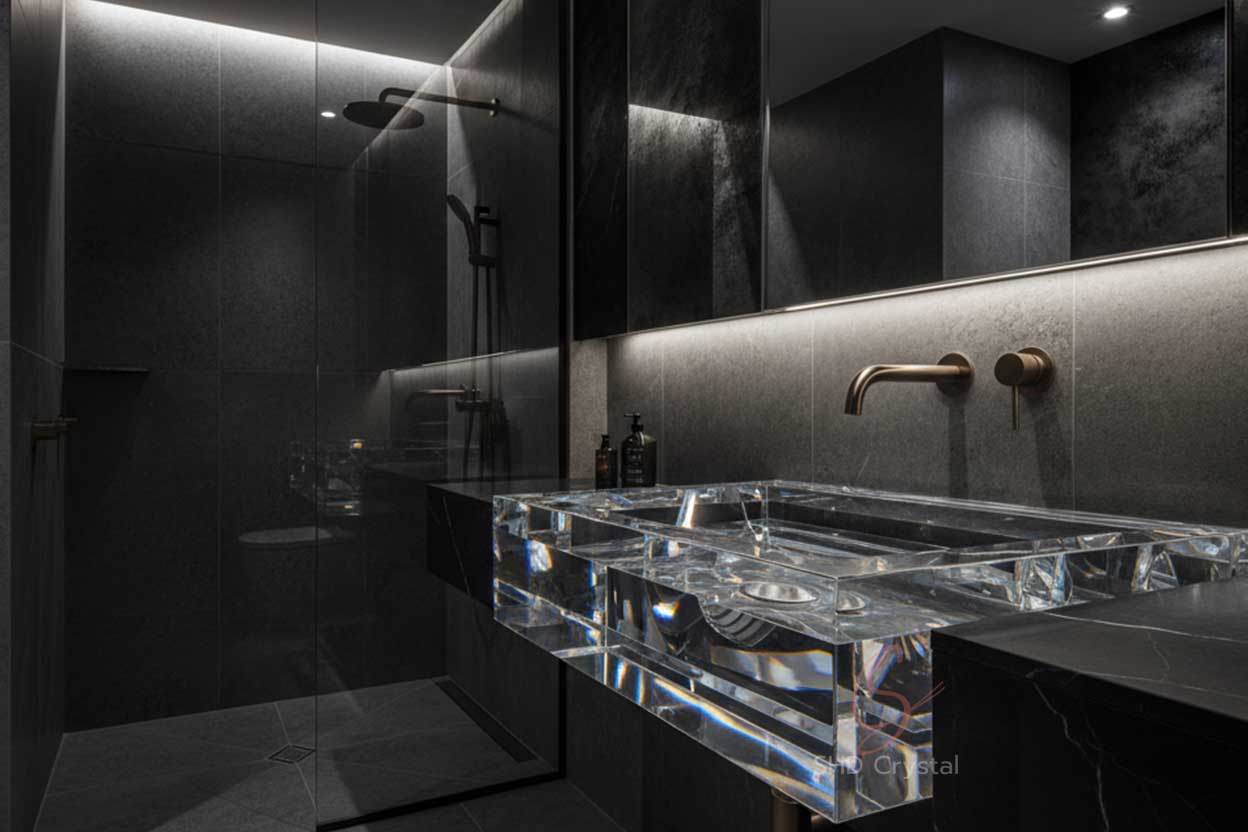
A clear glass washbasin looks different when empty and when being used. When dry, its shape is defined by edges, thickness, reflections, and shadows. Once water enters, the visual effect changes. Ripples distort the countertop beneath. Light bends through the glass and water together. Small reflections appear along the rim and base.
This interaction is difficult to achieve with opaque materials. Ceramic gives a strong, clean silhouette. Stone offers texture and permanence. Glass contributes movement. That is one reason an artistic washbasin does not always require elaborate patterns or dramatic colors. Sometimes transparency itself is enough to make the object interesting.
Thickness Gives Glass Its Presence
Transparency does not mean the basin disappears completely. Glass thickness can create a sense of weight around the rim and base while leaving the overall form visually open. In thicker areas, the glass may produce stronger refraction and subtle greenish or bluish edge tones depending on the material. This creates an interesting contradiction: the basin can look light and substantial at the same time.
That quality also connects the washbasin with large capacity glassware, where thick walls and rounded edges often become part of the visual character rather than something hidden.
Interested in custom glassware or related products?
Contact our team to discuss your project requirements.
Artistic Washbasins Expanded the Possibilities
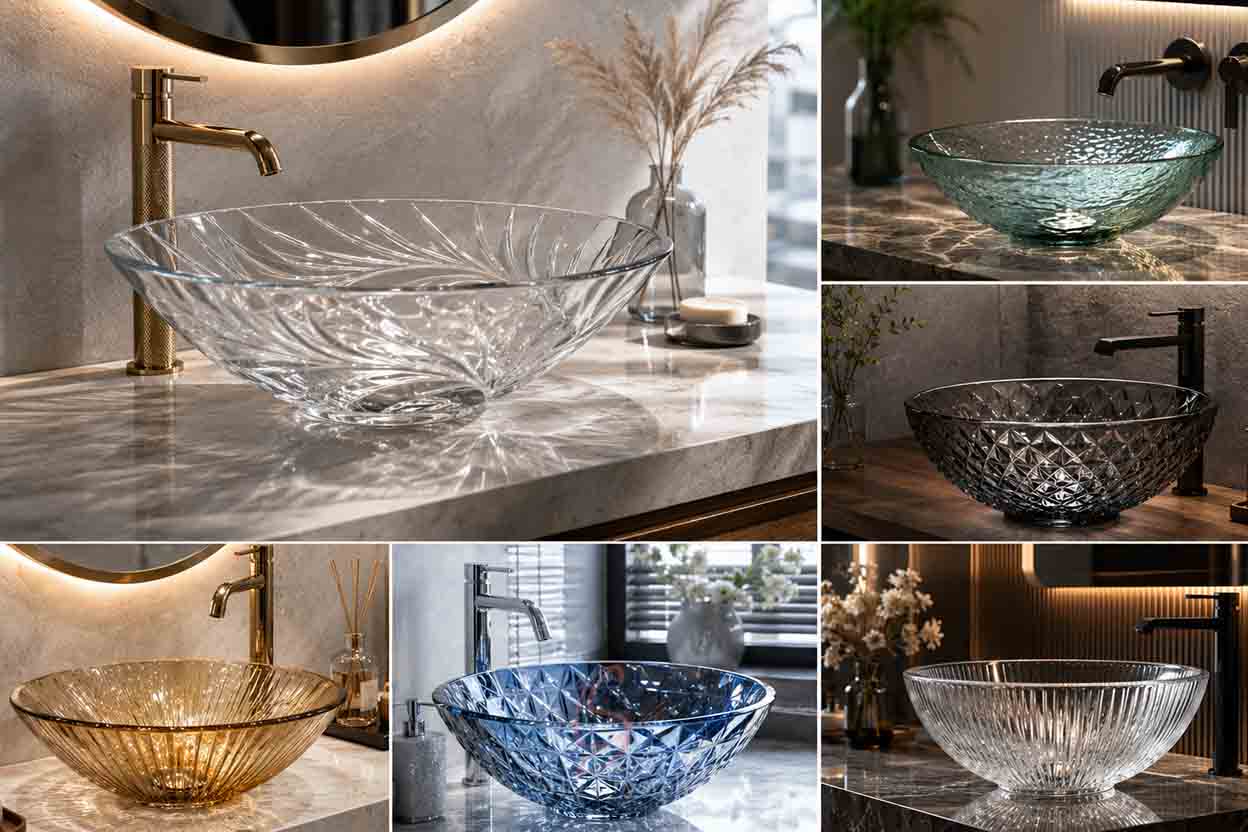
Once glass was accepted as more than a purely functional material for washbasins, designers started exploring what an artistic washbasin could look like.
Some designs remain almost invisible, using clear circular or oval forms. Others introduce texture, bubbles, colored edges, sculptural contours, or irregular surfaces. In these pieces, the basin begins to behave more like decorative glass art than conventional sanitary ware.
The important shift is psychological. A washbasin no longer has to disappear into the bathroom furniture. It can become one of the room’s focal points. Yet glass does not need to shout to achieve that. A simple transparent bowl under soft lighting can attract attention precisely because it appears effortless.
Transparency Also Changes the Space Around It
Perhaps the greatest charm of a clear glass washbasin is not the basin itself, but what happens around it.
A floating countertop feels less interrupted. Decorative stone beneath the bowl remains visible. Light passes through rather than stopping at the vessel wall. In smaller bathrooms, this can contribute to a more open visual impression. This is why transparent glass works particularly well with minimalist interiors. The basin occupies physical space without creating the same visual mass as an opaque object.
It is present, but politely.
As a word, The appeal of the clear glass washbasin comes from discovering that transparency can be functional and decorative at the same time. Glass transformed the washbasin from a purely practical fixture into an object that interacts with water, light, reflections, and the surrounding interior.
Its relationship with large capacity glassware also explains why the form feels so natural: the washbasin is, at its heart, simply a large vessel given a new purpose. And when designers began treating it as an artistic washbasin, the bathroom gained an object that could be useful, sculptural, and visually light all at once.
Read the original article on custom crystal glass manufacturing: https://shdcrystal.com/blogs/clear-glass-washbasin/