
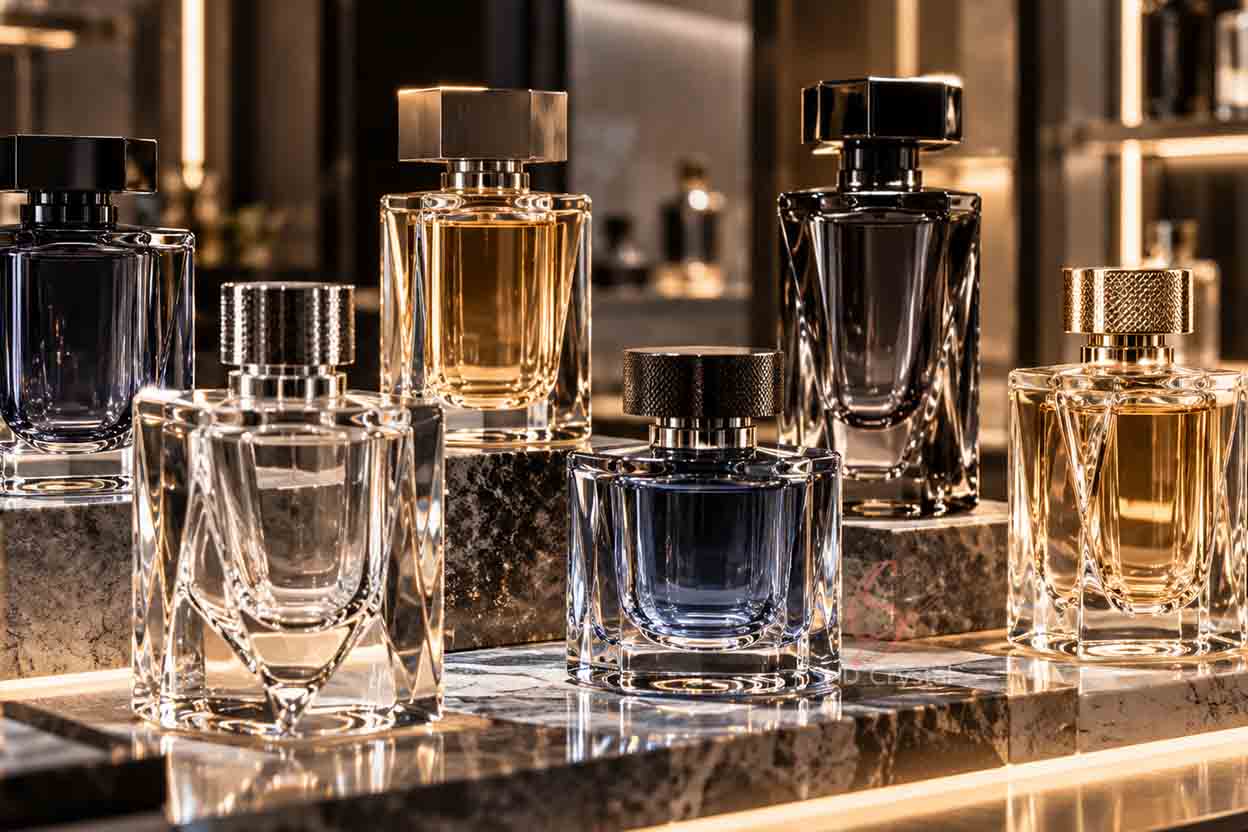
A cologne perfume inner chamber is the internal space that contains fragrance within a glass bottle. Its size, position, and shape determine actual liquid capacity, influence glass distribution, and affect how the fragrance appears through the outer body. In bottles with substantial transparent glass surrounding the cavity, the liquid can appear suspended inside a larger structure. This creates visual depth without necessarily requiring a separate double-wall construction.
What a Cologne Perfume Inner Chamber Actually Changes
The inner chamber has both functional and visual significance. Functionally, it defines where the fragrance is stored and how the spray system accesses the liquid. Visually, it determines how the bottle presents its contents through surrounding glass.
Capacity, Appearance, and Everyday Use
An inner chamber perfume bottle can have a substantial exterior while holding a comparatively small volume of fragrance. This allows designers to create a more prominent silhouette without making the internal cavity follow every external curve.
The surrounding glass can also change how light passes through the bottle, producing reflections, magnification, or the appearance of a floating liquid reservoir. An intentionally centered cavity may emphasize symmetry, while an offset cavity can create a more sculptural effect. However, visual size should not be confused with actual capacity. Buyers must confirm the intended fill volume, bottle weight, internal geometry, and liquid level during development.
The chamber must also support practical dispensing. Its lowest usable point and neck alignment influence dip tube positioning and whether the spray system can access the remaining fragrance effectively.
Inner Chamber and Double-Wall Construction Are Different
Not every bottle with a visible inner cavity is a double wall cologne bottle. In a conventional molded glass bottle, the fragrance occupies a cavity within the formed glass body. Thick sidewalls or a substantial base can make this cavity appear visually separated from the exterior.
A genuine double-wall structure introduces an additional wall or distinct inner reservoir, potentially with a space between the inner and outer structures. Its manufacturing and assembly requirements may differ significantly from those of a conventional molded bottle.
Both approaches can create visual depth, but they should not be treated as identical production methods. The intended structure needs to be confirmed before tooling and process selection.
What Manufacturers Must Control During Production
The main production challenge is translating the designed cavity into a consistent physical structure. Mold design and glass distribution determine how closely the internal volume matches the intended shape. Large differences between thick and thin glass sections can complicate forming and cooling. Complex or offset cavities also require evaluation of tooling feasibility and dimensional consistency.
Annealing and inspection become important when the bottle contains substantial glass around a relatively small internal space. Controlled cooling helps reduce residual stress, while inspection can identify visible bubbles, distortion, inconsistent cavity positioning, or unacceptable surface defects.
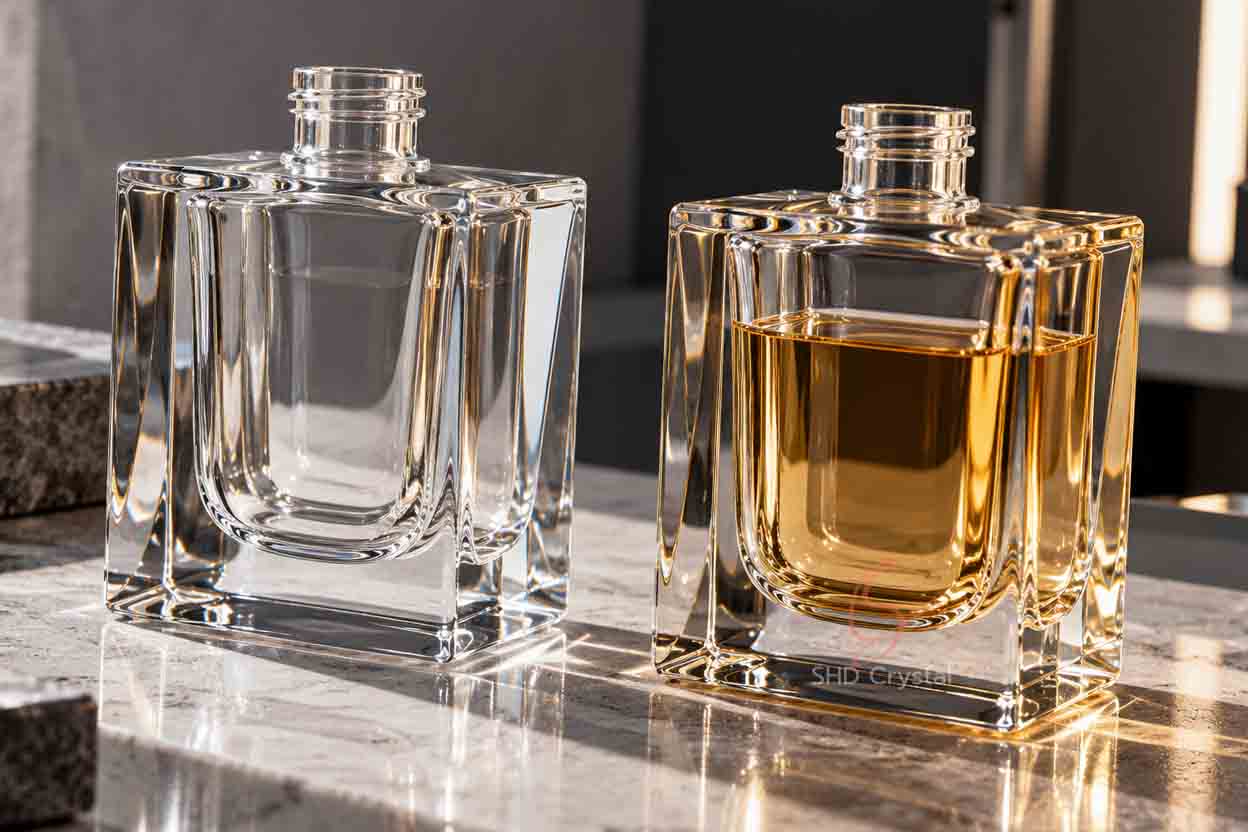
Neck accuracy and filling compatibility must be evaluated alongside the cavity. A visually impressive bottle is not commercially practical if its spray pump, dip tube, or closure cannot operate reliably.
Finally, transparent glass makes optical variation particularly noticeable. Buyers should compare samples from several angles, checking actual capacity, cavity alignment, glass clarity, base stability, and the appearance of the liquid after filling. These considerations explain why inner chamber development requires more than approving an attractive three-dimensional rendering.
Conclusion
A cologne perfume inner chamber determines much more than how fragrance appears inside a bottle. It defines usable capacity, influences dispensing, and contributes to the structural and optical characteristics of the glass.
For an inner chamber perfume bottle, successful development depends on balancing visual depth with mold feasibility, glass distribution, annealing, dimensional accuracy, and component compatibility. A more complex double-wall structure requires additional production evaluation rather than being assumed to follow the same process.
Developing Inner Chamber Glass Bottles With SHD Crystal
SHD Crystal provides glass manufacturing support covering mold development, glass forming, annealing, surface finishing, quality inspection, and packaging preparation.
For cologne bottles with distinctive internal cavities, development can begin with the outer dimensions, intended liquid capacity, cavity geometry, neck specifications, and desired optical appearance. These details help determine whether the design can be realized through a conventional molded structure or requires a different manufacturing approach.
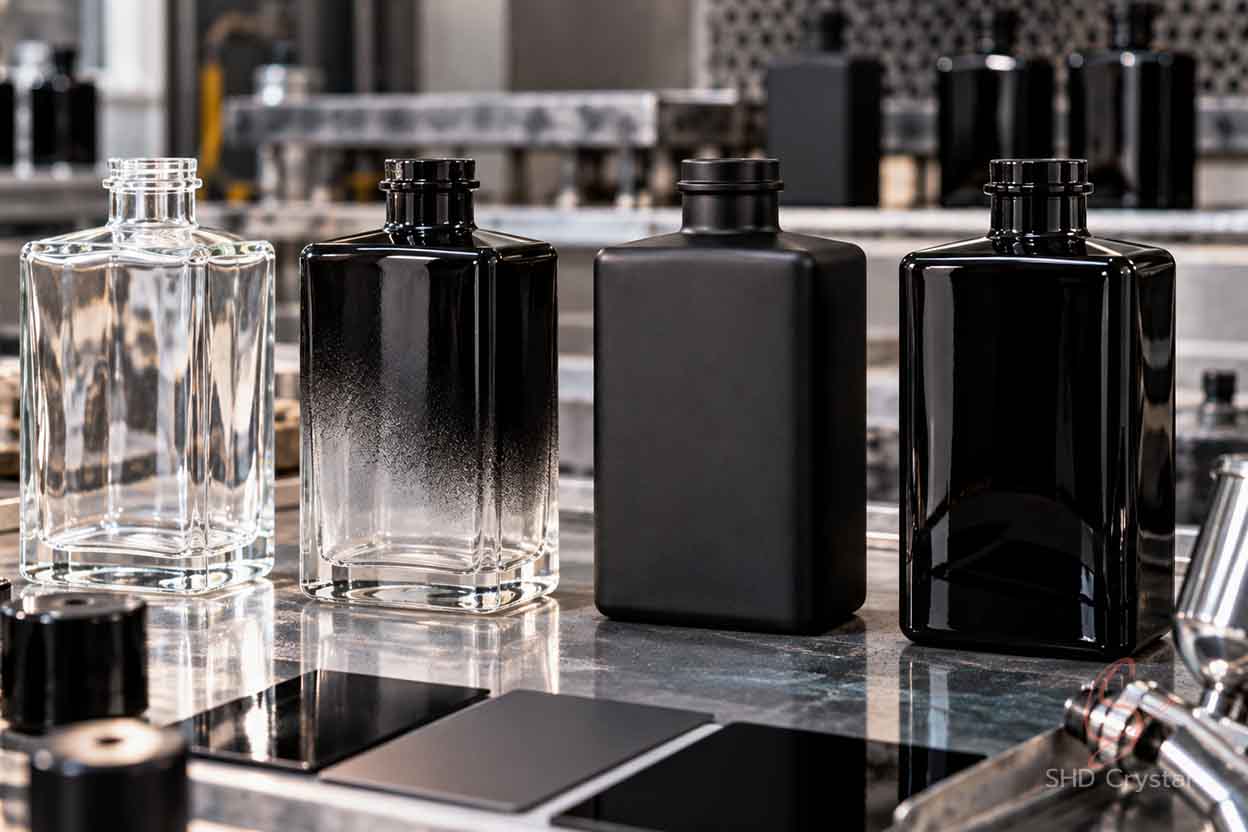
During sampling, attention can be given to glass distribution, cavity positioning, internal stress, dimensional consistency, and compatibility with the intended spray components. SHD Crystal’s glass processing capabilities also support decorative options such as frosting, color spraying, printing, and polishing where appropriate.
FAQs
-1. Does an inner chamber improve fragrance preservation?
Not automatically. The internal cavity holds the fragrance, but preservation still depends on the formulation, glass compatibility, closure integrity, and exposure conditions. A distinctive cavity shape does not replace suitable sealing or packaging tests.
-2. Can the inner chamber have a different shape from the outer bottle?
Yes. The internal cavity may be simpler, smaller, or differently proportioned than the exterior. However, its geometry must remain compatible with the selected forming process, tooling, structural requirements, and dispensing system.
-3. Why is physical sampling important for inner chamber bottles?
Samples allow buyers to verify actual capacity, cavity alignment, optical appearance, glass weight, neck accuracy, and filling compatibility. They also help identify differences between the intended design and the glass structure achievable in production.
The link to this article is managed and owned by SHD Crystal. Please cite the source if reposting. Thank you for your cooperation.