
A transparent tumbler becomes something entirely different when geometric facets meet a soft rainbow sheen. Under daylight, its surface may reveal pale blue and lavender reflections. Beneath warm evening lighting, champagne gold and delicate pink become more noticeable. This changing appearance gives crystal-cut iridescent cups their distinctive character, combining the structured beauty of decorative glass cutting with a luminous, contemporary finish.
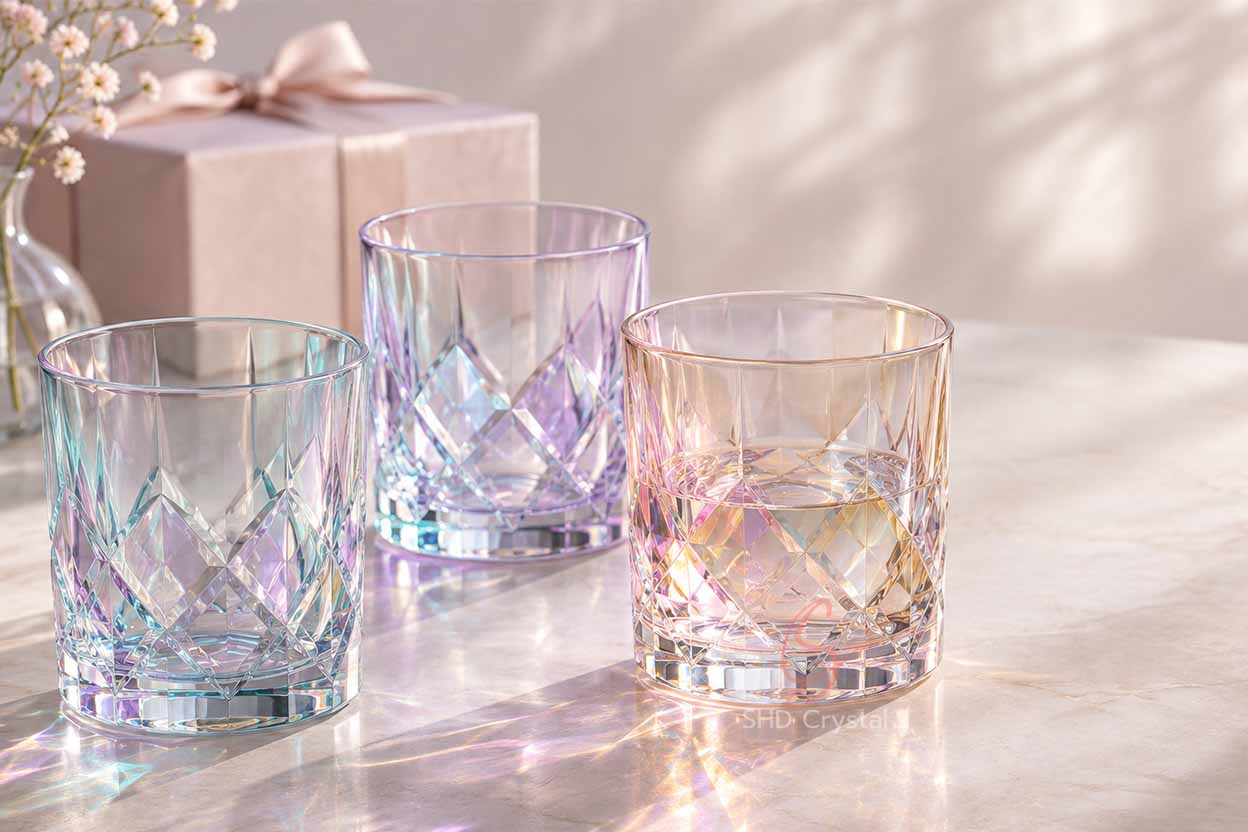
Unlike permanently colored glass, an iridescent surface can appear different depending on the viewing angle and lighting conditions.
How Crystal-Cut Iridescent Cups Combine Texture and Color
The appeal of crystal-cut iridescent cups comes from two visual elements working together. Geometric patterns shape the reflection of light, while the iridescent surface introduces subtle color changes.
Neither element needs to dominate. Their balance determines whether the finished glass feels sophisticated or excessively decorative.
The Geometry Beneath the Glow
Traditional cut crystal tumblers feature geometric decorations produced by grinding the glass surface with cutting wheels.
Diamond patterns, vertical flutes, and intersecting facets create surfaces that reflect light in different directions. Subsequent polishing gives these areas their characteristic brilliance. Similar visual patterns can also be incorporated directly into glass molds. This approach can reproduce decorative relief more efficiently for suitable designs, but molded textures should not be confused with genuine wheel cutting.
For OEM projects, the intended appearance and manufacturing method should be established before selecting the decorative pattern.
Where the Rainbow Effect Comes From
The colors visible on iridescent glass are not necessarily created by coloring the entire glass body. Historically, glassmakers produced iridescence through treatments involving metallic compounds applied to hot glass surfaces. Modern decorative products may use other compatible lustre or coating technologies.
An iridescent glass finish can introduce shifting tones of violet, turquoise, pink, and gold without requiring an opaque surface.
The appearance depends on the finishing chemistry, application method, underlying glass color, and lighting. A transparent base often provides an especially delicate result because the changing colors remain connected to the glass’s natural clarity.
Combining Decoration with Manufacturing Control
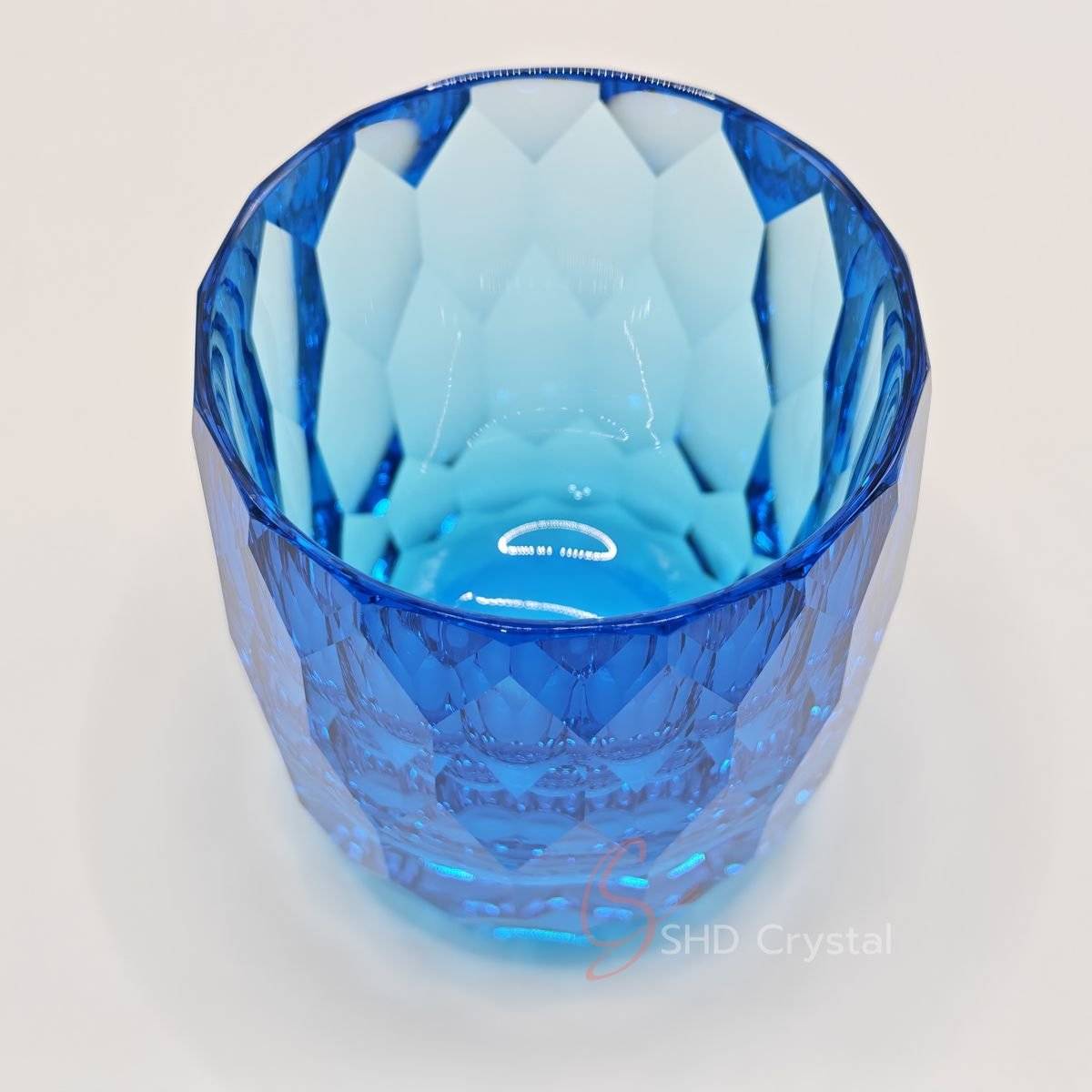


Producing a visually convincing cup requires more than applying a colorful finish. The glass body must first meet its dimensional and structural requirements. Wall thickness, rim quality, base stability, and surface condition all influence subsequent processing. For cut crystal tumblers, the selected cutting depth and polishing quality affect the definition of the decorative pattern.
Adding an iridescent treatment introduces another manufacturing consideration: process compatibility.
Some traditional iridizing methods require hot-glass treatment, while other decorative finishes can be applied during later manufacturing stages. The correct processing sequence depends on the selected technology. Sample development is therefore important for confirming color distribution, facet definition, and acceptable surface variation.
A Decorative Cup with Gift Appeal
The visual personality of crystal-cut iridescent cups makes them particularly interesting for commemorative gifts, boutique tableware, and limited decorative collections.
A coordinated pair can combine matching geometric patterns with subtly different iridescent tones. A larger collection may use the same silhouette while exploring several restrained color variations. Unlike bold printed decoration, the changing surface color can become the main artistic feature.
For gift-oriented projects, presentation packaging should protect the glass while allowing its transparent appearance to remain the focal point.
Practical Details Behind a Beautiful Finish
A decorative glass cup must still be suitable for its intended use. The selected iridescent glass finish should be evaluated for adhesion, abrasion resistance, cleaning compatibility, and applicable food-contact requirements.
A visually attractive coating does not automatically establish dishwasher safety.
Decoration near the drinking rim or on surfaces that contact beverages requires particular attention. Material composition should also be confirmed rather than assuming every crystal-style glass contains lead.
For commercial orders, approved samples should establish the expected color range, pattern definition, and acceptable visual differences.
FAQ
Are crystal-cut iridescent cups always hand-cut?
No. Some products use genuine wheel-cut patterns, while others feature molded geometric textures. The manufacturing method should be confirmed with the supplier.
Does the iridescent color change permanently?
The finish creates a changing visual appearance under different lighting conditions. Its actual durability depends on the selected treatment and cleaning conditions.
Can iridescent glass cups be customized as gifts?
Yes. Depending on manufacturing feasibility, glass shape, geometric decoration, color effects, and presentation packaging can be developed around a coordinated gift collection.
Conclusion
Crystal-cut iridescent cups bring a fresh interpretation to decorative glassware. Their appeal lies in the interaction between structured geometric surfaces and shifting iridescent colors.
With suitable material selection and finishing control, this combination can transform a familiar drinking vessel into a distinctive decorative gift.
A New Expression of Decorative Glass
Not every memorable glass design needs an elaborate silhouette. Sometimes, a familiar shape becomes distinctive through the way it captures light. For collections exploring crystal-cut iridescent cups, SHD Crystal welcomes original design concepts that combine geometric glass decoration with carefully considered surface effects.
For commercial orders, approved samples should establish the expected color range, pattern definition, and acceptable visual differences.
Read the original article on custom crystal glass manufacturing: https://shdcrystal.com/blogs/crystal-cut-iridescent-cups/