
Crystal glass evolution is not only a visual story. It is also a practical record of how material formulas, forming methods, decoration styles, buyer expectations, and production control have changed over time. For importers, hotel suppliers, gift brands, and custom glassware buyers, this helps explain why a crystal product should be judged through clarity, balance, finishing quality, durability, and commercial practicality rather than appearance alone.
Crystal Glass Evolution Shows How Materials Changed Buyer Expectations
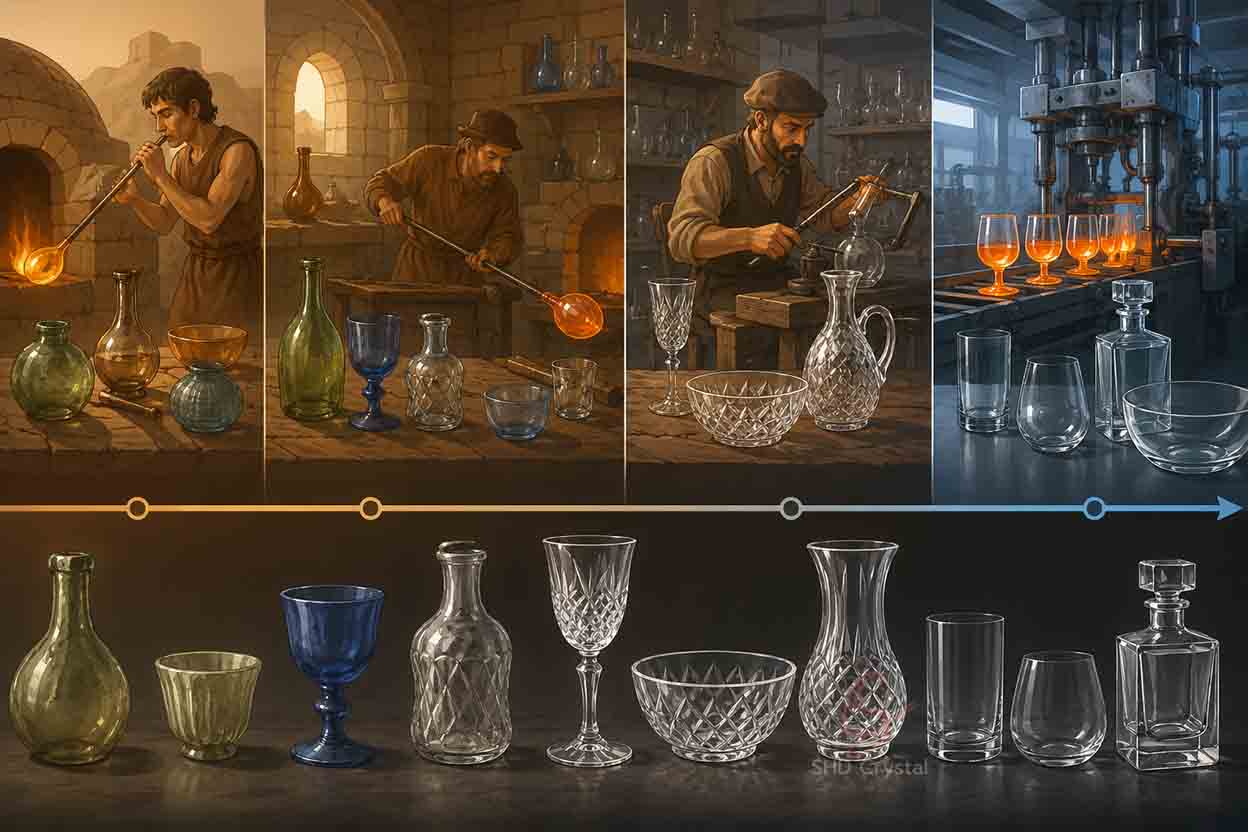
Early crystal products were often admired for brilliance, weight, and the way they interacted with light. As materials and production knowledge developed, makers refined glass composition to improve clarity, cutting performance, and overall workability. This allowed crystal glass production to support a wider range of goblets, tumblers, decanters, bowls, and decorative pieces that felt refined while remaining suitable for shaping, finishing, and market use.
Today, modern crystal glassware no longer follows one fixed definition of luxury. Some buyers still prefer heavier pieces with deeper cutting and a more formal table presence. Others want lighter, cleaner designs for hospitality use, boxed retail sets, or private-label collections. Both directions can be valid. The better choice depends on where the product will be used, how often it will be handled, and what level of decoration the market actually supports.
A common mistake is to judge crystal only by how bright it looks in a photo. A product may appear clear online but still have weak rim finishing, poor base stability, uneven wall thickness transition, or insufficient packaging protection. In real sourcing decisions, quality is always more practical than sparkle alone.
Crystal glass production has also changed because buyers now care much more about repeatability. A handmade sample may look beautiful, but bulk production still depends on controlled annealing behavior, stable polishing pressure, and clear inspection standards. If cooling stress is not managed properly, the product may become more vulnerable during handling, storage, or long-distance shipment. This is one reason crystal glass evolution should be understood as a manufacturing subject, not only a design topic.
The development of modern crystal glassware also reflects material comparison. Traditional lead crystal can offer a classic hand feel and strong optical effect, while lead-free crystal glass may be more suitable for certain markets, daily-use products, or export programs. This does not mean one material is always better than the other. It means the material should be chosen according to the buyer’s purpose, usage scenario, and product positioning.
Decoration has evolved as well. Deep cutting, wheel engraving, etching, logo marking, color accents, and simplified polished surfaces all serve different commercial needs. A gift set may benefit from hand-cut details and stronger visual character, while a hotel glass may need a smoother shape that is easier to replace, stack, and pack. In that sense, crystal glass evolution is also a story of compromise, where beauty, function, and supply practicality must work together.
For OEM projects, buyers should not begin with appearance alone. Capacity, size, target weight, rim thickness, base style, decoration method, logo position, expected quantity, and packaging standard should all be defined early. With these details in place, crystal glass production can be evaluated more accurately before sampling begins.
Modern crystal glassware also requires packaging planning at an early stage. A thin stem glass, a heavy tumbler, and a faceted bowl each need different protection. Foam density, carton strength, inner spacing, and gift box structure can all influence breakage risk and the final customer impression. Packaging is not a separate afterthought. It is part of the product system.
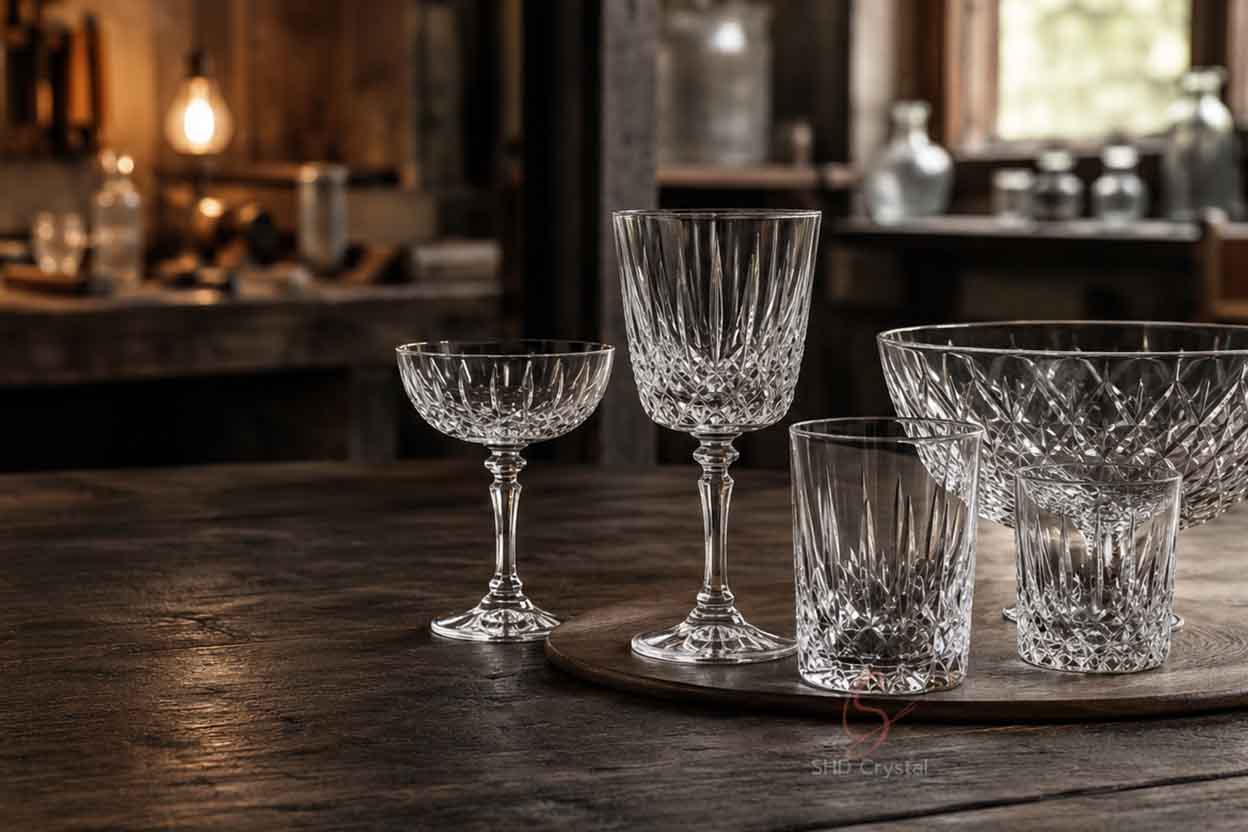
Another practical sourcing point is batch consistency. Crystal glass evolution has made product styles more diverse, but diversity can also increase production complexity. Unusual curves, heavier bases, or deeper decorative surfaces may require closer mold tolerance review and more careful manual finishing control. Buyers should discuss acceptable variation before approving the sample rather than after production begins.
Conclusion
Crystal glass evolution shows that crystal value comes from the relationship between material behavior, design intention, finishing quality, and real use. The strongest product is not simply the brightest or heaviest option. It is the one that suits the market, performs reliably, and can be repeated with stable quality across future orders.
Turning Evolving Craft Into Custom Products
For brands developing stemware, tumblers, bowls, awards, or gift-ready collections, crystal glass evolution can support better custom decisions. Sharing reference images, material preference, target weight, decoration style, and packaging goals helps a manufacturer suggest a more practical route for OEM development before unnecessary revisions begin.
Exclusive Release by SHD Crystal
Custom Crystal Glass OEM Manufacturer
This article is originally published by SHD Crystal. Original Link: https://shdcrystal.com/blogs/crystal-glass-evolution/