
Blogpost keywords: custom perfume bottle sizes, perfume bottle capacity selection, fragrance packaging size planning
Custom perfume bottle sizes guide perfume bottle capacity selection and fragrance packaging size planning for practical brand use.
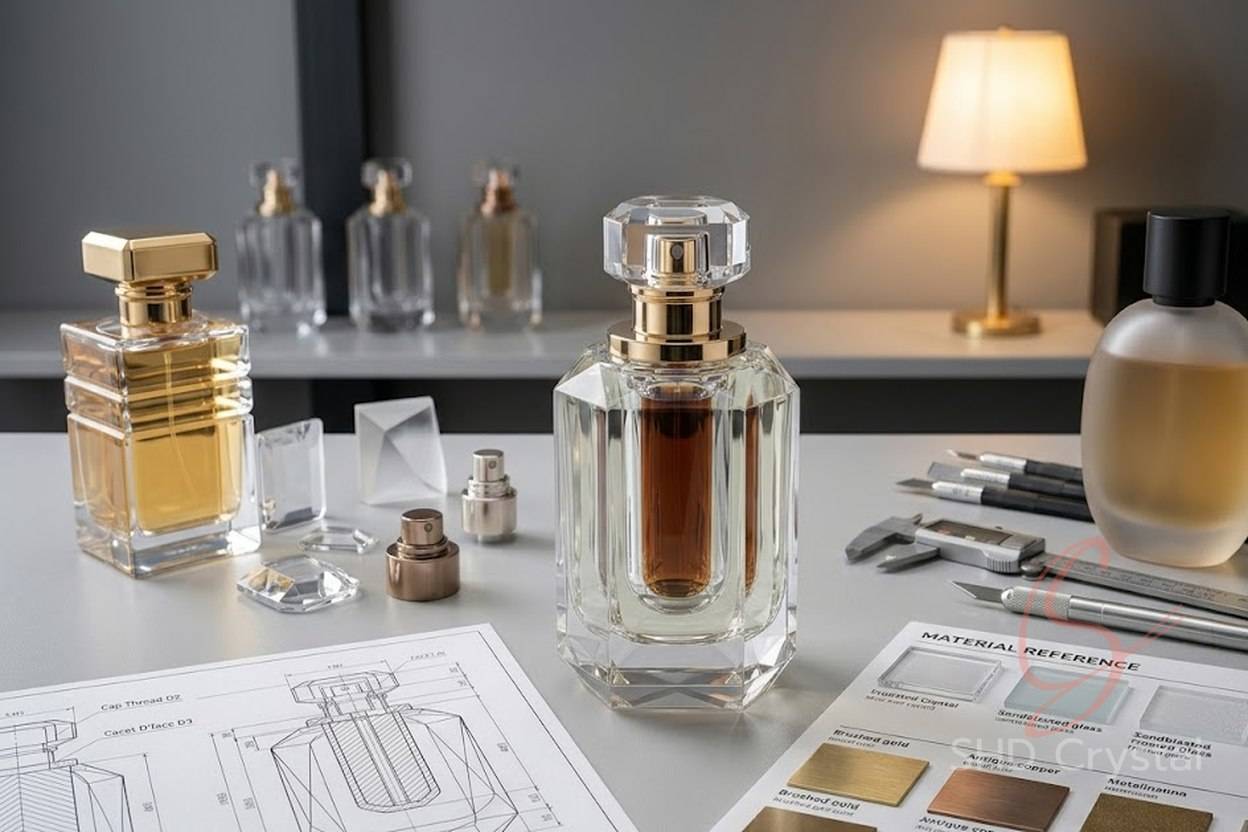
Custom Perfume Bottle Sizes For Brand Projects
Custom perfume bottle sizes influence far more than the amount of fragrance inside the package. A 10 ml travel spray, a 30 ml entry bottle, a 50 ml main retail size, and a 100 ml statement bottle can create completely different expectations before the scent is tested. Size affects price point, hand feel, shelf presence, carton structure, filling method, glass weight, and reorder planning. For fragrance brands, choosing capacity is a product strategy decision, not only a packaging specification.
Custom Perfume Bottle Sizes Should Match Real Selling Scenarios
The first question is where the fragrance will be sold and how the buyer is expected to use it. Small formats are often suitable for discovery sets, travel products, sample programs, and lower-risk first purchases. Mid-size bottles usually work well as daily retail products because they balance value, portability, and display effect. Larger bottles can support gifting, signature scents, or strong visual statements, but they require more attention to weight, stability, and packaging cost.
Perfume bottle capacity selection should also consider fragrance concentration. A highly concentrated extrait may not need a large bottle to feel valuable. A lighter body mist or casual fragrance may benefit from a more generous format. This is one reason custom perfume bottle sizes should be planned together with formula positioning, channel strategy, and target customer behavior.
Capacity Does Not Equal Bottle Presence
A common misunderstanding is assuming that a larger capacity automatically creates a more premium product. In reality, bottle proportion matters as much as volume. A compact 50 ml bottle with a thick base can feel more substantial than a tall 100 ml bottle with thin walls. A wide bottle may create strong shelf visibility, while a slim bottle may photograph elegantly but need careful base stability.
Fragrance packaging size planning should review height, width, base thickness, shoulder shape, and neck position together. If the body becomes too tall, carton height and transport efficiency may suffer. If the base is too thick, annealing behavior and glass weight range need closer control. If the wall thickness transition is uneven, the bottle may look refined but become harder to produce consistently.
Neck Finish And Pump Choice Affect Size Decisions
Bottle size cannot be separated from the spray system. A small bottle may need a fine pump and light cap to avoid visual imbalance. A large bottle may need a stronger cap structure or a wider shoulder to keep the design stable. Crimp neck and screw neck options also influence filling workflow, sealing control, and future refill concepts.
For custom perfume bottle sizes, the neck finish should be reviewed before finalizing capacity. A small change in mouth specification can affect pump fit, collar height, cap proportion, and carton insert design. Perfume bottle capacity selection becomes more reliable when the bottle body, pump, cap, and box are checked as one package.
Practical Limits In Production And Packing
Different sizes create different inspection points. Small bottles require precise decoration placement because there is less surface area for labels, screen printing, or hot stamping. Large bottles need stronger control over base flatness, glass distribution, and impact protection. Mid-size bottles may seem easier, but they still require stable mold tolerance and consistent fill appearance.
Fragrance packaging size planning should also include shipping. A bottle that looks attractive alone may become inefficient in a set box or export carton. Inner trays, dividers, cap protection, and bottle orientation should be reviewed before mass production. This is especially important when a fragrance line includes several capacities with shared design language.
Conclusion
Custom perfume bottle sizes should be chosen through product positioning, user behavior, glass structure, pump compatibility, and packing efficiency. When capacity decisions are made with production details in mind, fragrance brands can avoid oversized concepts, unstable proportions, and avoidable cost pressure.
Developing Bottle Sizes With Factory-Based Evaluation
For brands planning custom perfume bottle sizes, SHD Crystal can support capacity review, bottle proportion evaluation, neck finish matching, surface decoration planning, sample correction, and OEM production coordination. The aim is to help each bottle size feel suitable for its scent concept, retail channel, handling needs, and future product line development.