
When I see delicate flowers painted on a glass vase, I am often drawn to the way the colors sit against the transparent surface. The petals may look soft and almost weightless, yet the decoration has gone through a carefully controlled heating process. This is what makes enamel flowers and glass interesting to me. The technique brings painted floral artwork onto glass through heat, turning an ordinary vessel into a decorative piece with its own character.
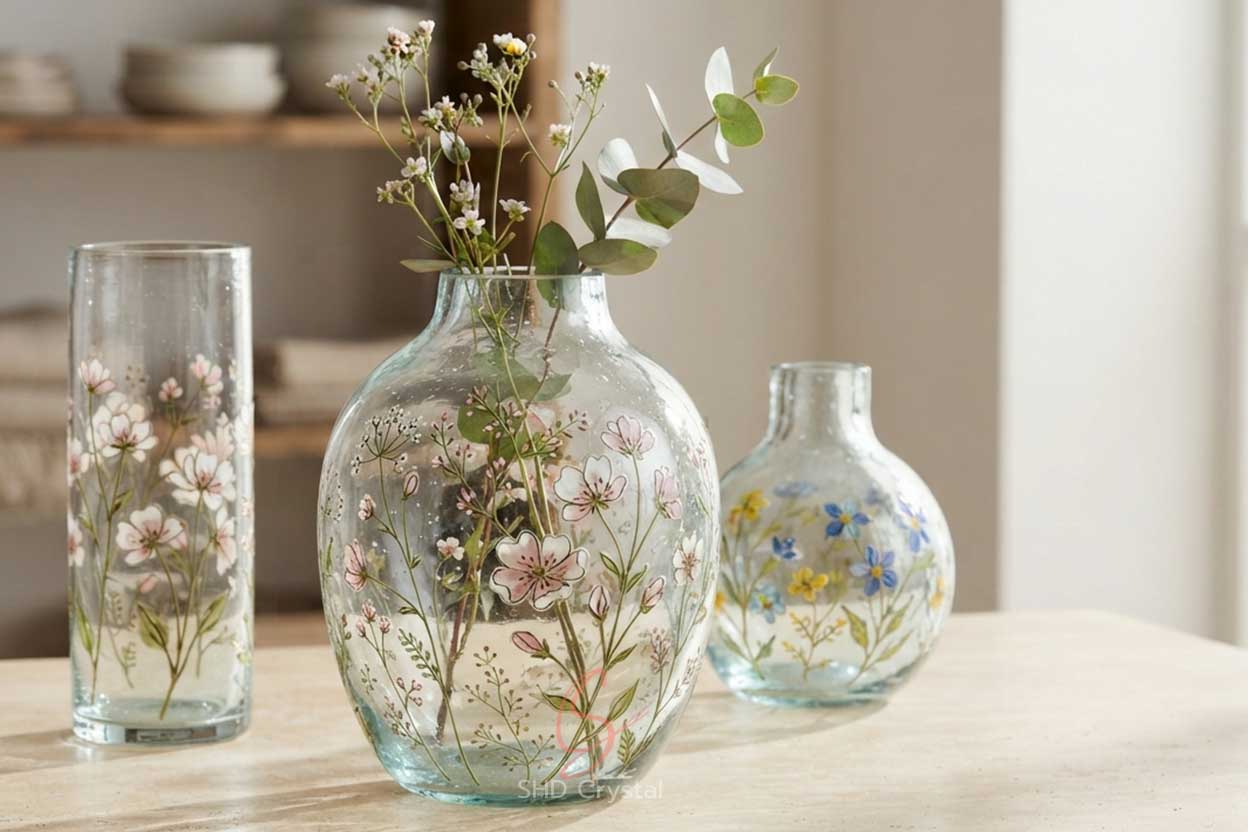
How Enamel Flowers and Glass Work Together
Unlike ordinary surface paint, traditional glass enamel contains finely ground glass, coloring materials, and a medium that makes it suitable for painting. When heated under the right conditions, the enamel softens and bonds to the glass surface.
I think of it as painting with a material that needs a second firing to become part of the finished object. This also explains why enamel painting is different from attaching separately formed glass flowers or applying decorative stickers.
Designing Flowers for a Glass Surface
Before painting, I would consider the shape of the vessel. A broad vase provides space for larger blossoms and flowing branches, while a slender body may look better with smaller flowers and delicate stems.
Color is equally important. White, pink, yellow, and green enamels can create a lively botanical design, but their appearance changes against clear, frosted, or colored glass. For floral glassware decoration, the placement of each flower matters as much as the artwork itself. A pattern needs to remain attractive when the glass is viewed from different angles.
The Actual Process of Glass Enamel Painting
The process begins with a finished glass body. Its surface must be clean and suitable for the selected enamel.
Next, the enamel material is prepared using a compatible painting medium. The floral pattern may be outlined first, followed by petals, leaves, and finer details. Different colors can be applied with small brushes, depending on the design.
Once the decoration has dried, the piece moves into a kiln. Some traditional glass enamels are fired at approximately 500–700°C, although the correct temperature and heating schedule depend on the glass and enamel formulation.
During firing, the medium burns away and the enamel bonds to the surface. Complex designs may require more than one firing.
The final stage involves controlled cooling and inspection. This is where glass enamel painting becomes more demanding than it first appears.
Why Firing Is the Most Delicate Stage
A beautifully painted flower can still fail during firing. If the temperature is too low, the enamel may not fuse properly. Excessive heat can affect the colors or distort the glass body. Uneven enamel application may also create visible differences between petals.

I would never judge the finished quality from the painted sample alone. The real result only becomes clear after firing and cooling.
Where Floral Enamel Decoration Works Best
I find this technique particularly suitable for decorative glass vases, artistic bottles, gift collections, and selected tabletop products. Hand-painted floral artwork can give individual pieces a distinctive appearance. For repeatable commercial collections, manufacturers may also evaluate compatible enamel transfers or screen-printing methods.
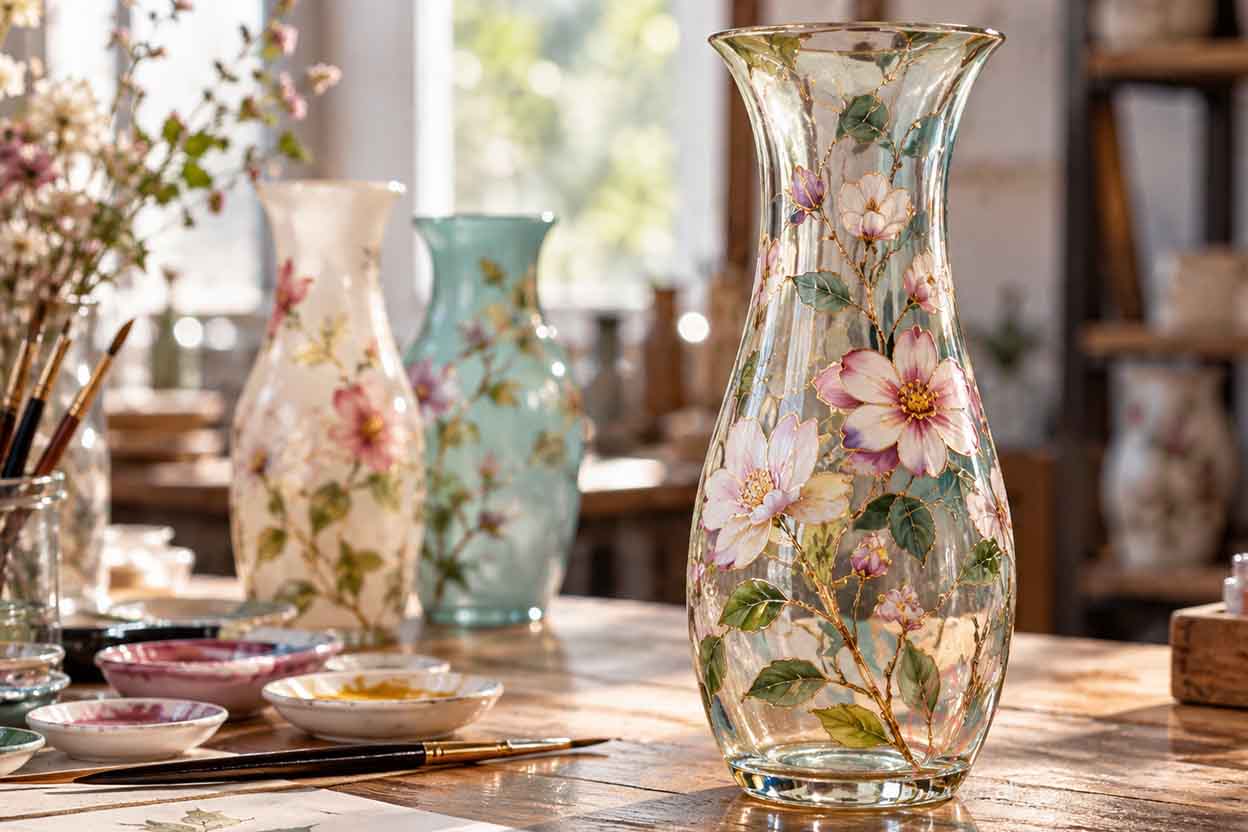
The choice depends on pattern complexity, order volume, and the intended visual effect. In floral glassware decoration, more complicated artwork does not necessarily produce a better result.
What I Would Check Before Approving Production
For a commercial project, I would examine the consistency of flower placement, color, outlines, and surface finish. Testing should also consider decoration adhesion and resistance to the intended cleaning conditions. A kiln-fired enamel finish should not automatically be described as dishwasher-safe without suitable verification.
Physical samples are especially valuable when several colors must remain consistent across a collection.
Conclusion
For me, enamel flowers and glass represent a meeting of artistic detail and controlled glassmaking. The beauty lies in the painted flowers, but the quality depends on preparation, firing, and finishing. Understanding these steps makes it easier to develop decorative glassware that is both visually distinctive and practical to produce.
Developing Floral Enamel Glassware with SHD Crystal
SHD Crystal supports OEM and ODM glassware development for decorative and commercial collections. For projects involving enamel flowers and glass, buyers can provide original floral artwork, glass specifications, color references, and target quantities for a manufacturing feasibility review. Production methods and decoration requirements are evaluated before sampling.
FAQs About Enamel Flowers and Glass
Q&A-01 | Can enamel flowers be added to an existing glass vase?
Yes, provided the existing glass is compatible with the enamel and firing process. A sample firing is needed to assess the risk of deformation, cracking, or poor adhesion.
Q&A-02 | Can floral enamel patterns be applied to colored glass?
Yes. However, the underlying glass color affects the appearance of the enamel. Physical samples help determine whether the selected floral colors provide sufficient contrast.
Q&A-03 | Is enamel-decorated glassware automatically safe for food and beverages?
No. Food-contact suitability depends on the enamel composition, decoration placement, intended use, and applicable testing requirements. Special attention is needed around drinking rims and food-contact surfaces.
Read the original full version: https://shdcrystal.com/blogs/enamel-flowers-and-glass/