
Color is one of the most distinctive features of glassware. A transparent cobalt blue vase, an amber glass bottle, or a crystal ornament with delicate enamel details can each create a completely different visual impression. Behind these effects are different glass coloring techniques, each involving specific materials, manufacturing processes, and finishing requirements.
In glass manufacturing, color can be introduced directly into the glass composition during melting or applied to an already formed glass surface through spraying, coating, enamel decoration, and decal firing. The choice influences not only the final appearance but also transparency, surface characteristics, production requirements, and consistency. For glassware brands, designers, and OEM buyers, understanding these differences helps determine which coloring method is suitable for a particular product. At SHD Crystal, color selection is considered alongside glass material, forming methods, decorative craftsmanship, and sample approval to support practical custom glassware development.
How Glass Coloring Techniques Create Color in Glass
Glass coloring techniques generally follow two approaches: introducing colorants into the glass batch or molten glass before forming, or applying decorative finishes after the glass has taken shape. In body coloring, suitable colorants are incorporated during melting, making the resulting color an integral part of the glass material rather than a separate exterior layer. The final appearance depends on factors such as glass composition, colorant concentration, and product thickness.
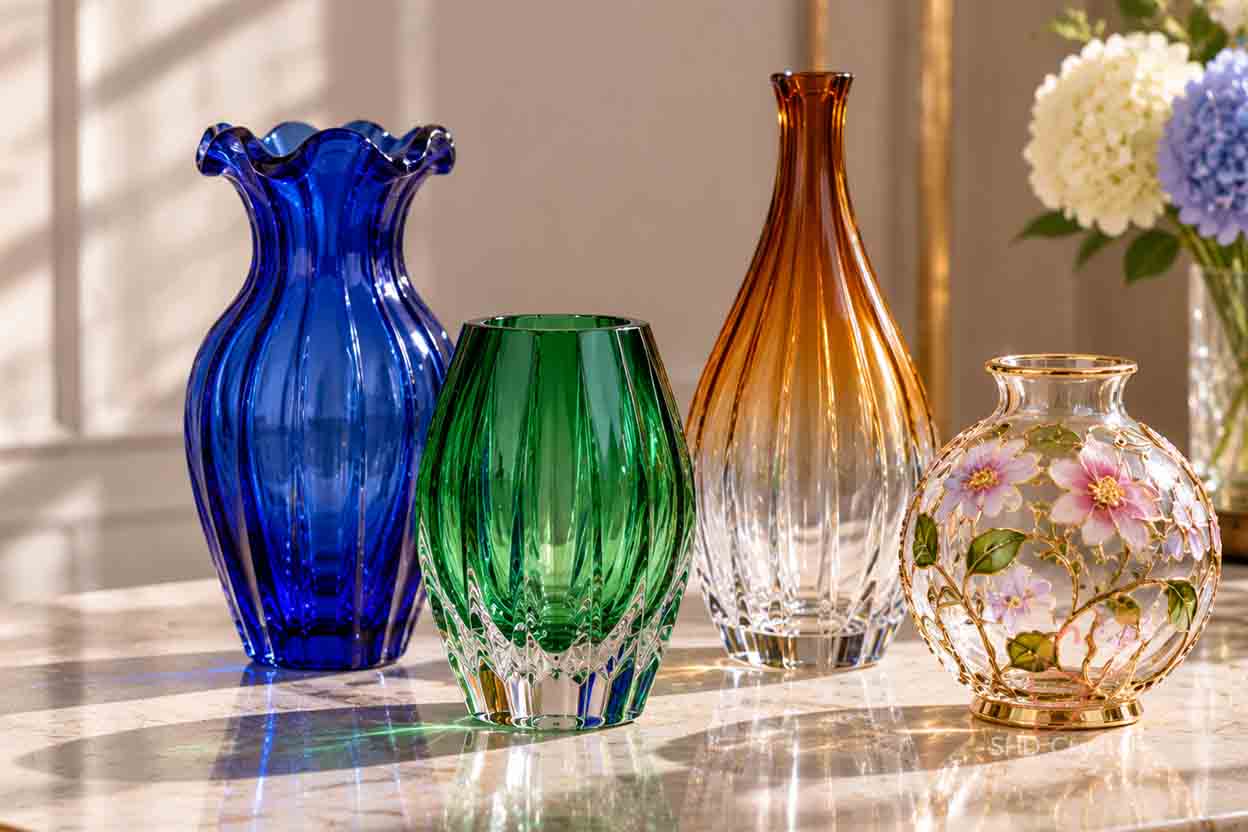
Different color-forming compounds can produce different effects. Cobalt compounds are commonly associated with blue glass, chromium with green, and iron with shades ranging from green to amber depending on the glass chemistry and melting conditions. Copper and manganese compounds can also produce different colors under suitable processing conditions.
The final appearance depends on more than the selected colorant. Glass composition, colorant concentration, oxidation-reduction conditions, melting conditions, and the thickness of the finished product all influence the resulting shade.
Body-colored glass is particularly suitable for transparent colored tumblers, bottles, vases, and decorative vessels where color needs to remain integrated throughout the material.
For OEM development, the glass composition and intended color should be evaluated together. A physical sample is important because the same nominal color can appear different when the wall thickness, product geometry, or glass formulation changes.
Glass Color Spraying and Surface Coating
Color spraying is another widely used glass coloring technique. Instead of changing the glass composition, this method applies a selected color finish to the surface of an already formed glass product.
Depending on the coating formulation and application process, the result can be transparent, translucent, opaque, or graduated. Common decorative effects include:
– Solid-color exterior finishes
– Transparent smoky or tinted effects
– Gradient transitions from dark to light
– Two-tone decorative surfaces
– Colored bases or selected surface areas
This method provides greater flexibility when a design requires a particular exterior appearance without introducing color throughout the glass body.
For example, a clear glass vase can receive a translucent blue gradient, while a decorative crystal vessel may feature a darker lower section and a clearer upper body.
Surface preparation, coating application, and curing conditions influence the final finish. Adhesion, scratch resistance, handling, and cleaning compatibility should also be evaluated according to the product’s intended use.
For functional drinking vessels, buyers should pay particular attention to the decoration area and its suitability for the intended food-contact and cleaning conditions.
Enamel Decoration and Hand-Painted Glass Finishes
Enamel decoration introduces color through specialized glass-based decorative materials applied to the glass surface and subsequently fired under suitable conditions.
Unlike ordinary surface spraying, fired enamel decoration creates a bonded decorative layer through controlled heat treatment.
This technique is especially useful when a glass product requires more detailed artistic patterns rather than a uniform color finish.
Typical applications include:
-Floral and botanical patterns
-Decorative borders and ornamental motifs
-Multicolor artwork on crystal vases
-Gold-accented decorative details
-Customized crystal ornaments and giftware
Hand-painted decoration also provides flexibility for intricate designs, particularly when a project requires artistic details or variations that are difficult to achieve through uniform surface coating.
For OEM projects, the glass material, firing compatibility, artwork positioning, and final color appearance should be confirmed during sampling. Decorative details must also be evaluated for their intended handling and usage conditions.
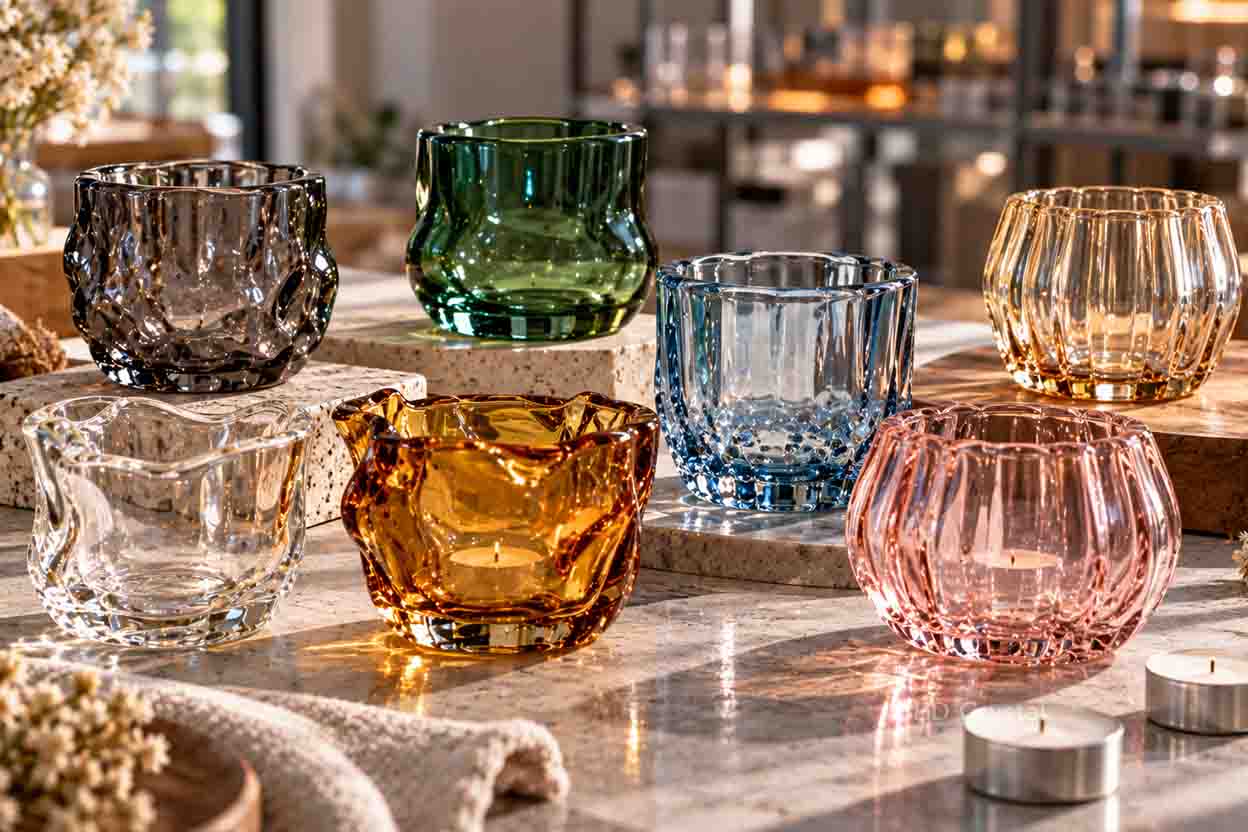
Decal Firing and Printed Glass Decoration
Not every custom glassware project requires an entirely colored product. Some brands need a specific logo, graphic, pattern, or decorative identity applied to an otherwise transparent glass surface.
Printing and ceramic decal decoration provide practical options for these requirements.
Glass printing can be used for repeated logos, geometric patterns, decorative lines, and selected multicolor designs. Ceramic decals offer additional flexibility for more intricate artwork and coordinated decorative patterns.
Depending on the selected material and process, decal decoration may involve transferring the prepared design onto the glass surface followed by firing to bond the decoration.
For curved glass products, artwork positioning and surface geometry require particular attention. The final design should be checked for alignment, color appearance, and consistency across the intended production quantity.
These methods are particularly relevant to branded glassware, promotional collections, decorative vessels, and customized gift products.
How to Choose the Right Glass Coloring Technique
The most suitable glass coloring technique depends on the product’s appearance, material, structure, and intended application.
For projects requiring transparent color throughout the glass body, body coloring is generally the more appropriate direction. When a design calls for a gradient, opaque finish, or colored exterior, spraying and surface coating may provide greater flexibility.
Enamel decoration and hand painting are better suited to artistic patterns, while printing and decal firing support logos and more structured decorative artwork.
The glass forming method should also be considered. Hand-blown, mold-blown, and pressed glass products have different shapes and surface characteristics, which may influence the practicality of a particular decorative process. For example, an irregular hand-formed vase may require a different decoration approach from a geometrically structured pressed glass tumbler.
Understanding the relationship between decoration and glass forming processes helps establish a more practical manufacturing direction before sample development begins.
Interested in custom glassware or related products?
Contact our team to discuss your project requirements.
What Affects Color Consistency in Glass Manufacturing?
Achieving the desired color in a glass sample is only part of the development process. Maintaining a consistent appearance across production requires attention to several manufacturing factors.
- Glass Composition and Material Compatibility
Different glass compositions may respond differently to colorants, coatings, and firing conditions. A coloring formulation suitable for one glass material should not automatically be assumed to work with another. Material compatibility should therefore be evaluated before the final coloring method is selected.
- Wall Thickness and Product Geometry
Glass thickness influences light transmission and the perceived depth of transparent color. A thick glass base may appear darker than a thin wall even when both areas use the same glass composition. Curved surfaces, irregular shapes, and decorative structures can also affect how color and light are distributed across a product.
- Lighting and Visual Evaluation
Transparent colored glass interacts with surrounding light through transmission, reflection, and refraction. The same product may appear different under natural daylight, warm indoor lighting, or against different backgrounds. Color approval should therefore use consistent viewing conditions and a clearly defined reference.
- Decoration and Production Conditions
For surface-colored glass, preparation, application, curing, and firing conditions influence the finished appearance. Coating uniformity, decorative positioning, and finish quality should be reviewed against agreed specifications. These checks become particularly important when the same design is produced across multiple batches.
- Physical Sample Approval
A physical sample provides a more reliable reference than a digital image alone. Before production, buyers should confirm the target color, transparency, decorative details, dimensions, and surface finish. The approved sample can then serve as a reference for subsequent production follow-up and inspection.
Planning Custom Glass Coloring for OEM Projects
For an OEM glassware project, color development should begin with a clear understanding of the intended product and its application. clients/purchasers can provide reference images, Pantone color references, physical samples, product drawings, or descriptions of the desired visual effect. These details help establish whether the project requires integrated body color, surface spraying, enamel decoration, or another finishing approach.
The following factors should be considered during development:
- Glass composition and material requirements
- Target color, transparency, and surface appearance
- Product dimensions, wall thickness, and structural design
- Forming and decoration compatibility
- Intended product use and cleaning conditions
- Sample approval and production consistency
- Packaging requirements for finished products
For existing glassware designs, the development process may begin with an established product model and adjusted color or decoration specifications. Original designs may require additional structural evaluation, tooling, and sample development.
A clearly approved sample and agreed production specifications provide a practical foundation for repeatable OEM manufacturing.
Custom Glass Coloring and Decoration at SHD Crystal
At SHD Crystal, glass coloring is considered part of a broader custom glassware development process. The objective is to coordinate material selection, product structure, forming methods, and decorative finishing to achieve the intended appearance while maintaining manufacturing feasibility.
SHD Crystal supports different glass production routes, including hand forming, mold blowing, pressed forming, and automated production. Its finishing capabilities include color spraying, coating, frosting, engraving, polishing, printing, decal firing, hand-painted decoration, enamel decoration, and metallic details.
For different projects, the appropriate process is evaluated according to the glass material, product geometry, decorative requirements, and intended application. Existing custom glass vases demonstrate how colored glass, sculptural forms, engraved details, and gilded enamel decoration can be incorporated into decorative product development.
For branded collections and decorative projects, custom crystal glass decorative items provide additional possibilities for combining distinctive glass forms with specialized craftsmanship.
Through bespoke crystal glass manufacturing, SHD Crystal also considers structural feasibility, finishing requirements, sample confirmation, and production consistency throughout the development process.
Conclusion
Glass coloring techniques offer different possibilities for transforming the appearance of glass products. Body coloring creates integrated color throughout the material, while spraying, enamel decoration, printing, and decal firing provide additional ways to develop distinctive surface finishes.
For custom glassware projects, the right method depends on the relationship between glass composition, product geometry, manufacturing processes, and intended use. Color selection should therefore be treated as part of product development rather than an isolated decorative decision.
Developing Custom Colored Glassware with SHD Crystal
SHD Crystal supports custom glassware OEM projects involving colored glass, decorative surface finishes, and specialized craftsmanship. Whether developing a transparent colored vase, a gradient-finished glass vessel, or a crystal ornament with detailed enamel decoration, our team can review the material, design, finishing requirements, and sampling expectations.
Share your reference images, target colors, drawings, or existing samples with SHD Crystal to discuss a suitable manufacturing direction for your custom glassware project.
The link to this article is managed and owned by SHD Crystal. Please cite the source if reposting. Thank you for your cooperation.