
A glass kettle manufacturer should be evaluated by heat performance first, not by appearance alone. A clear kettle may look simple and elegant, but it has to withstand hot water, pouring movement, cleaning, storage, and repeated household use. For tea brands, kitchenware buyers, and giftware distributors, the real question is whether the product can stay visually refined while remaining dependable under daily temperature change.
Glass Kettle Manufacturer Projects Depend on Material and Use Conditions
The first decision in a glass kettle manufacturer project is the intended use. Some products are designed only for brewing with already-boiled water. Others are promoted as a stovetop tea pot for direct heating. These two categories may look similar in photos, but they do not ask the same thing from the glass body.
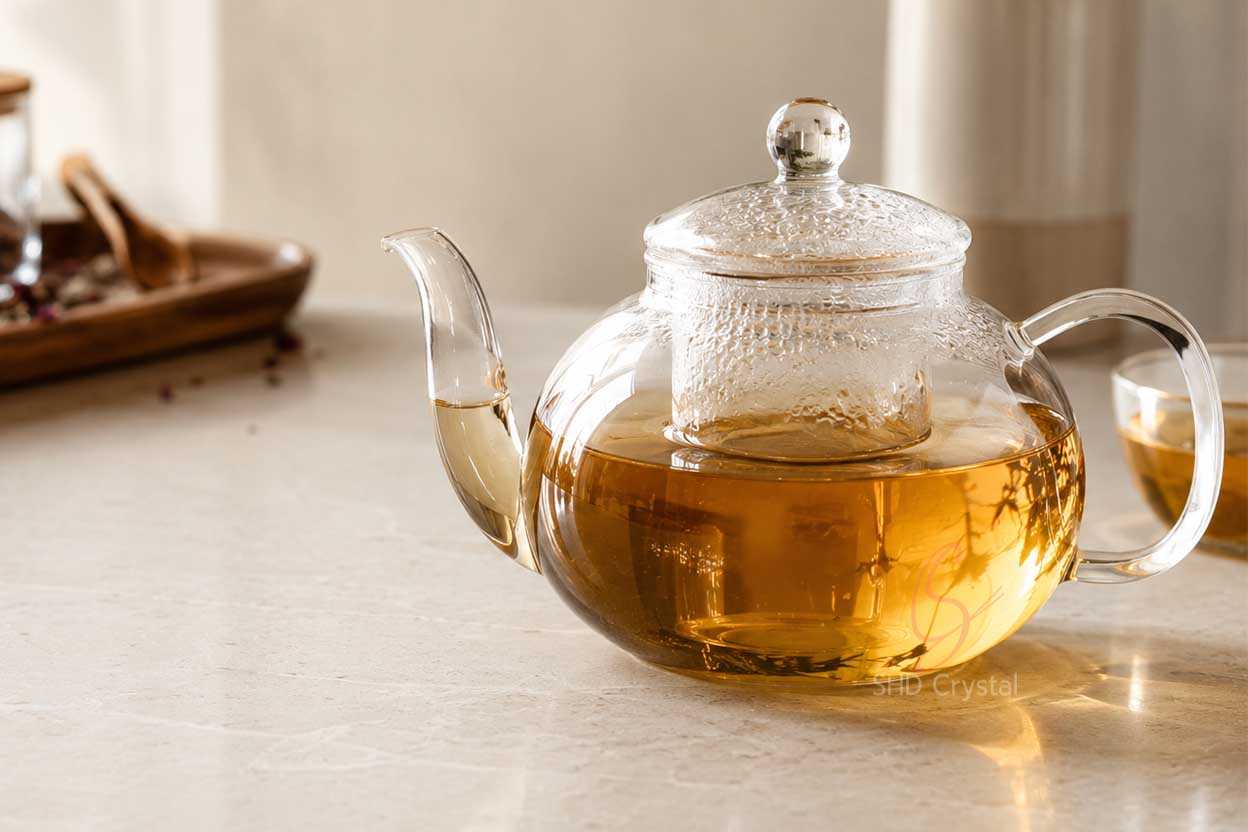
This is why use conditions should be confirmed before shape, lid style, or decoration. A borosilicate teapot is often preferred because borosilicate glass offers better resistance to thermal stress than ordinary decorative glass. Even so, material alone does not guarantee safety. Structure, wall distribution, handle design, and production control still determine whether the kettle performs well after purchase.
Structure Controls More Than Appearance
One common mistake is assuming that a thicker kettle is automatically safer. In reality, wall thickness transition matters more than simple heaviness. If the base is much thicker than the body wall, or if the spout and handle joints create uneven heat behavior, the product may carry unnecessary stress during use.
For a glass kettle manufacturer, forming temperature and annealing behavior are practical control factors because they influence dimensional accuracy and residual stress. In a borosilicate teapot, small differences in wall thickness can affect how the kettle responds when hot water is poured in or when the vessel cools after service.
Handle, Spout, and Lid Fit Affect Daily Confidence
Heat-safe glassware is judged quickly by the hand. A handle that looks elegant but feels too thin can reduce user confidence when the kettle is full. A spout that drips heavily makes the product frustrating even if the glass body itself is well formed. The lid also needs balance. It should sit securely during pouring but remain easy to remove for refilling and cleaning.
A stovetop tea pot may introduce even more variables if it includes bamboo, stainless steel, silicone, or plastic components. These extra parts should match the heating method and the overall product purpose rather than being treated as decorative additions.
Common Misunderstandings in Sourcing
A frequent misunderstanding is assuming that all transparent kettles are suitable for direct heating. They are not. Some are appropriate only as serving vessels or brewing pots after water has already been heated separately. This difference should be made clear in product positioning and use instructions.
Another mistake is judging quality only by clarity. A reliable glass kettle manufacturer must also control mold tolerance, polishing quality, handle attachment, spout forming, and inspection standards. Clear glass attracts the buyer first, but structure decides whether the product remains usable over time.
Packaging Still Belongs to Product Development
A kettle is a fragile product with several exposed zones, especially the spout, lid, and handle. That means packaging cannot be treated as a final shipping detail. A borosilicate teapot with a rounded body may still require stronger inner support if the spout is long or the lid is loose during transport.
For this reason, a glass kettle manufacturer project should also review carton structure, inner protection, and retail or export packing early in sampling.
Conclusion
A glass kettle manufacturer should be judged by the relationship between material, heat conditions, structure, pouring performance, and transport safety. A kettle is not successful simply because it looks clean and transparent. It needs to match its intended use, whether as a borosilicate teapot for brewed service or a stovetop tea pot for direct heating, while reducing avoidable stress risks in real use.
Building a Practical Tea Kettle Program
For buyers planning a new glass kettle manufacturer project, early communication about heating method, capacity, lid style, handle structure, and packing expectations can make the development process more reliable. A clearer brief helps the supplier recommend a more suitable borosilicate teapot or stovetop tea pot direction before sampling and production begin.
Explore more custom crystal glass OEM solutions: https://shdcrystal.com/blogs/glass-kettle-manufacturer/