
A colored vase can look almost opaque on a shelf, then reveal clear facets when sunlight reaches it. That shift captures the appeal of a glass overlay effect: depth created by layers, contrasting surfaces, and transmitted light. For brands developing decorative vessels, the first task is connecting the desired appearance with a workable production method.
A Glass Overlay Effect Begins with the Layer
In this article, the term describes a physical decorative effect in glassware. The appearance may come from actual glass layers, an applied surface finish, or overlapping transparent forms.
Casing has a specific meaning: one glass layer is applied over another of contrasting color, and the components are formed together. The outer layer may subsequently be cut or carved. Museum glassmaking definitions distinguish this construction from a purely visual impression of layering. When colored casing is cut back to reveal a clear body, the result is commonly described as cut-to-clear glass. Cameo decoration instead uses contrasting layers to create a design in relief.
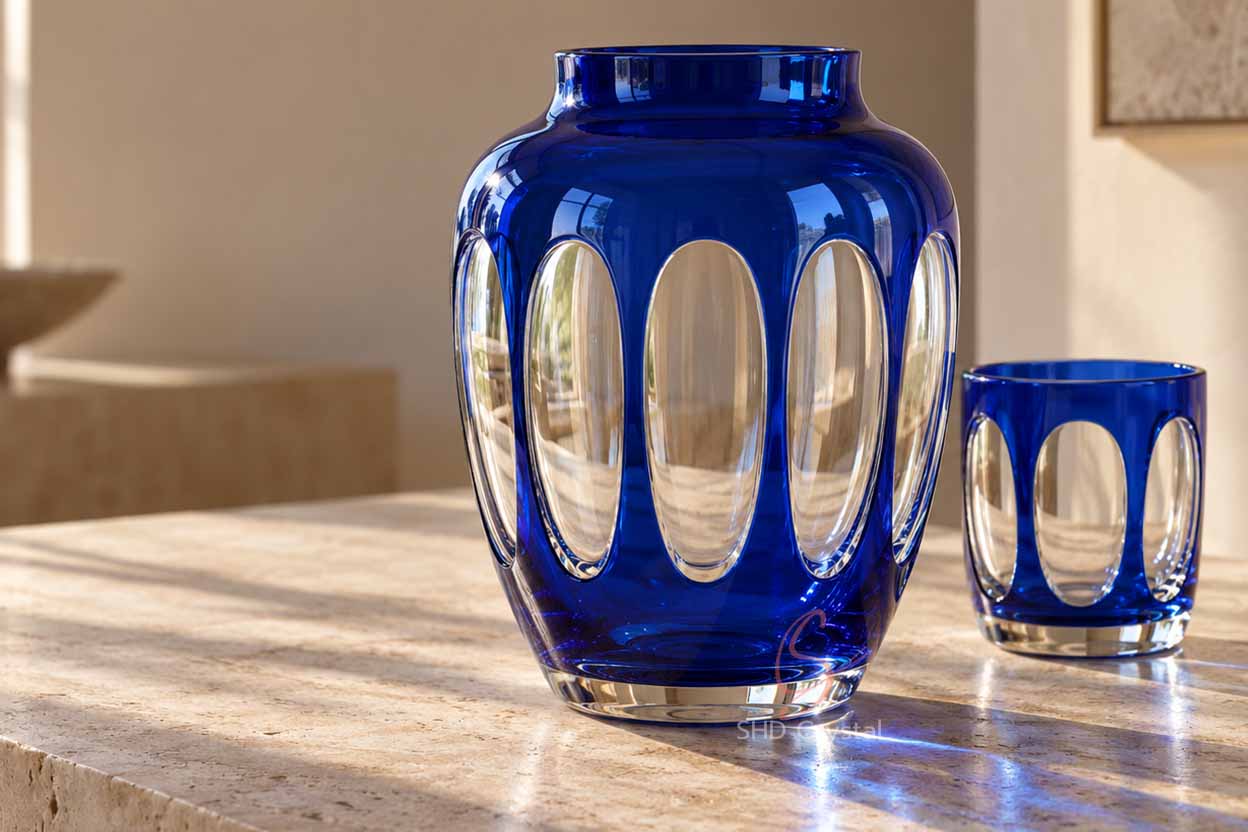
Match the Appearance to the Construction
A photograph can communicate a mood while leaving the production route unclear. Identify which feature matters: continuous color, exposed clear areas, or a tinted surface.
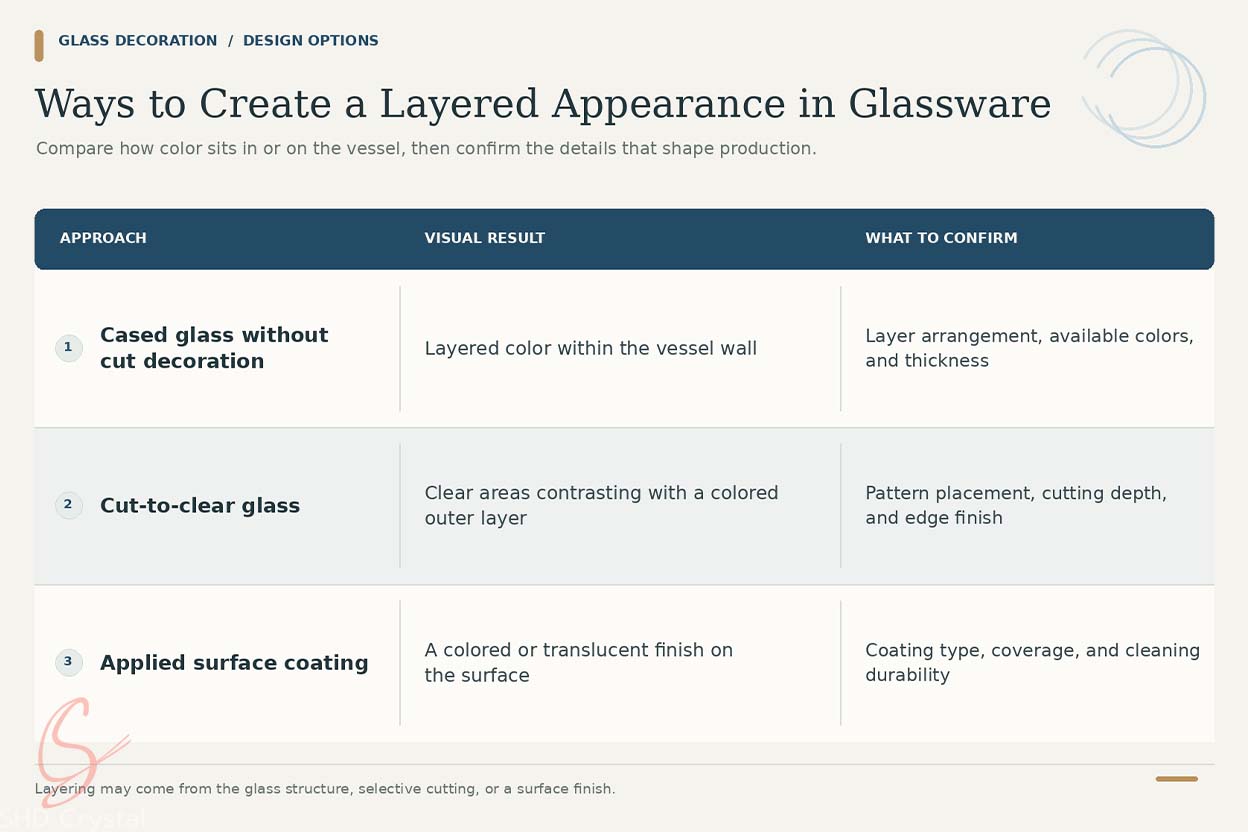
For cased glass design, explain the intended construction in drawings or sample notes. Similar-looking products may require different production and care specifications.
Let the Application Shape the Pattern
A vase provides a generous canvas. Broad clear windows can reveal stems and water, while retained colored areas frame the arrangement. Review it both empty and filled: the contents become part of the composition.
A tumbler presents different priorities. Keep the drinking edge comfortable, preserve usable gripping areas, and check how decoration looks behind the intended beverage. A pattern that is legible against water may appear less distinct against a dark drink.
Decorative bowls require another viewing angle. Inspect the interior as well as the outside, especially where curved walls make patterns overlap visually. Coordinate pieces through a shared motif or color relationship rather than automatically repeating one pattern at every scale.
Approve More Than One Flattering Photograph
Review physical samples under daylight and the lighting expected at the venue. Use light and dark backgrounds, and rotate each vessel to inspect color distribution and pattern alignment. For cased glass design, record the approved color range, layer arrangement, and acceptable variation. For cut-to-clear glass, compare the clarity of exposed areas, transitions between surfaces, and finishing around the rim and base. Agree on cleaning trials and protective packing before production.
A successful glass overlay effect connects visual depth with appropriate construction, comfortable handling, and repeatable finishing. Clear sample criteria help preserve that relationship across a collection.
Frequently Asked Questions
Q01 | Does a layered appearance prove that the glass contains lead?
No. Appearance alone cannot establish composition. Request the actual material specification and relevant documentation for the intended application.
Q02 | Can a photograph provide enough information for a quotation?
It can begin the discussion. Dimensions, intended use, quantity, and additional views help clarify the design. A reference sample may be needed to distinguish casing from a surface finish.
Q03 | Can every layered finish go in a dishwasher?
Cleaning suitability depends on the complete product, including any coating or decoration. Request instructions and agreed testing for the proposed finish instead of assuming one cleaning method suits every construction.
The link to this article is managed and owned by SHD Crystal. Please cite the source if reposting. Thank you for your cooperation.