
A glass tea storage jar has two responsibilities that do not always agree with each other. It should display the natural beauty of loose tea leaves, yet it must also help protect their aroma and quality during storage. Transparent glass provides an attractive view of green tea, black tea, oolong, or herbal blends, making the container suitable for tea shops, kitchen collections, and premium packaging. However, good design requires more than an appealing silhouette. The lid structure, glass finish, opening dimensions, and intended storage conditions must work together.
For glassware manufacturers, tea canisters offer an opportunity to combine practical container engineering with decorative glass production.
Glass Tea Storage Jar Design Starts With What Tea Needs
Loose tea leaves are sensitive to moisture, oxygen, light, heat, and surrounding odors. These conditions can gradually change their aroma and flavor, particularly during extended storage. An effective glass tea storage jar therefore needs to support both convenient access and suitable protection. The choice of glass body and closure should reflect whether the product is intended for home storage, tea retail presentation, or decorative gift collections.
Transparency Creates Both Appeal and Responsibility
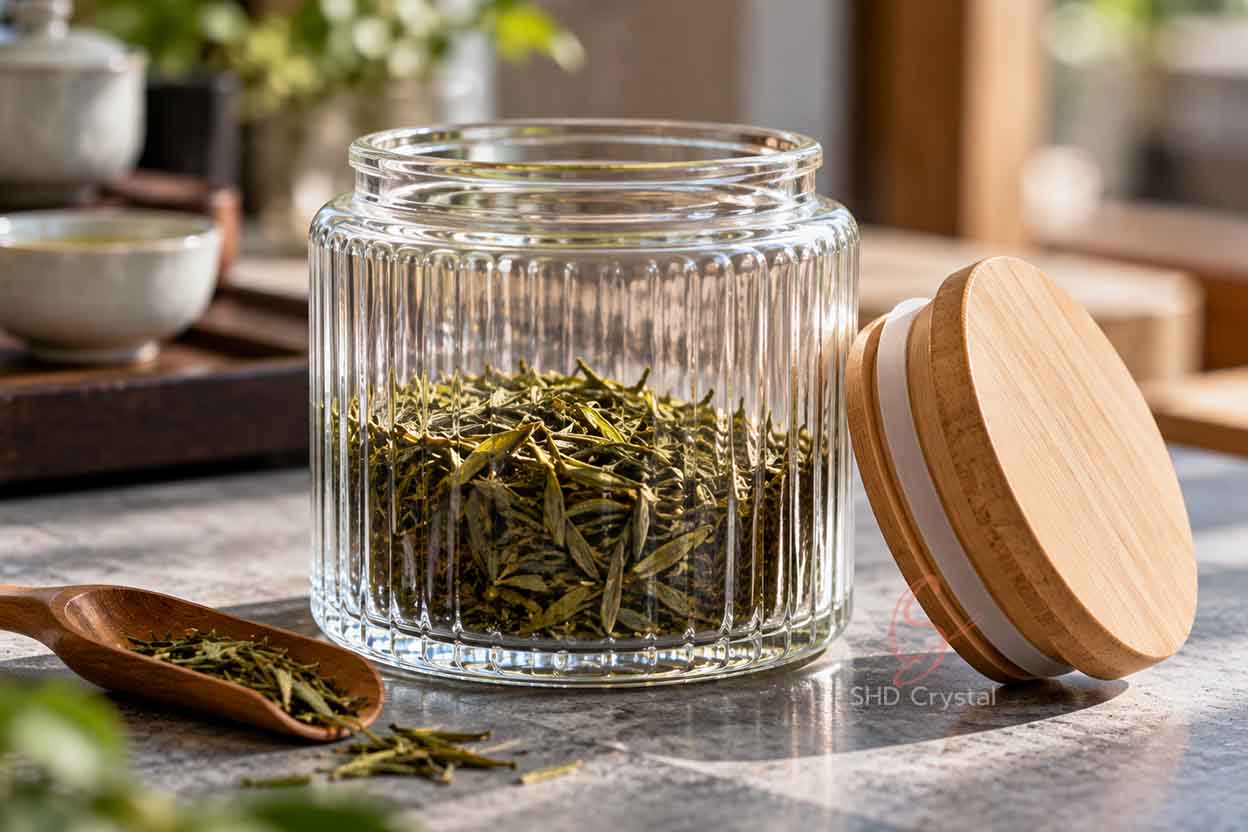
One of the strongest advantages of glass tea containers is visual presentation. Clear glass reveals the color, texture, and arrangement of tea leaves, allowing retailers to showcase the product without opening the jar. Ribbed surfaces, subtle embossing, and geometric patterns can introduce decorative character while retaining partial transparency.
However, clear glass does not provide meaningful protection from visible light. Tea products stored for longer periods generally benefit from a cool, dry, dark environment.
For decorative loose leaf tea packaging, this creates a practical design decision. Clear glass may be appropriate for controlled indoor displays and regularly used tea collections, while tinted glass, protective outer packaging, or storage away from direct light may offer advantages in other situations. The visual appeal of the container should never replace the actual storage requirements of the tea.
The Lid Determines Whether the Jar Can Seal Properly
An airtight tea canister depends on the complete closure system, not simply the presence of a lid. Glass lids with suitable sealing rings, bamboo lids with silicone gaskets, and selected metal closure systems can provide different combinations of appearance and sealing performance.
Each requires attention to the opening diameter, rim flatness, gasket compression, and dimensional consistency. A lid that looks perfectly fitted in a photograph may still allow air exchange if the sealing surfaces do not contact correctly.
For manufacturers, the glass mouth is therefore an important functional area. Mold accuracy, forming consistency, and inspection help establish the dimensional foundation required for reliable closure assembly. Actual sealing performance must then be confirmed using the intended lid and gasket.
Shape and Opening Size Influence Everyday Use
A tea jar should be easy to fill, access, and handle. Wide-mouth cylindrical containers allow convenient access with a tea scoop and simplify cleaning. Squarer or more compact shapes may improve shelf arrangement, while rounded jars can create a softer decorative appearance. For a glass tea storage jar, the proportions should suit the anticipated amount of tea without becoming unnecessarily tall or difficult to reach into.
Base stability also matters, particularly for tea counters where containers are handled repeatedly. A practical opening and comfortable overall shape can make the difference between a decorative object and a container people genuinely enjoy using.
Surface Texture Adds Character Without Complicating the Contents
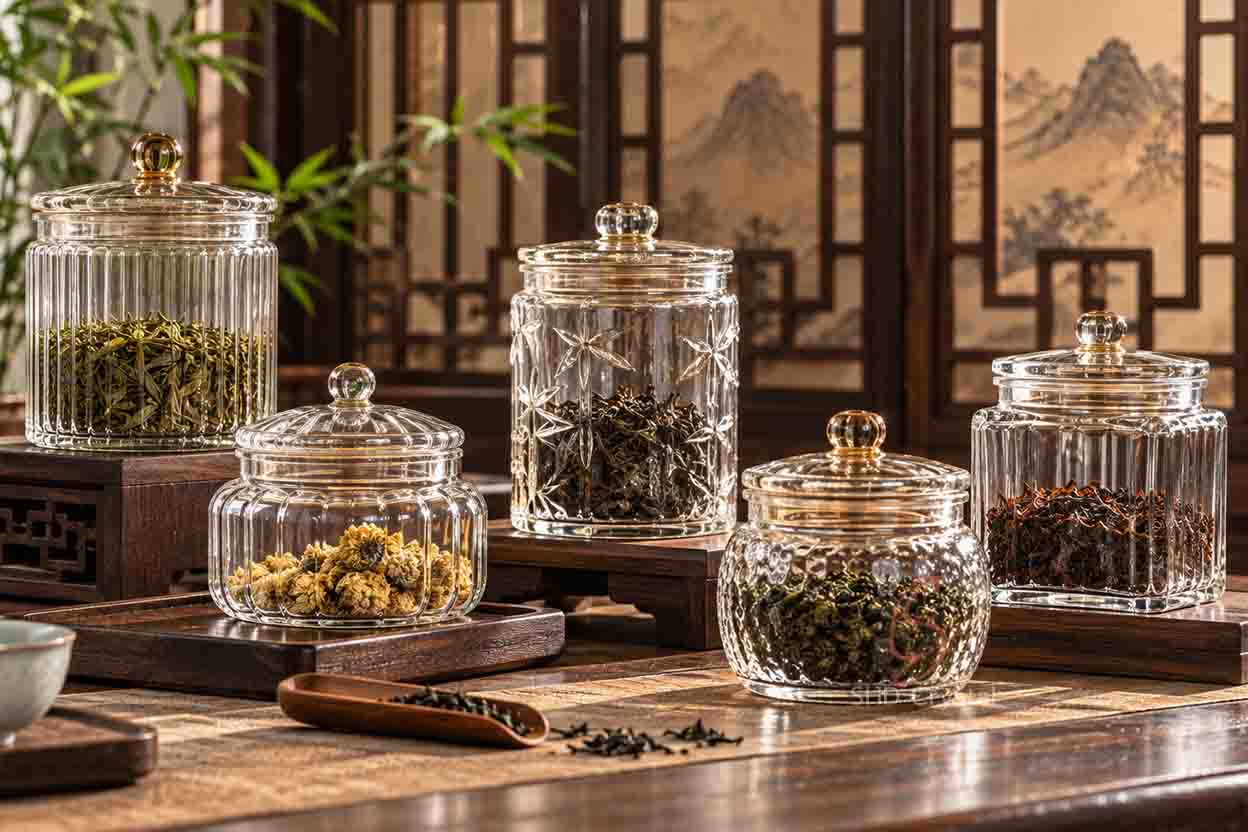
Glass manufacturing offers several opportunities to create distinctive tea canisters without introducing decoration onto the tea-contact surface. Molded vertical ribs, raised geometric patterns, subtle embossed details, and decorative exterior finishes can help distinguish different product collections. For loose leaf tea packaging, these treatments can create a coordinated appearance across several jar sizes. However, texture depth and pattern consistency should be considered during mold development. Complex surfaces may influence forming behavior, glass distribution, and visual inspection.
Applied coatings or printed decoration should also be assessed for the intended food-contact application, particularly where decorative materials could contact tea or the jar opening.
Production Consistency Supports Coordinated Collections
Many tea brands prefer to present multiple varieties in matching containers. A collection might include small jars for premium loose-leaf selections, medium jars for everyday tea, and larger containers for retail display.
Maintaining consistent opening dimensions, decorative patterns, color appearance, and lid compatibility helps the collection feel intentional. During production, manufacturers should monitor wall distribution, annealing quality, rim condition, and dimensional variation. These checks are particularly important when a design uses removable lids sourced from a separate component manufacturer. For commercial projects, packaging should also protect both the glass and its closure during transportation.
Conclusion
A successful glass tea storage jar combines the beauty of transparent or decorative glass with the practical requirements of tea storage. The glass body establishes the container’s appearance, while the closure determines much of its sealing performance. For brands developing an airtight tea canister or a coordinated loose leaf tea packaging collection, material selection, surface design, and dimensional consistency should be considered together.
Developing Glass Tea Storage Jars With SHD Crystal
SHD Crystal supports glass container development through mold design, glass forming, annealing, decorative surface processing, quality inspection, and packaging preparation. For a glass tea storage jar project, development can begin with capacity, body proportions, opening dimensions, decorative texture, and the selected lid structure.
SHD Crystal can support clear and decorative glass jar production, including molded patterns and suitable surface finishes. When a project requires an airtight tea canister, the glass neck and rim can be evaluated against the dimensions of the intended lid and sealing components.
By coordinating glass manufacturing with closure compatibility and visual consistency, SHD Crystal helps tea brands and kitchenware buyers develop practical containers for individual products and matching collections.
Read the original full version: https://shdcrystal.com/blogs/glass-tea-storage-jar/