
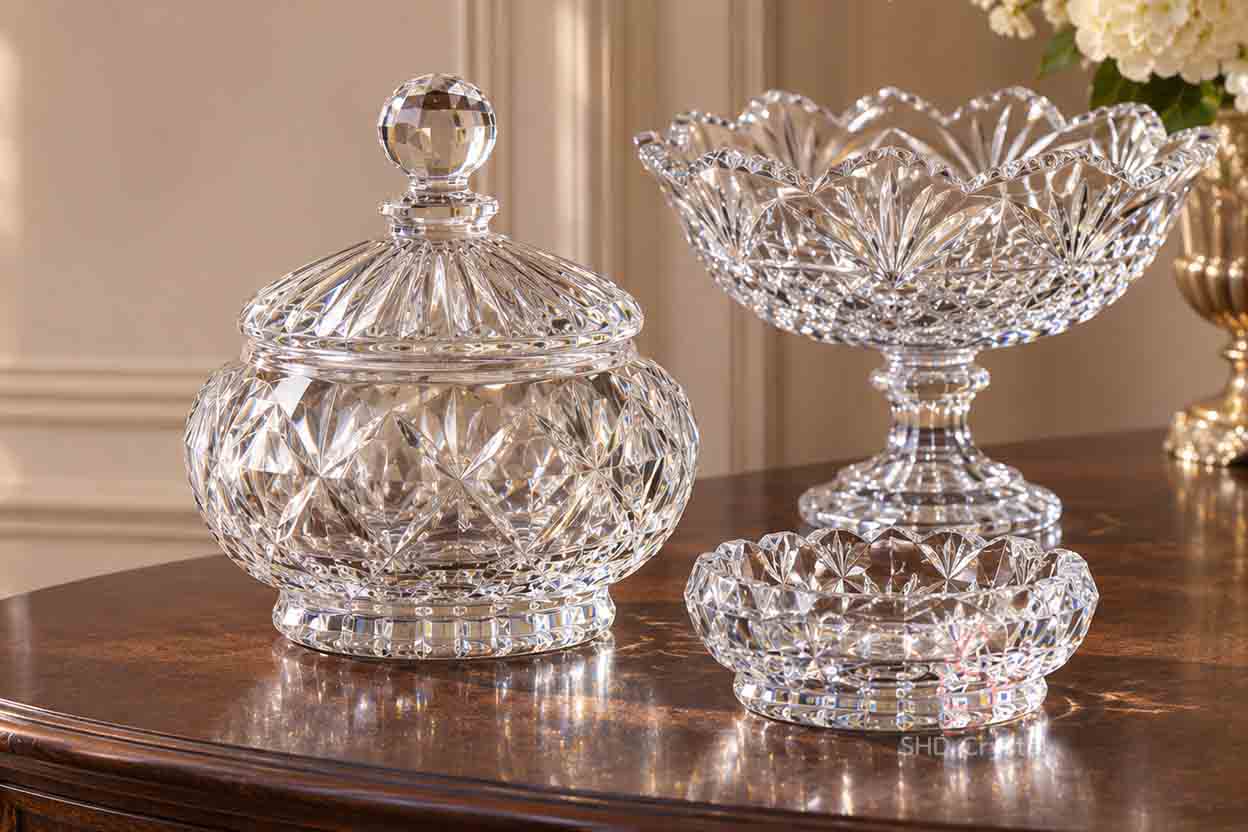
Some glass objects are beautiful even when they are empty. A deeply carved serving bowl catches the afternoon light, while a covered crystal candy jar sits quietly on a wooden sideboard, its patterned lid almost as decorative as the vessel beneath it. These familiar details capture the appeal of imperial lead crystal tableware, a design direction associated with elaborate cutting, substantial proportions, and the timeless elegance of traditional decorative glass.
Here, imperial describes an ornamental style rather than a particular brand or place of manufacture. The charm lies in the details: polished facets, sculptural handles, raised bases, and the way transparent glass turns ordinary light into decoration.
Imperial Lead Crystal Tableware and Its Decorative Character
Unlike minimalist glassware, which often relies on smooth surfaces and simple silhouettes, this style celebrates ornamentation. Deep diamond patterns, starburst cuts, scalloped edges, and carefully shaped lids create a richer visual language. These elements can make an everyday vessel feel closer to a small piece of decorative art.
Serving Bowls with a More Sculptural Presence
Traditional cut crystal serving bowls often feature generous proportions, thick walls, and decorative patterns extending across the body. Some stand directly on a substantial glass base, while others rise above the table on a short pedestal. A footed design creates a more formal presentation, especially when paired with a scalloped rim or intricate geometric cutting.
The interesting part is how these details change under different lighting. Broad polished facets reflect light strongly, while smaller intersecting cuts create delicate highlights. Even without elaborate table decorations, the bowl itself can become a centerpiece.
Candy Jars Where the Lid Steals the Show
Among the most charming pieces in this style are lidded crystal candy dishes. Their rounded bodies, patterned covers, and sculptural finials give them an almost architectural appearance. A spherical lid knob, radiating cuts, or a beautifully fitted cover can become the most memorable detail. Some designs have a compact, rounded silhouette, while others resemble small covered urns with raised feet.
They can serve as decorative containers, collectible gifts, or elegant display pieces. For products containing lead crystal, however, long-term food storage should be avoided. Wrapped sweets may provide visual context for a display, while lead-free, food-contact-compliant glass is preferable for regular food service and storage.
The Craftsmanship Behind Ornamental Patterns
The rich appearance of imperial lead crystal tableware depends on the relationship between glass forming and surface decoration. Traditional wheel cutting removes material from the glass to create grooves and facets. Polishing then develops the transparent, reflective surfaces.
Pressed glass can also feature elaborate molded patterns, but these should not be described as hand-cut decoration unless a separate cutting operation has actually taken place. For decorative bowls and covered jars, manufacturers must consider glass thickness, cutting depth, rim finishing, and the fit between the lid and body.
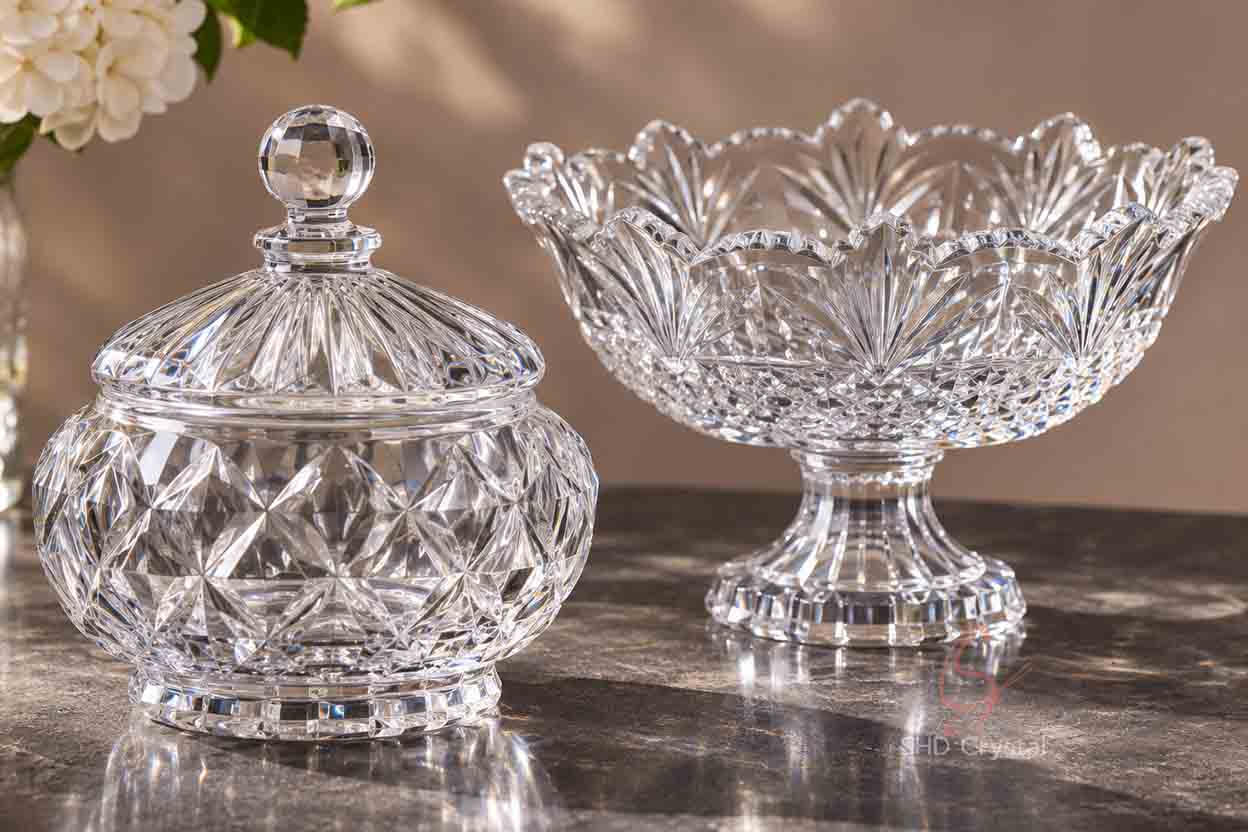
A well-designed pattern should complement the vessel’s proportions rather than simply cover every available surface.
A Classic Style for Modern Collections
Ornamental crystal does not have to belong exclusively in antique cabinets. A transparent covered jar can complement a modern console table, while cut crystal serving bowls can introduce contrast into a restrained interior.
For original gift collections, designers may retain a traditional diamond pattern but simplify the silhouette. Others may preserve elaborate lids and decorative feet as the defining features. This flexibility allows classical inspiration to coexist with contemporary presentation.
Material Selection and Practical Use
Lead crystal is valued for its optical properties and suitability for decorative cutting. However, its actual composition must be verified rather than inferred from weight or brilliance. For new tableware intended for frequent food contact, lead-free crystal is generally the more appropriate direction because lead can migrate from lead crystal into foods and beverages, particularly with prolonged contact.
Decorative lead-crystal pieces are better positioned for display and occasional use consistent with applicable safety guidance.
Conclusion
Imperial lead crystal tableware celebrates a more expressive side of decorative glass. From beautifully patterned bowls to ornate covered candy jars, its appeal comes from the combination of traditional forms, polished details, and the changing reflections of transparent glass. These objects remind us that even a familiar serving vessel can have a personality of its own.
Classic Details, New Possibilities
A scalloped rim, a carefully shaped lid, or a distinctive cutting pattern can give a new collection the character of a treasured heirloom. For decorative projects inspired by imperial lead crystal tableware, SHD Crystal welcomes original concepts that reinterpret classical forms while considering appropriate materials, practical construction, and the intended use of each piece.
Read the original article on custom crystal glass manufacturing: https://shdcrystal.com/blogs/imperial-lead-crystal-tableware/