
A beautifully made drinking glass can make an ordinary glass of water feel surprisingly refined. When paired with a matching pitcher, it becomes part of a complete table setting rather than an isolated object. Lead-free crystal drinkware brings this combination of clarity, elegant proportions, and everyday usefulness into homes, hotels, restaurants, and contemporary hospitality collections.
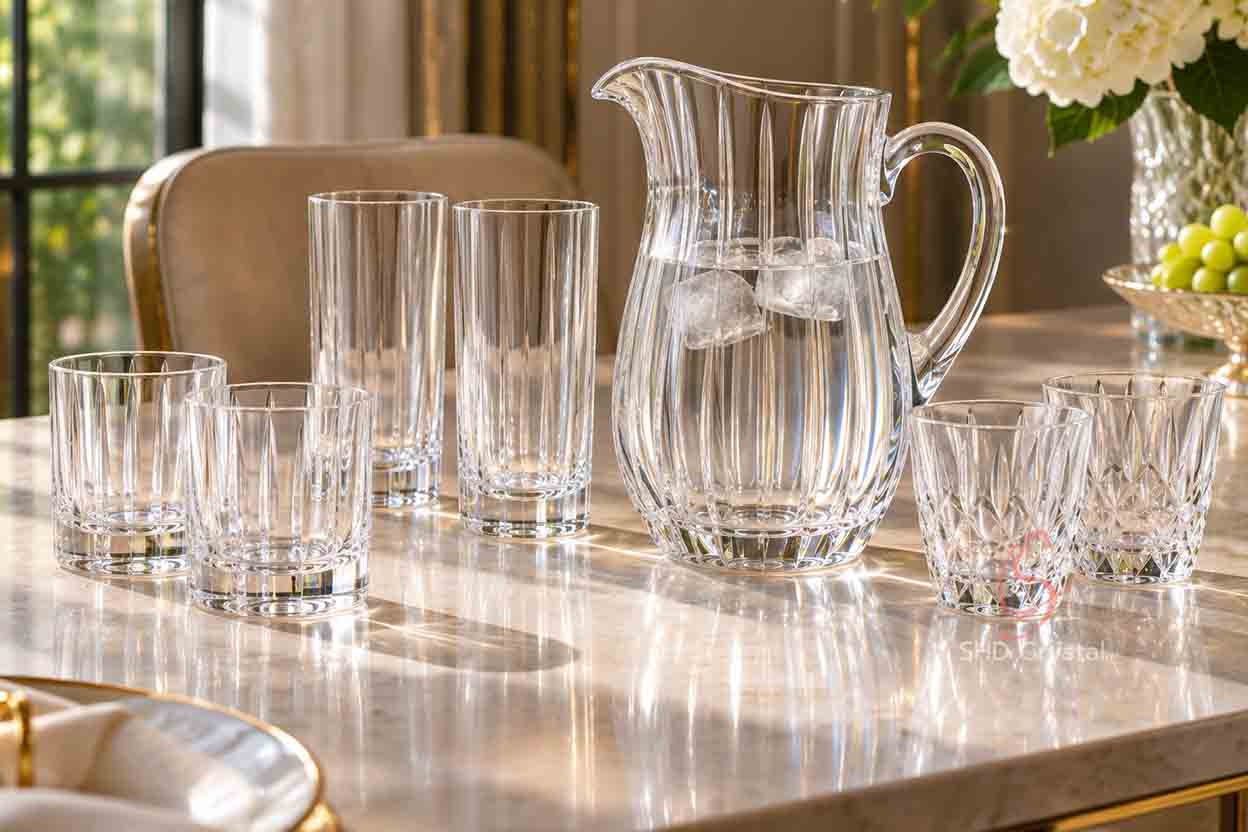
For glassware brands, the opportunity extends beyond traditional wine glasses to tumblers, highball glasses, water pitchers, and coordinated serving sets.
Why Lead-Free Crystal Drinkware Works Across Glasses and Pitchers
The appeal of lead-free crystal lies in its transparent appearance and refined finish without intentionally using lead oxide as a traditional crystal ingredient. However, lead-free crystal compositions vary. Material identity should be supported by supplier specifications rather than judged by brilliance, weight, or sound alone. For drinking vessels, the selected glass must also suit the intended food-contact application.
Drinking Glasses: Clarity, Balance, and Comfortable Handling
Lead-free crystal drinking glasses can take many forms, from straight-sided water tumblers to elegant highball glasses and low whiskey glasses. Each shape offers a different experience. A thick-bottomed tumbler feels substantial, while a thinner-walled glass may feel lighter and more delicate. Vertical ribs, geometric facets, and polished transparent surfaces can introduce decorative character without changing the basic function.
For coordinated custom crystal glass barware, rim comfort, base stability, capacity, and consistency between pieces matter as much as appearance. A successful design should remain comfortable during regular use rather than relying entirely on its decorative finish.
Water Pitchers: Where Proportion Meets Function
Lead-free crystal water pitchers introduce additional structural requirements. A pitcher must accommodate its intended liquid capacity while remaining manageable when filled. The relationship between body width, handle position, spout geometry, and center of gravity influences how comfortably water can be poured.
A wide opening supports filling and cleaning, while a carefully formed pouring lip helps control liquid flow. Decorative cutting or surface texture can add visual depth, but the handle and pouring area must remain practical.
The appropriate glass forming processes should therefore be evaluated before approving a complicated pitcher silhouette.
Creating a Coordinated Drinkware Collection
A pitcher and its matching glasses do not need identical decorative details. A water jug might feature a gently fluted body, while the accompanying tumblers carry a simpler version of the same pattern. Matching glass clarity, proportions, and decorative rhythm can establish a recognizable collection.
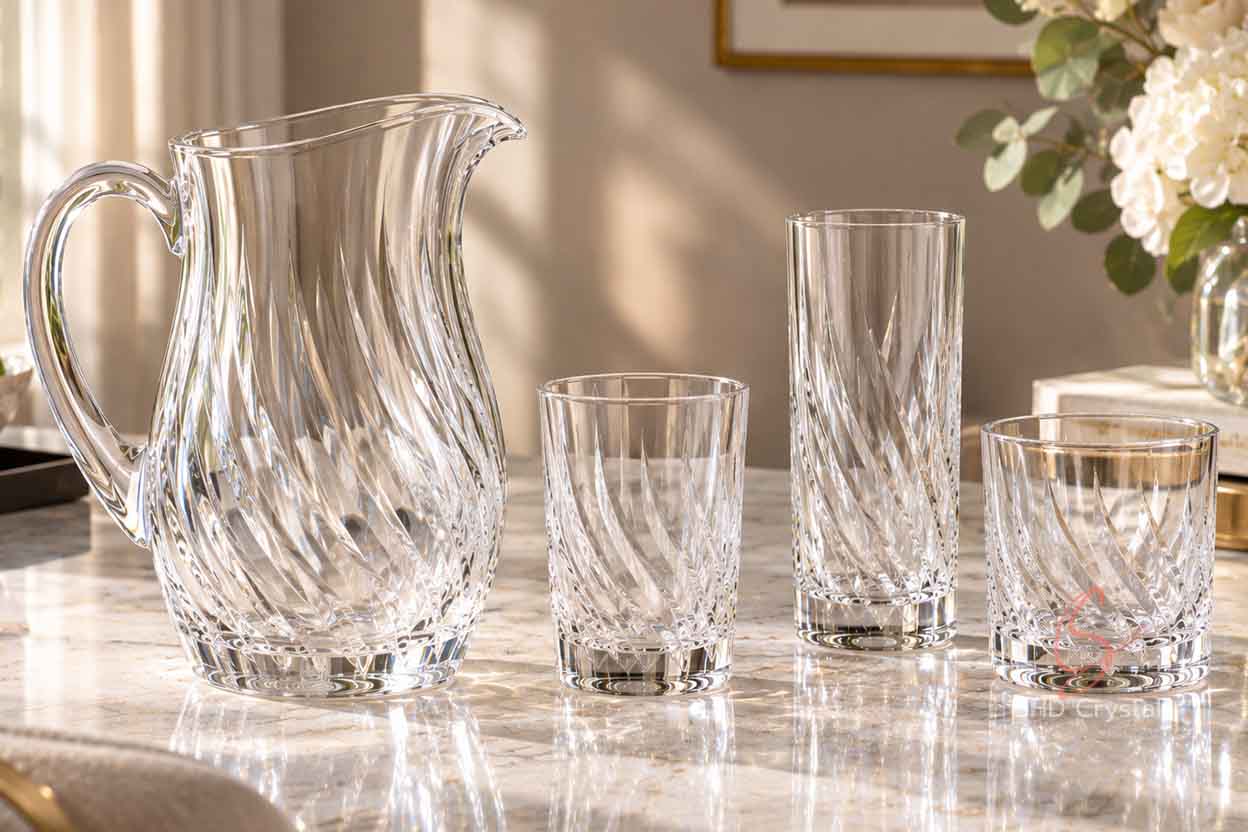
For lead-free crystal drinking glasses, coordinated designs are particularly attractive to hospitality buyers seeking consistent table presentation.
Clear finishes suit minimalist dining, while restrained faceting or subtle color accents can support more decorative collections. The intended cleaning conditions should influence every finishing decision.
Material Quality and Production Consistency
A transparent appearance alone cannot establish material composition or finished quality. For lead-free crystal water pitchers, buyers should evaluate pouring performance, handle integrity, surface finishing, and weight when filled.
Drinking glasses require attention to rim condition, base stability, wall thickness, and dimensional consistency. Within bespoke crystal glass manufacturing, these requirements influence material selection, forming methods, sampling, and inspection.
Food-contact documentation should match the finished product and intended market. Dishwasher suitability, thermal resistance, and long-term durability should not be assumed without appropriate evaluation.
Planning an OEM Drinkware Project
For an OEM collection, development should begin with the intended products and their relationship to one another. Useful information includes reference shapes, capacity requirements, glass composition, decorative preferences, target quantities, and packaging expectations.
Existing designs may offer a practical starting point, while original forms require further tooling and sampling assessment. Physical samples should confirm not only visual consistency but also handling, pouring, cleaning, and protective packaging.
Conclusion
Lead-free crystal drinkware combines visual refinement with the practical requirements of daily beverage service. From elegant tumblers to substantial water pitchers, successful designs balance clarity, proportion, comfort, and consistent manufacturing.
A thoughtfully coordinated collection can bring the character of fine crystal to both everyday dining and more formal hospitality settings.
Developing Lead-Free Crystal Drinkware Collections
SHD Crystal can review vessel shapes, material specifications, decorative details, and sampling requirements for lead-free crystal drinkware projects. Whether developing a matching glass-and-pitcher set or a wider hospitality collection, the goal is to translate a refined design into a practical, repeatable product.