
Vintage Green Glass Fruit Bowl OEM Starts With the Right Color Reference
this product line projects succeed or fail based on color matching. The deep green tint that defines the vintage aesthetic must be consistent across every piece in the production run. Unlike clear glass, where minor color variation is invisible, green glass shows every shade shift under natural or artificial light. We recommend providing a physical color reference — a glass sample, a paint swatch, or even a fabric sample — rather than relying on a Pantone number alone. That is the standard we hold every vintage green glass fruit bowl OEM to.
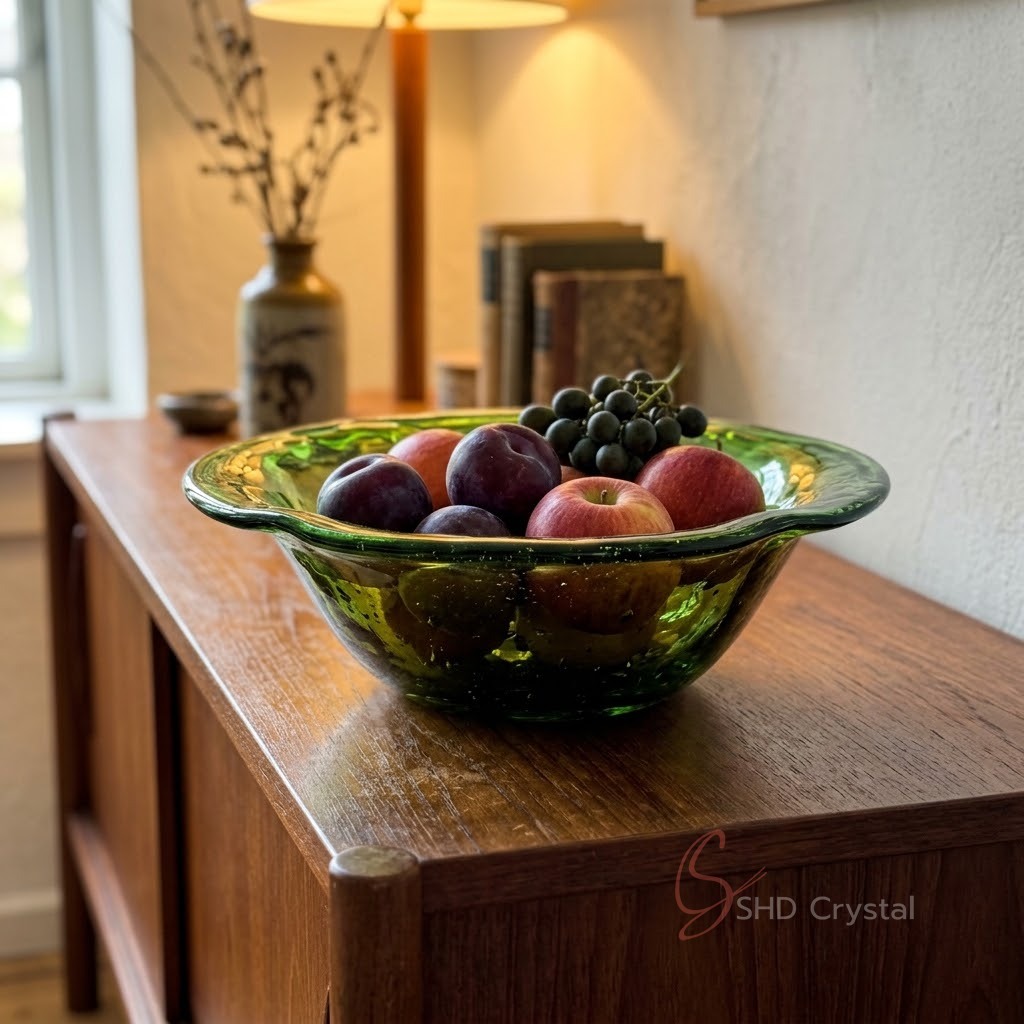
The reason is simple: the same Pantone color appears differently on paper, plastic, and glass. A retro glass bowl production run that matches a Pantone card perfectly may still look different from what the buyer expected because the glass substrate changes the color perception. Physical references eliminate this ambiguity.
Green Glass Serveware Requires Adjusted Forming Parameters
Colored glass absorbs heat differently than clear glass, which affects the entire forming process. For the line, the factory must adjust glass temperature, forming speed, and mold release timing to account for the different thermal behavior of the green batch. A large open-form bowl is already more challenging to form than a closed bottle — adding color sensitivity increases the complexity.
| Production Factor | Clear Glass Bowl | Green Glass Bowl |
|---|---|---|
| Glass Temperature | Standard range | May need 10–20°C adjustment |
| Forming Speed | Standard rhythm | Slightly slower for even distribution |
| Annealing Cycle | Standard profile | Extended — color absorbs heat differently |
| Color Inspection | Not required | Batch-to-batch color comparison needed |
For green glass serveware, the base area is where color variation often appears first. The thicker glass at the base retains heat longer, which can create a slightly different color density compared to the thinner walls. A skilled retro glass bowl production team will manage this by controlling the cooling rate at the base.
Finishing Options That Enhance the Vintage Character
The vintage aesthetic depends on more than color. Surface texture, rim treatment, and overall weight all contribute to the retro feel. For vintage green glass fruit bowl OEM, we recommend discussing finishing options during the sampling stage. A slightly textured mold surface can create a subtle handcrafted impression. A softly fire-polished rim gives the bowl a warmer feel than a sharp-cut edge.
For vintage green glass fruit bowl OEM, some buyers request a light frost or matte finish to reduce surface reflections and enhance the vintage character. This can be achieved through acid etching or sandblasting. However, frosting changes the color perception — it makes the green appear lighter and more muted. We suggest requesting both polished and frosted samples before making a final decision.
Batch Consistency for Wholesale Programs
For brands distributing green glass serveware through wholesale channels, consistency across reorders is essential for vintage green glass fruit bowl OEM programs. A buyer who orders a fruit bowl in one season and reorders matching pieces later expects the color to match. This requires the factory to maintain detailed batch records: glass composition, furnace settings, forming parameters, and finishing specifications.
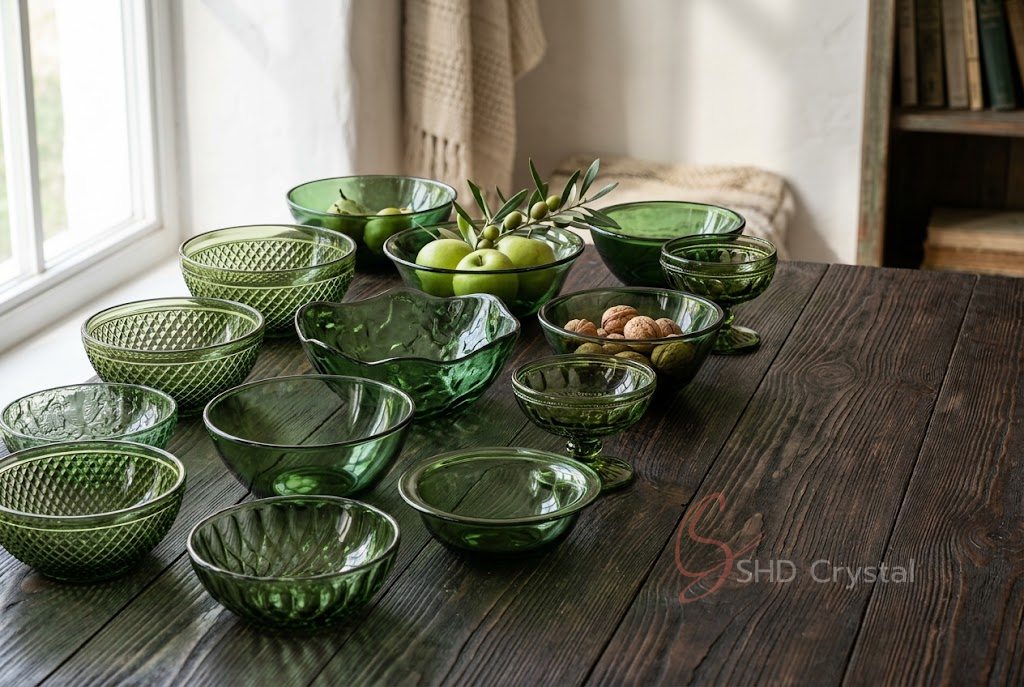
A vintage green glass fruit bowl OEM project that delivers consistent results on the first order but shifts on the second is a common complaint. The solution is documentation — the factory must record every variable that affects color and appearance and use those records for future production runs.
Packaging and Shipping for Oversized Glass
Retro glass bowl production creates large, heavy items that require careful packaging. Custom foam inserts, molded pulp trays, or individual dividers are usually necessary. For export shipments, the packaging must also account for stacking pressure and container vibration. We recommend reviewing the packing configuration during sampling rather than after production approval.
Frequently Asked Questions
What is the typical MOQ for vintage green glass fruit bowl OEM?
For stock shapes with standard green tint, MOQs typically start at 500–1,000 pieces. For custom molds with specific color matching, MOQs usually start at 2,000–3,000 pieces depending on the factory.
Can I combine green glass with other colors in a retro glass bowl production run?
Producing multiple colors in the same run requires cleaning the furnace between batches, which adds cost and time. Some factories offer amber, blue, and green in the same production schedule, but each color requires a separate batch setup.
How do I ensure color consistency across reorders for green glass serveware?
Provide the factory with a physical color standard and request that they retain batch records for your specific color formula. For green glass serveware programs with multiple SKUs, consider ordering all initial pieces from the same batch to establish a consistent color baseline.
Conclusion
Vintage green glass fruit bowl OEM combines the appeal of retro aesthetics with the discipline of controlled glass production. Brands that define color references, evaluate forming adjustments, and plan packaging during sampling create a more reliable path to consistent, high-quality green glass serveware.
Start Your Green Glass Fruit Bowl Project With SHD Crystal
For brands developing vintage green glass fruit bowl OEM projects, SHD Crystal can support color matching, forming evaluation, finishing selection, and packaging development. Share your color reference and design concept with us to discuss production feasibility.
Interested in custom glassware or related products?
Contact our team to discuss your project requirements.