
Blogpost keywords: custom heat resistant candle containers manufacturer, glass candle container production, candle jar OEM manufacturing
As a custom heat resistant candle containers manufacturer, we have learned that successful candle vessels are rarely defined by appearance alone. A container may look identical to another product on the shelf, yet perform very differently during actual use. The difference often comes from manufacturing control rather than design itself.
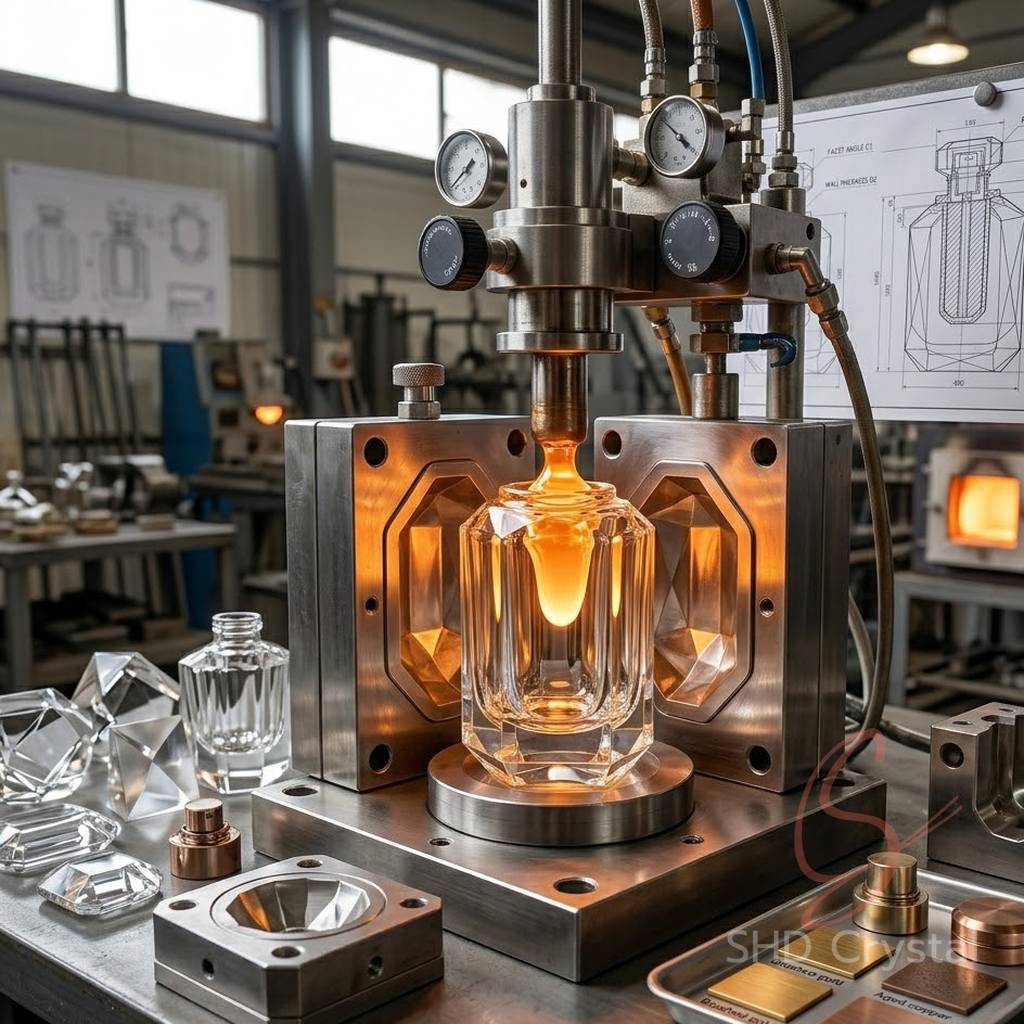
For brands sourcing candle packaging, understanding how a supplier manages production variables is often more valuable than evaluating aesthetics alone. Long-term reliability is built through controlled forming, stress management, and consistent execution throughout production.
How A Custom Heat Resistant Candle Containers Manufacturer Builds Stability Into Production
At SHD Crystal, we view glass candle container production as a process of managing thermal behavior rather than simply shaping molten glass. The first critical stage is forming. Molten glass must remain within a controlled forming temperature range. If the temperature is too high, dimensional accuracy becomes difficult to maintain. If it drops too quickly, incomplete forming or surface defects may occur.
Mold tolerance also plays a significant role. Even small dimensional variations can affect wall thickness distribution, which directly influences how a candle vessel responds to repeated heating cycles. For a custom heat resistant candle containers manufacturer, maintaining consistency at this stage often determines whether a design can be scaled successfully into mass production.
Key Factors That Affect Production Reliability
Several manufacturing factors influence the performance of candle containers:
- Forming temperature stability
- Mold tolerance control
- Wall thickness transition
- Cooling stress management
- Annealing behavior
- Manual finishing variation
- Batch consistency monitoring
When these factors are controlled together, the final product is more likely to perform consistently across different production runs.
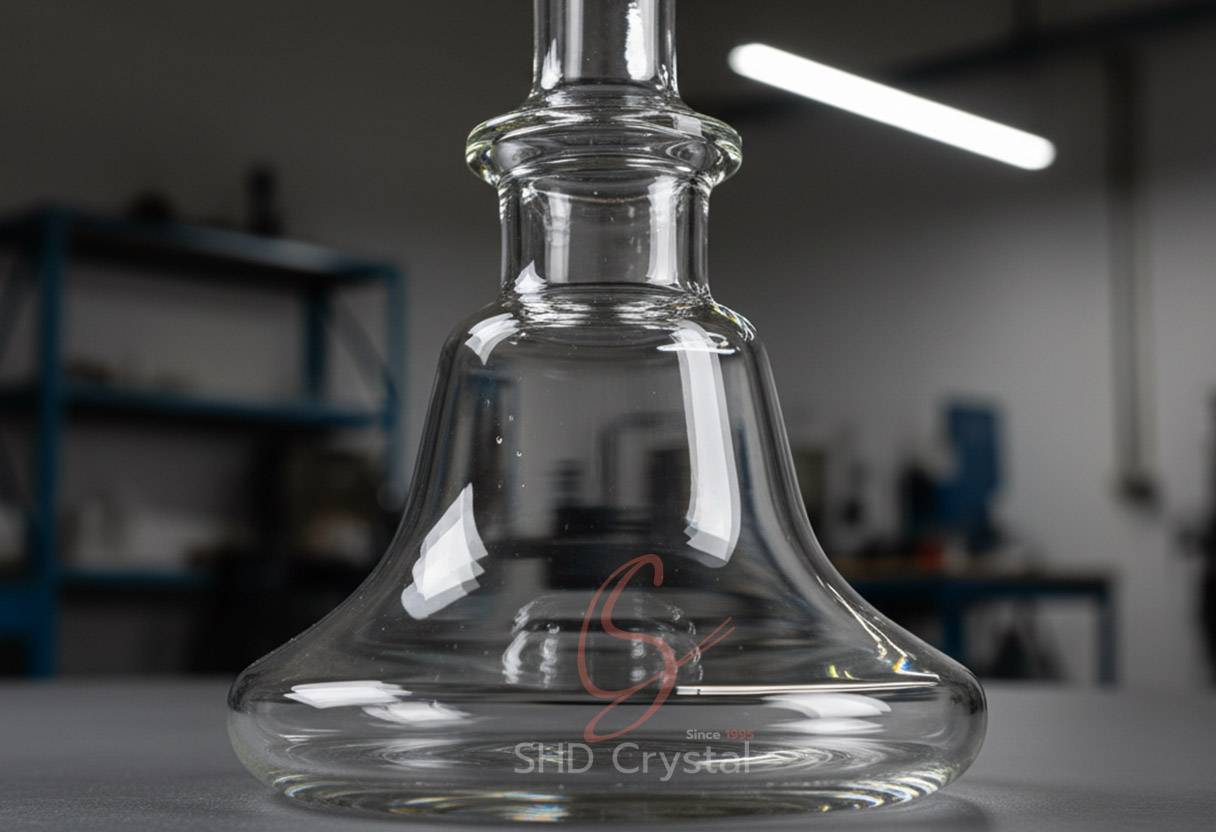
Real Production Challenges In Glass Candle Container Production
One of the most common assumptions among buyers is that production becomes straightforward once tooling is completed. In reality, batch consistency remains one of the most challenging aspects of glass candle container production.
During larger production runs, variables such as furnace conditions, raw material fluctuations, environmental humidity, and operator adjustments can all influence final results. Small changes may appear insignificant individually, but their combined effect can impact dimensional consistency and thermal performance. As a custom heat resistant candle containers manufacturer, we continuously monitor production conditions throughout the manufacturing cycle rather than waiting until defects appear during inspection.
This proactive approach helps reduce variation between batches and improves predictability for repeat orders.
From A Manufacturing Perspective
From our manufacturing perspective, annealing is often one of the most underestimated stages in candle jar OEM manufacturing. After forming, glass naturally contains internal stress. Annealing gradually releases this stress through controlled cooling. When cooling occurs too quickly, residual stress can remain trapped within the structure.
This creates a common production tradeoff. Faster cooling may increase production efficiency. Longer annealing cycles generally improve thermal stability and structural consistency. Finding the appropriate balance requires experience, testing, and process discipline.
In many cases, properly managed annealing contributes more to long-term reliability than increasing wall thickness alone.
Common Buyer Misconceptions
We frequently encounter buyers who associate heavier glass with better performance. While thickness contributes to durability, uneven wall thickness transition can sometimes create thermal imbalance rather than improve resistance.
Another misconception involves decorative finishing. Processes such as embossing, frosting, polishing, or surface texturing are often viewed as purely aesthetic features. However, these operations can introduce additional manufacturing variables that must be considered during candle jar OEM manufacturing. Ignoring these factors may lead to unnecessary challenges when scaling production volumes.
For procurement teams, these questions often provide greater insight into manufacturing capability than reviewing product photographs alone.
Conclusion
Working with a custom heat resistant candle containers manufacturer is ultimately about understanding process control. Reliable products are created through careful management of forming temperature, mold tolerance, cooling stress, annealing behavior, and production consistency. When these variables are properly controlled, candle containers can be produced with greater predictability across both small and large production programs.
Supporting OEM Candle Container Development
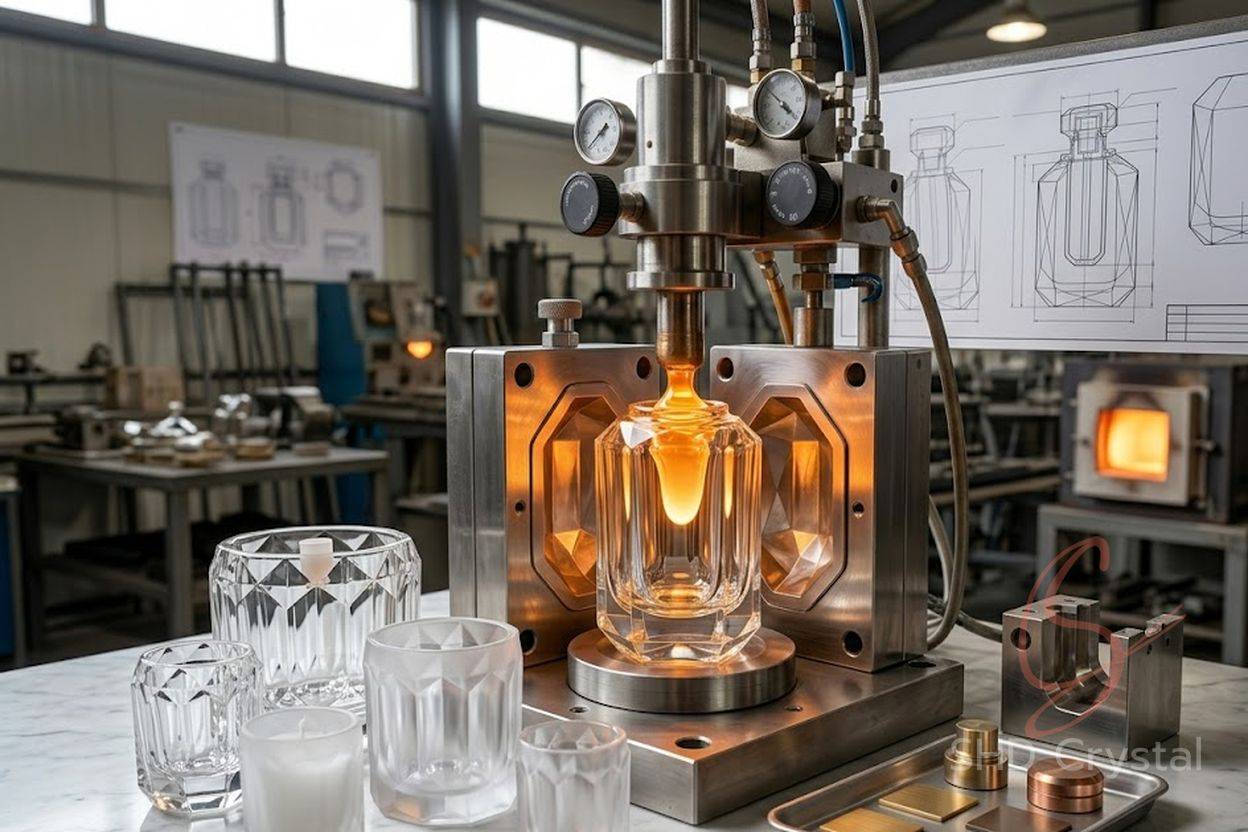
At SHD Crystal, we support brands throughout the entire development process, from design evaluation and prototype creation to full-scale candle jar OEM manufacturing. Through controlled glass candle container production, process-driven quality management, and manufacturing experience gained across diverse custom projects, we help customers develop candle vessels that balance design objectives with scalable production requirements.