
Blogpost keywords: glass blowing factory, hand blown glass, glass blowing process
A glass blowing factory plays a unique role in transforming molten material into functional and decorative objects used across commercial, hospitality, and architectural environments. Unlike purely industrial glass facilities, these factories combine skilled craftsmanship with structured production systems to meet both aesthetic and operational requirements. This balance allows projects to achieve visual distinction while maintaining consistency and reliability.
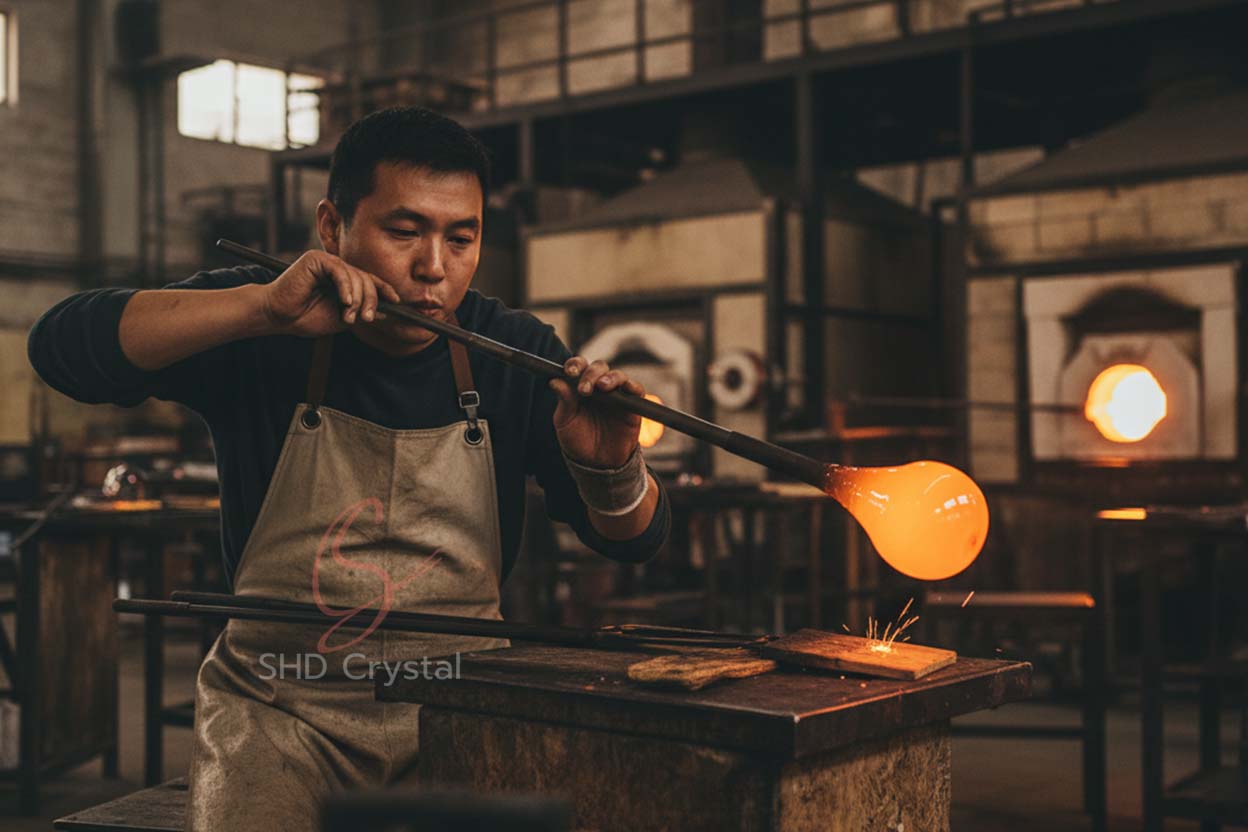
How A Glass Blowing Factory Integrates Craftsmanship And Process Control
Once design requirements are defined, a glass blowing factory evaluates feasibility based on form, volume, and technical constraints. The glass blowing process involves controlled heating, shaping, and cooling stages, each of which affects strength, clarity, and dimensional accuracy. By standardizing these steps while allowing skilled adjustments, factories can produce repeatable results without eliminating the character associated with hand blown glass.
Typical stages inside a glass blowing factory include furnace gathering, hand shaping, reheating in glory holes, and controlled annealing in temperature regulated kilns. These stages form the backbone of the glass blowing process and determine the final strength and optical quality of hand blown glass.
For commercial projects, this integration is especially important. Decorative lighting, vases, and sculptural glass pieces often need to match across multiple production batches. Process documentation, mold references, and tooling consistency help align handcrafted outcomes with project specifications while preserving the organic character that makes hand blown glass visually distinctive.
Practical Applications Across Different Industries
In hospitality environments such as hotels, restaurants, and lounge spaces, hand blown glass is commonly used for pendant lighting, table accents, and lobby installations. These objects help shape atmosphere while remaining durable enough for daily interaction. A glass blowing factory familiar with hospitality requirements can recommend shapes, thickness levels, and finishes that balance elegance with long term durability.
Retail and residential projects also rely on the glass blowing process when developing limited collections or customized interior displays. Designers may request variations in color, form, or surface texture to explore different visual directions before committing to larger production runs. The flexibility of hand blown glass makes these exploratory stages possible without the constraints of rigid industrial molds.
Common Misconceptions About Glass Blowing Facilities
One common misconception is that glass blowing factories operate without consistency because they depend on manual craftsmanship. In reality, many professional workshops apply strict controls over furnace temperature, reheating cycles, and raw material composition. These controls help ensure that each stage of the glass blowing process produces predictable results.
Another misunderstanding involves scalability. While extremely complex shapes may require adjustments before scaling production, early consultation with a glass blowing factory often reveals practical modifications that allow handcrafted designs to move into repeatable manufacturing without losing their visual identity.
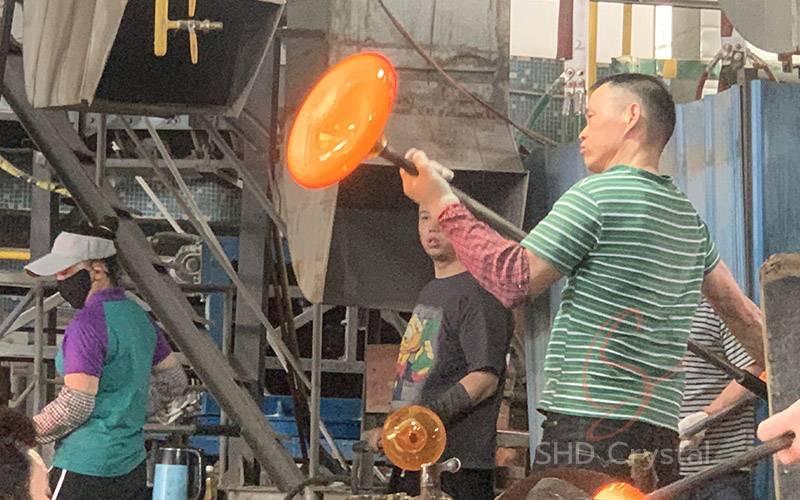
Practical Guidance For Project Planning
When planning products that involve the glass blowing process, clear communication around dimensions, tolerances, and usage conditions becomes essential. Exposure to heat, impact, or frequent handling can influence design decisions, especially for lighting fixtures or decorative objects used in public environments.
Factories experienced in hand blown glass production often recommend slight adjustments in wall thickness, curvature, or connection points to improve durability. These modifications rarely change the visual concept but can significantly improve performance during long term use.
Sampling is another important stage. Reviewing physical samples allows designers and project teams to confirm color tone, weight balance, and surface finish before full production begins. This step reduces costly revisions and supports smoother production scheduling.
Conclusion
Partnering with a skilled glass blowing factory allows creative concepts to be realized through a controlled yet flexible production environment. By combining structured processes with experienced craftsmanship, factories support projects that require both individuality and dependable quality. Through careful coordination of furnace work, shaping techniques, and cooling control, the glass blowing process continues to enable the production of durable and visually distinctive hand blown glass objects.
Manufacturing Expertise For Custom Glass Projects
For designers, lighting brands, and architectural projects seeking reliable production partners, SHD Crystal operates as an experienced glass blowing factory specializing in decorative and functional glass manufacturing. The workshop combines skilled artisans with structured production management, allowing complex forms to be translated into consistent batches of hand blown glass.
With strong capabilities in sculptural lighting components, decorative vessels, and architectural glass elements, SHD Crystal supports projects that require both artistic detail and scalable production. Teams developing new collections or custom installations are always welcome to discuss how the glass blowing process can be adapted to meet specific design requirements and production goals.