
Blogpost keywords: glass wine decanter manufacturing, wine decanter design, hand blown glass decanter
In our production work, a glass wine decanter is never treated as a simple container. It is a combination of form, flow, and control. When we begin a glass wine decanter manufacturing project, we are not only shaping glass, but also defining how wine moves, breathes, and is presented. Every curve, opening, and thickness variation influences the final experience, which is why we approach each piece through controlled forming rather than decorative intention alone.
How We Approach Glass Wine Decanter Manufacturing From Form to Function
In glass wine decanter manufacturing, the first decision is proportion. A decanter must allow wine to aerate while remaining stable during pouring. This requires a wide base for surface exposure and a controlled neck for directing flow.
We adjust diameter, height, and wall thickness together rather than separately. If the base is too wide without sufficient structural support, stability becomes an issue. If the neck is too narrow, pouring becomes restricted.
Through this process, wine decanter design becomes a balance between visual openness and functional control.
Hand Blown Glass Decanter and Material Behavior
Most high-quality decanters are produced through hand blown glass decanter techniques. During blowing, molten glass responds to gravity, air pressure, and temperature in real time.
We guide this process manually, controlling expansion speed and rotation to achieve smooth curves and even thickness. In glass wine decanter manufacturing, this stage determines whether the final piece feels balanced or uneven.
Because the material is fluid during forming, small adjustments can significantly affect symmetry. This is why experienced technicians are essential in hand blown glass decanter production.
Controlling Pouring Performance
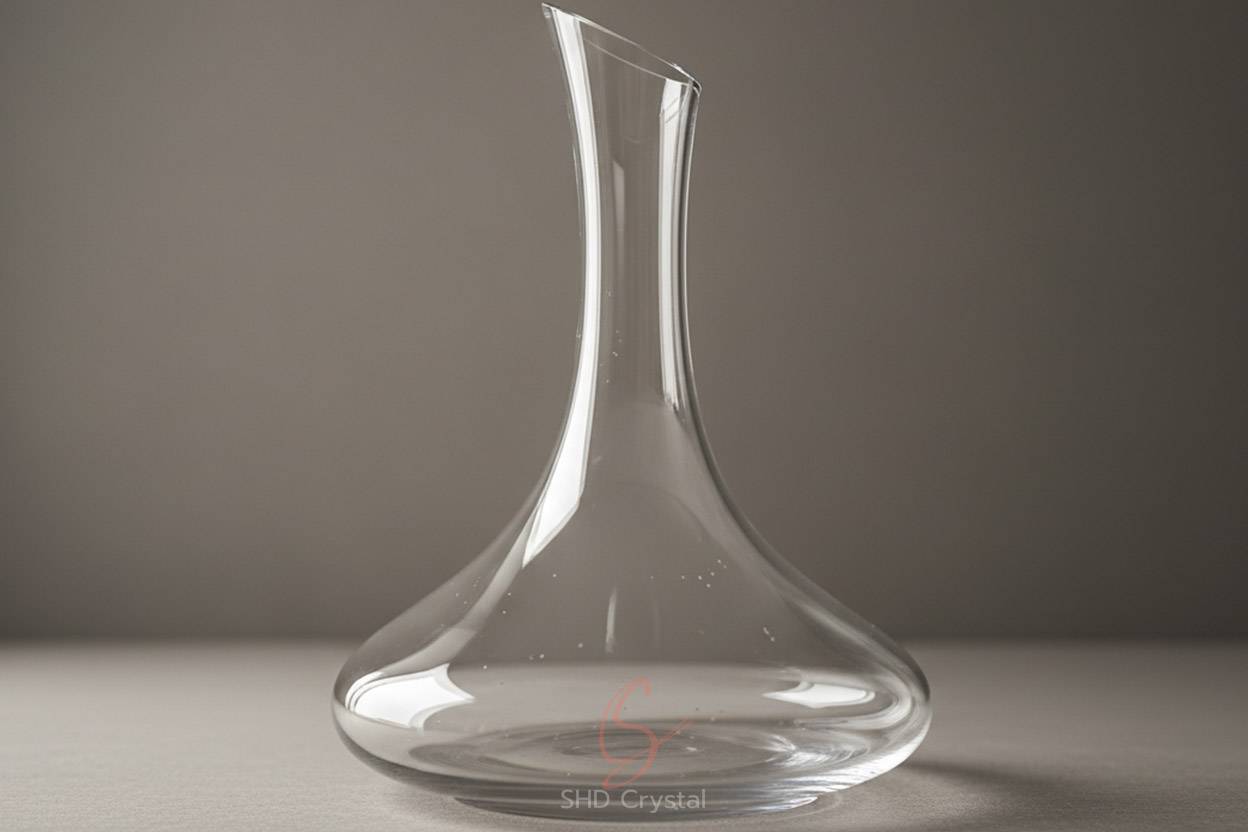
A key function of any decanter is controlled pouring. In wine decanter design, the angle of the neck and the sharpness of the lip determine how smoothly the wine flows.
If the lip is too thick, wine may drip. If it is too thin, it may become fragile. We refine this edge carefully during finishing to balance durability and performance.
Glass wine decanter manufacturing must account for real usage. A decanter that looks elegant but pours poorly cannot function in practical settings.
Surface Finishing and Optical Clarity
After forming, the decanter enters finishing stages where clarity and smoothness are refined. In hand blown glass decanter production, polishing removes minor surface irregularities while maintaining transparency.
Because wine is highly visual, optical clarity becomes part of the experience. Light passing through the glass highlights color and movement, which is why glass wine decanter manufacturing emphasizes surface quality.
We also ensure that the interior remains smooth to support cleaning and repeated use.
Making Each Design Repeatable
Although decanters often appear as unique pieces, production requires consistency. In glass wine decanter manufacturing, we standardize key dimensions while allowing slight variation from hand forming.
This ensures that each piece maintains the same functional performance while preserving the natural character of hand blown glass decanter work.
Balancing repeatability and individuality is one of the most important aspects of wine decanter design.
Conclusion
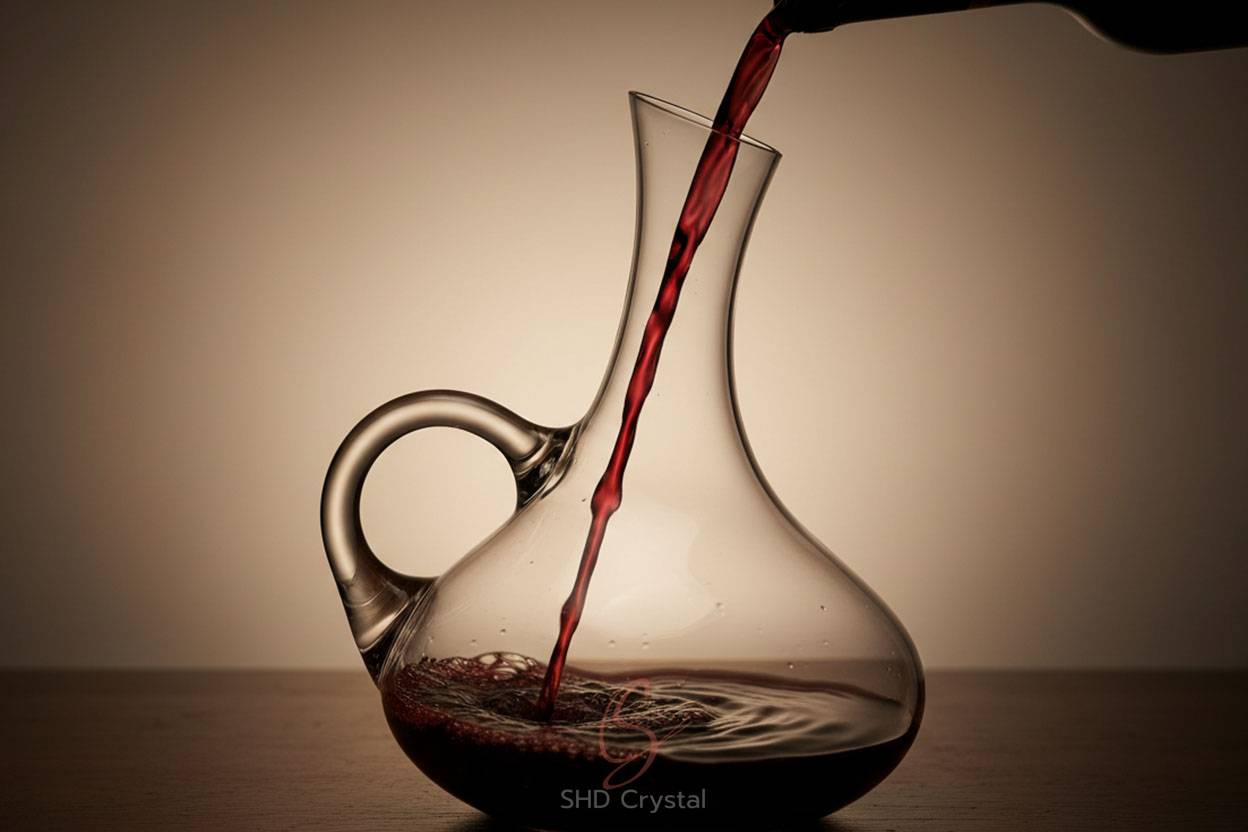
Glass wine decanter manufacturing combines controlled shaping, hand blowing techniques, and precise finishing to create functional and visually balanced pieces. Through careful wine decanter design and refined hand blown glass decanter processes, each product supports both aeration and presentation in wine service.
From Molten Glass to Finished Decanter
At SHD Crystal, we develop glass wine decanter manufacturing projects by focusing on how form and function interact. We control shaping, thickness, and finishing to ensure that each piece performs reliably during pouring while maintaining clarity and balance.
Our approach to wine decanter design integrates hand blown glass decanter techniques with repeatable production standards. Whether for retail collections or hospitality programs, we work to ensure that each decanter reflects both craftsmanship and practical usability.