
Blogpost keywords: grape ice bucket factory, organic form molding, surface texture integration
In luxury wine presentation, the ice bucket is no longer treated as a purely functional container. It has become part of the atmosphere surrounding the bottle itself, contributing to how wine is displayed, served, and experienced at the table. In our grape ice bucket factory projects, sculptural glass surfaces inspired by vineyard forms are developed not simply as decoration, but as part of the visual ritual of wine service. Through organic form molding and refined surface texture integration, the object begins to interact with light, condensation, glass reflections, and surrounding table materials in ways that standard smooth ice buckets cannot achieve.
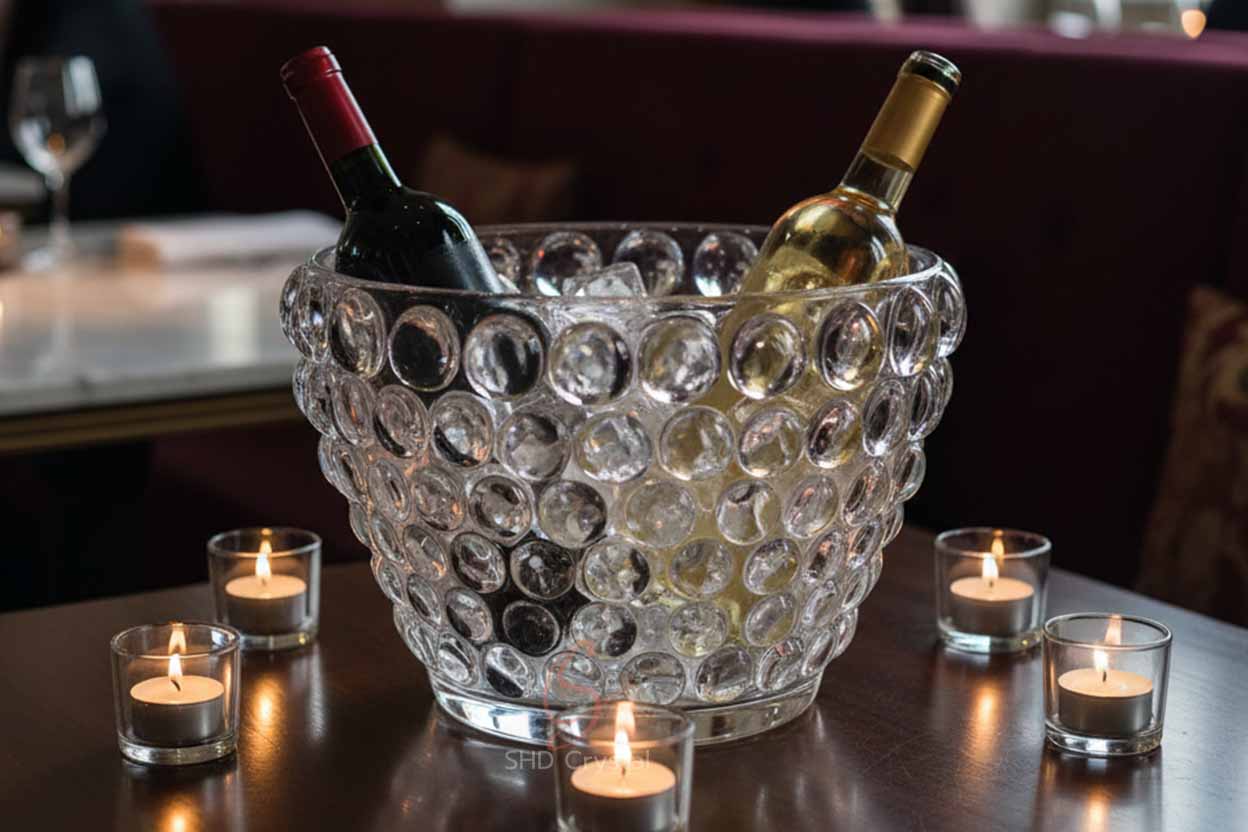
How Vineyard-Inspired Texture Changes Wine Presentation
The defining visual feature of a grape ice bucket factory design is the clustered surface rhythm inspired by grape formations. Rather than relying on flat polished walls, the glass surface becomes layered with rounded sculptural depth that captures reflections from candles, wine bottles, and ambient lighting.
This interaction creates movement across the surface of the bucket as condensation and reflections shift during use. Through organic form molding, these rounded forms remain fluid and integrated rather than appearing mechanically repetitive.
The result feels closer to sculptural wine presentation than conventional barware production.
Organic Form Molding and the Challenge of Sculptural Glass Thickness
One of the most difficult aspects of grape ice bucket factory production is maintaining stable crystal thickness across irregular clustered geometry.
Rounded protrusions and recessed transitions naturally influence how molten glass distributes during forming. In organic form molding, even slight imbalance can create visual distortion or structural inconsistency once the bucket is illuminated or filled with ice.
To preserve clarity and stability, thickness transitions must remain gradual across the clustered structure. This allows the bucket to maintain both sculptural presence and practical durability during wine service.
Why Surface Texture Integration Matters Beyond Decoration
Surface texture integration is not only visual — it changes how the object behaves physically within a wine setting. Layered textures catch moisture differently from smooth glass, allowing condensation to form subtle reflective highlights across the clustered surface.
Under warm restaurant lighting or candlelight, these reflections create depth that continuously changes as the bucket cools and the surrounding environment shifts.
Because of this interaction, grape ice bucket factory designs often feel visually active even when stationary. The object participates in the atmosphere of the table rather than functioning only as storage for chilled bottles.
Balancing Sculptural Form With Wine Service Functionality
A common misconception is that heavily textured glassware sacrifices practicality. In reality, successful grape ice bucket factory designs carefully balance sculptural exterior surfaces with smooth interior functionality.
Organic form molding is often concentrated externally, while the interior cavity remains refined and stable to support bottle placement and ice retention. Surface texture integration must also allow comfortable grip and controlled handling during service.
This balance allows the bucket to function effectively in hospitality environments while still maintaining strong decorative identity.
Why Wine Ritual Has Increased Demand for Sculptural Ice Buckets
Contemporary wine presentation increasingly emphasizes atmosphere, storytelling, and curated table environments. As a result, standard industrial ice buckets often feel visually disconnected from luxury dining settings.
A grape ice bucket factory responds to this shift by creating glassware that contributes directly to wine ritual and presentation aesthetics. Organic form molding introduces a softer and more natural visual rhythm, while surface texture integration creates reflections that evolve throughout the dining experience.
In many hospitality interiors, these sculptural wine buckets now function as centerpiece objects rather than secondary accessories.
Conclusion
A grape ice bucket factory transforms wine service into a more atmospheric and sculptural experience through organic form molding and carefully balanced surface texture integration. By combining vineyard-inspired geometry with reflective crystal behavior, luxury ice buckets become part of the visual ritual surrounding wine rather than simple functional containers.
Sculptural Wine Glassware Developed for Luxury Presentation
At SHD Crystal, we develop grape ice bucket factory projects that focus on sculptural surface rhythm, crystal clarity, and atmospheric wine presentation rather than standard barware production. Our approach to organic form molding emphasizes gradual thickness transitions and integrated clustered geometry to preserve both visual fluidity and structural stability.
Through refined surface texture integration, reflective crystal finishing, and customization in sculptural detailing, we support hospitality and wine presentation projects that require distinctive glassware with collectible visual identity and practical performance.
Exclusive Release by SHD Crystal
Custom Crystal Glass OEM Manufacturer
This article is originally published by SHD Crystal. Original Link: https://shdcrystal.com/blogs/2026-05-06-blogpost-of-grape-ice-bucket-factory/