
Blogpost keywords: glass art manufacturer, custom glass art, artistic glass sculptures
Glass art rarely begins with decoration alone. In many collectible glass pieces, the visual impact comes from the tension between fluidity and control — the moment where molten material begins solidifying into permanent form while still preserving movement inside the object itself. In our work as a glass art manufacturer, this transformation is often what defines whether a piece feels like ordinary décor or a collectible sculptural object with long-term artistic presence.
Unlike standardized decorative accessories, custom glass art is frequently developed around individuality, optical depth, and emotional response rather than strict functional requirements. The object is intended to be observed slowly, from multiple angles, under changing light conditions.
Why Glass Creates A Different Type Of Sculpture
Unlike stone or metal, glass reacts continuously to light. Transparency allows internal reflections to become part of the sculpture itself, while curved surfaces distort surrounding space in subtle ways. This interaction creates visual movement even when the object remains completely still. For this reason, artistic glass sculptures often feel more atmospheric than traditional decorative objects. Reflections shift during the day, color density changes under different lighting conditions, and layered crystal thickness creates depth that cannot be achieved through opaque materials alone.
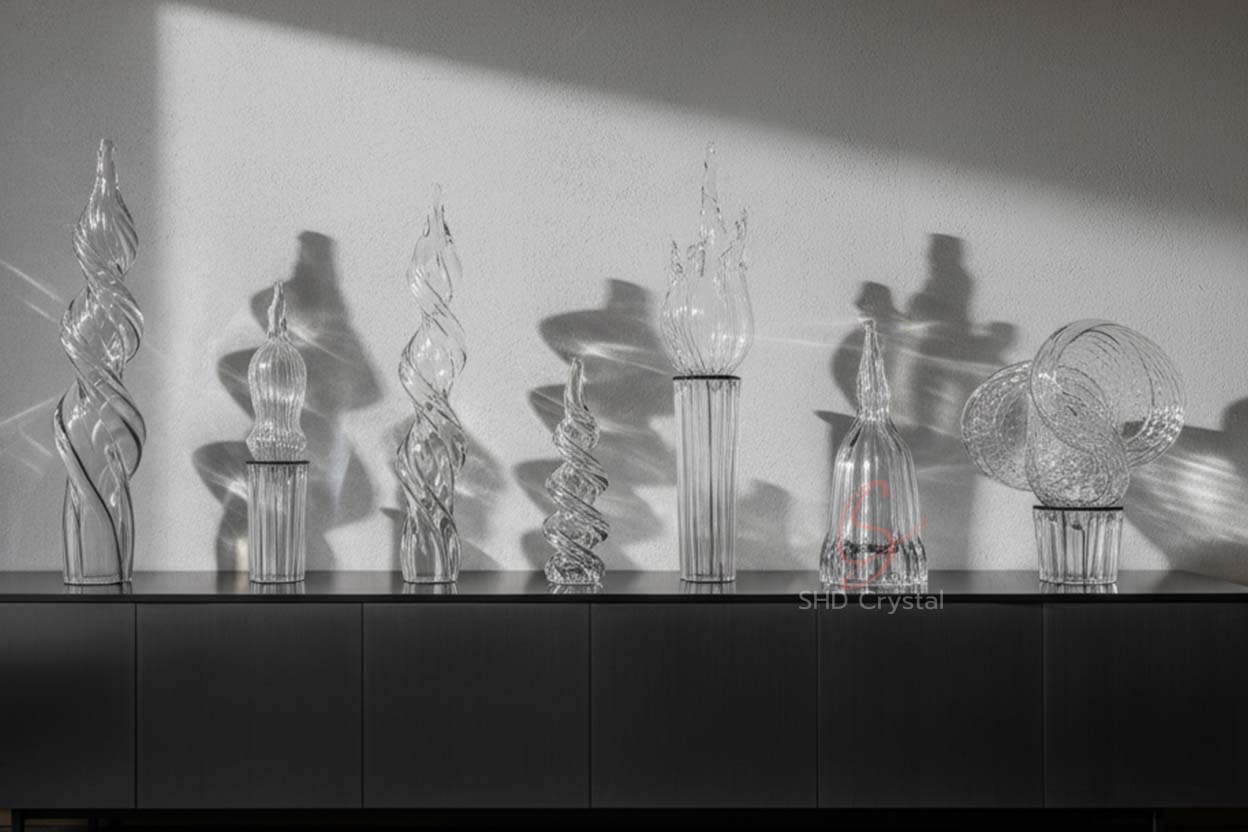
As a glass art manufacturer, controlling this optical behavior becomes just as important as shaping the physical form.
The Appeal Of Controlled Imperfection In Glass Art
One misconception about custom glass art is that perfection should always be the goal.
In reality, many collectible glass sculptures become visually interesting because of slight asymmetry, flowing transitions, or organic variation created during hand-forming. Unlike industrial glassware, artistic pieces often preserve evidence of movement and thermal behavior inside the material.
Subtle stretching, layered density, and gradual contour changes allow artistic glass sculptures to feel alive rather than mechanically standardized.
This controlled imperfection is often what separates collectible studio-style glass from mass-produced decorative products.
Why Scale Changes The Emotional Presence Of A Sculpture
Small glass objects may feel decorative. Larger sculptural pieces begin influencing the atmosphere of the room itself.
As scale increases, reflections become more dramatic and transparency develops greater spatial depth. Thick crystal sections interact with surrounding light differently from thin decorative glass, creating layered optical behavior inside the sculpture.
Many custom glass art collections therefore balance scale carefully. Oversized forms create stronger gallery presence, while smaller pieces may emphasize detail and intimacy instead.
For a glass art manufacturer, proportion becomes part of emotional storytelling rather than purely dimensional planning.
Artistic Glass Sculptures Are Increasingly Viewed As Collectible Objects
In recent years, collectible decorative objects have shifted away from highly ornamental styling toward more sculptural and material-focused forms.
This has increased interest in artistic glass sculptures with restrained silhouettes, layered transparency, and distinctive hand-crafted surface behavior. Rather than relying on excessive decoration, many contemporary collectors prefer pieces that reveal complexity gradually through light and perspective.
As a result, custom glass art is increasingly displayed similarly to small-scale sculpture — on stone plinths, gallery shelving, and curated interior surfaces rather than integrated into heavily decorated environments.
Why We Approach Glass Art Beyond Decorative Production
A common misconception is that decorative glass manufacturing and collectible glass art follow the same creative logic.
In our work as a glass art manufacturer, artistic glass sculptures are developed with attention to optical layering, sculptural rhythm, and the emotional pacing of the object rather than only decorative appearance.
Many custom glass art projects involve balancing transparency, color density, thickness variation, and hand-finished surface refinement to ensure the final sculpture maintains visual depth from every viewing angle.
The goal is not simply producing decoration, but creating glass objects that continue revealing new visual behavior over time.
Conclusion
A glass art manufacturer creates more than decorative accessories. Through carefully developed custom glass art and refined artistic glass sculptures, molten glass becomes a collectible medium capable of capturing light, movement, and emotional atmosphere within permanent sculptural form. The lasting appeal of glass art comes not only from craftsmanship, but from how the material continuously changes through reflection and perspective.
Collectible Glass Sculptures Developed Through Material And Optical Refinement
At SHD Crystal, we approach glass art manufacturer projects through sculptural balance, optical depth, and collectible visual presence rather than decorative mass production. Our custom glass art development process focuses on transparency layering, controlled hand-forming behavior, and reflective interaction to preserve artistic individuality across each piece.
Through artistic glass sculptures customization in scale, crystal density, color transitions, and sculptural contour refinement, we support collectible décor and gallery-oriented projects seeking long-term visual depth and material distinction.