
Blogpost keywords: green vessel basin, light absorption control, interior flow sculpting
Green vessel basin shaped through light absorption control and interior flow sculpting for balanced aesthetics and refined usability.
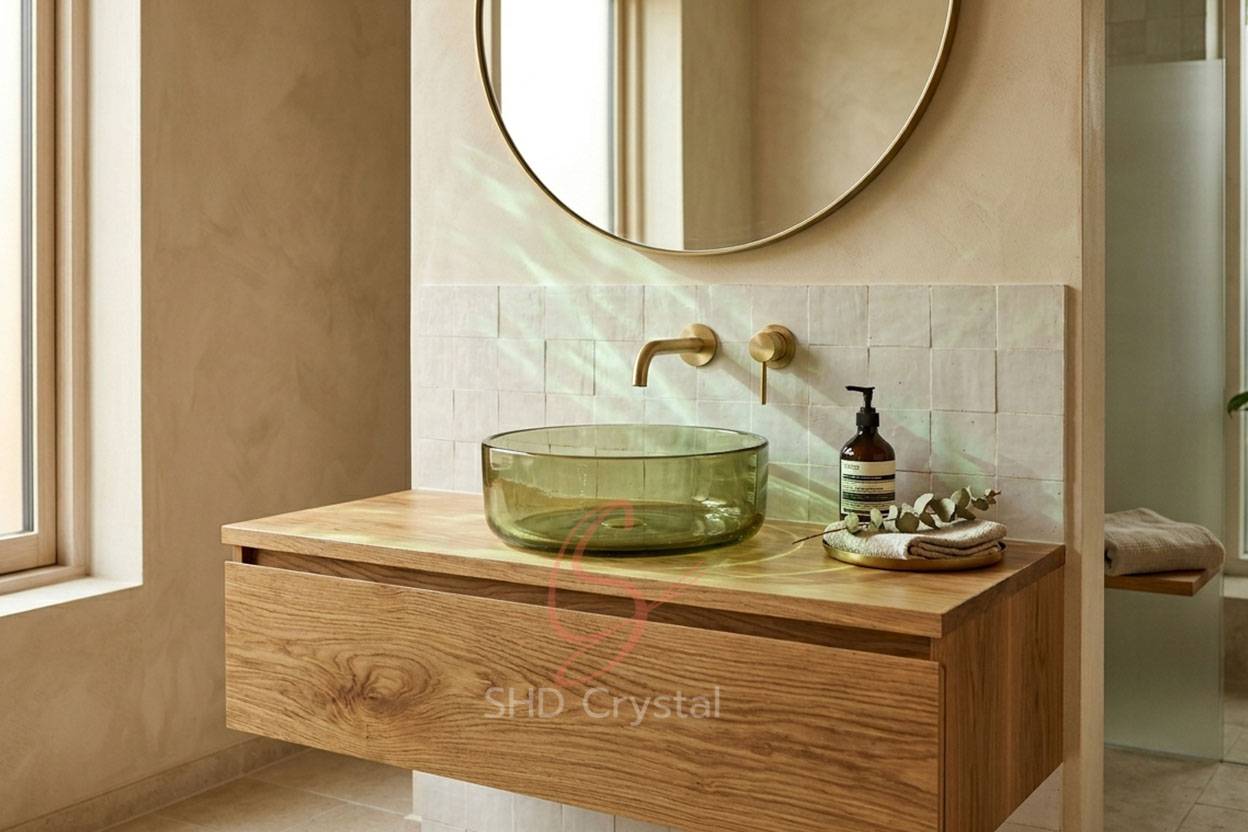
Reimagining Green Vessel Basin Through Material Behavior
Green vessel basin design is less about color application and more about how the material interacts with light and space. Green, unlike brighter tones, tends to soften reflections and create a more grounded visual presence, making it particularly effective in calm, design-led interiors.
In glass production, a green vessel basin must be approached as a balance between optical behavior and physical form.
Manufacturers that understand light absorption control and precise interior flow sculpting are able to produce basins that feel visually stable while remaining highly functional.
This perspective moves beyond decoration and into material-driven design.
How Green Alters Light Interaction
Green glass behaves differently from highly reflective or luminous materials. In a green vessel basin, light is partially absorbed rather than fully transmitted, creating a muted, layered effect.
Through light absorption control, manufacturers regulate how much light is retained within the material versus reflected outward. This prevents the basin from appearing overly dark in thicker areas or too pale at thinner edges.
The result is a more even and natural color presence that adapts well to different lighting environments.
This characteristic makes green particularly suitable for spaces aiming for subtle sophistication.
Sculpting the Interior for Performance
The internal shape of a basin directly affects how it performs during use. In green vessel basin production, this goes beyond simple curvature.
With interior flow sculpting, manufacturers design the internal geometry to guide water efficiently while maintaining a smooth visual surface.
This involves refining slope transitions, depth variation, and drainage alignment to reduce splashing and residue buildup.
At the same time, these adjustments must not disrupt the external silhouette, which remains fully visible in vessel designs.
This integration of function and form is essential for achieving a refined product.
Balancing Thickness and Visual Weight
Glass thickness plays a major role in how a green vessel basin is perceived. Thicker sections appear deeper and more saturated, while thinner areas allow more light to pass through.
Through light absorption control, manufacturers balance these variations to prevent uneven visual weight.
At the same time, interior flow sculpting ensures that thickness adjustments support functional performance rather than interfere with it.
This coordination allows the basin to maintain a cohesive appearance from all angles.
Surface Character and Tactile Experience
Surface quality is not only visual but also tactile. In a green vessel basin, smoothness and consistency influence both user interaction and maintenance.
Polished surfaces enhance light behavior, while subtle texturing can introduce a softer visual effect.
Through light absorption control, surface treatments are calibrated so they do not disrupt the overall color balance.
Meanwhile, interior flow sculpting ensures that the internal surface remains easy to clean and efficient in directing water.
These considerations contribute to a more complete user experience.
Dealing With Production Sensitivity
Glass production is inherently sensitive to small variations. In green vessel basin manufacturing, these variations can affect both color perception and structural balance.
Without proper light absorption control, inconsistencies in thickness may lead to uneven color distribution.
Without effective interior flow sculpting, internal geometry may not perform as intended, affecting usability.
Managing these factors requires careful process control and continuous adjustment.
Application in Contemporary Spaces
Green vessel basin products are often used in interiors that emphasize calmness, balance, and material authenticity.
In residential settings, they can serve as subtle focal points that complement natural materials such as stone or wood.
In hospitality environments, green tones help create a relaxed and cohesive atmosphere.
Through controlled light absorption control, manufacturers ensure consistent visual behavior, while interior flow sculpting supports reliable daily performance.
This makes green vessel basins suitable for both design-focused and practical applications.
Conclusion
Green vessel basin design is defined by how well material behavior is understood and controlled. By applying light absorption control and precise interior flow sculpting, manufacturers can produce basins that achieve both visual harmony and functional efficiency. This approach ensures that the product performs consistently while maintaining a refined presence in modern interiors.
Planning a Green Vessel Basin Project
When developing a green vessel basin, working with manufacturers who understand both optical behavior and functional shaping is essential. Suppliers capable of implementing advanced light absorption control and effective interior flow sculpting can support design development, sampling, and production scaling. This ensures that the final product aligns with both aesthetic intent and practical use.